
The Indoor Sports Arena in KLE technological University tries to answer these and other questions that emanated from the brief and is an attempt to strike a balance between such dichotomies as architecture and landscape, figure and ground, as well as the city and the campus.
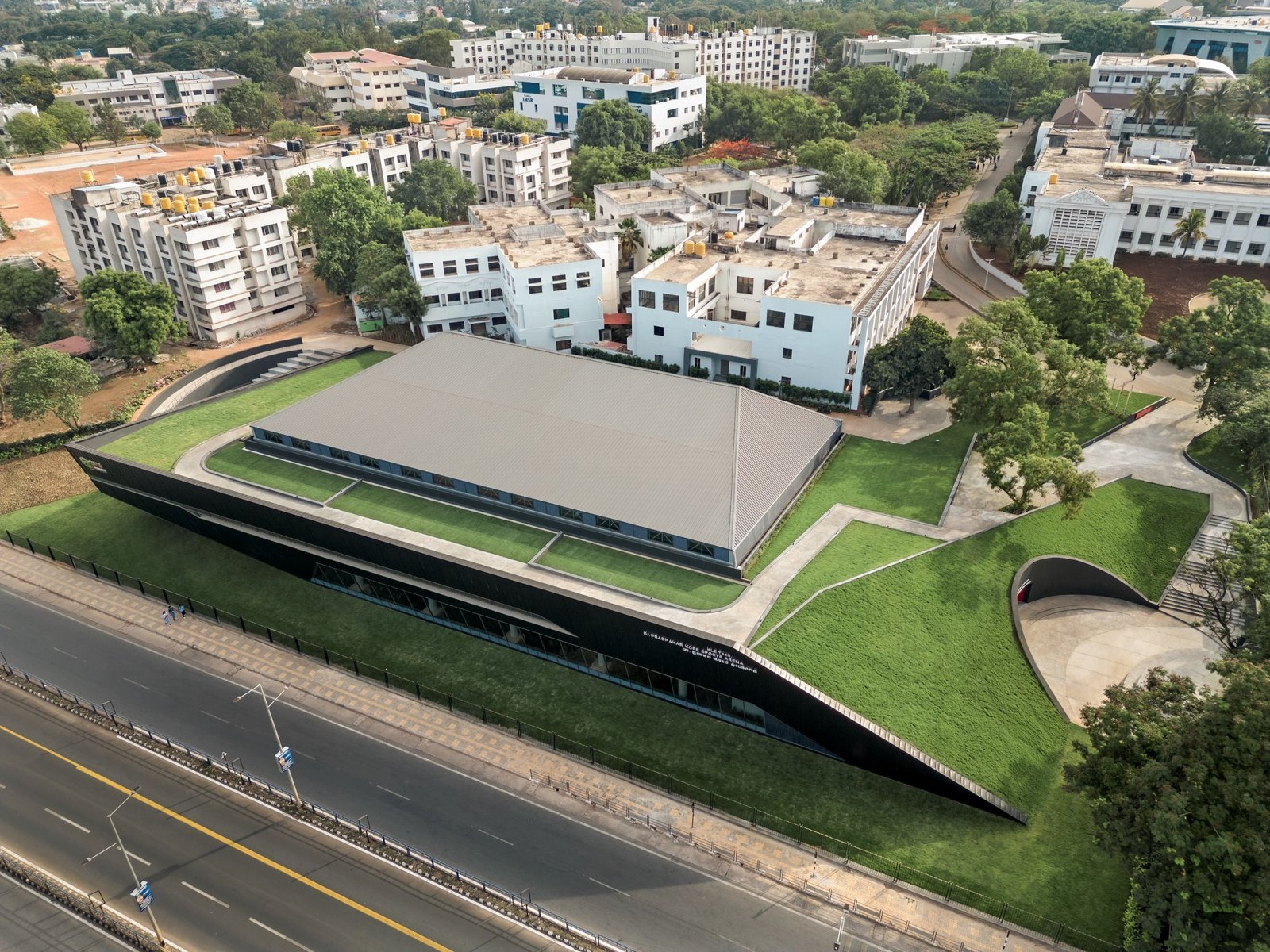
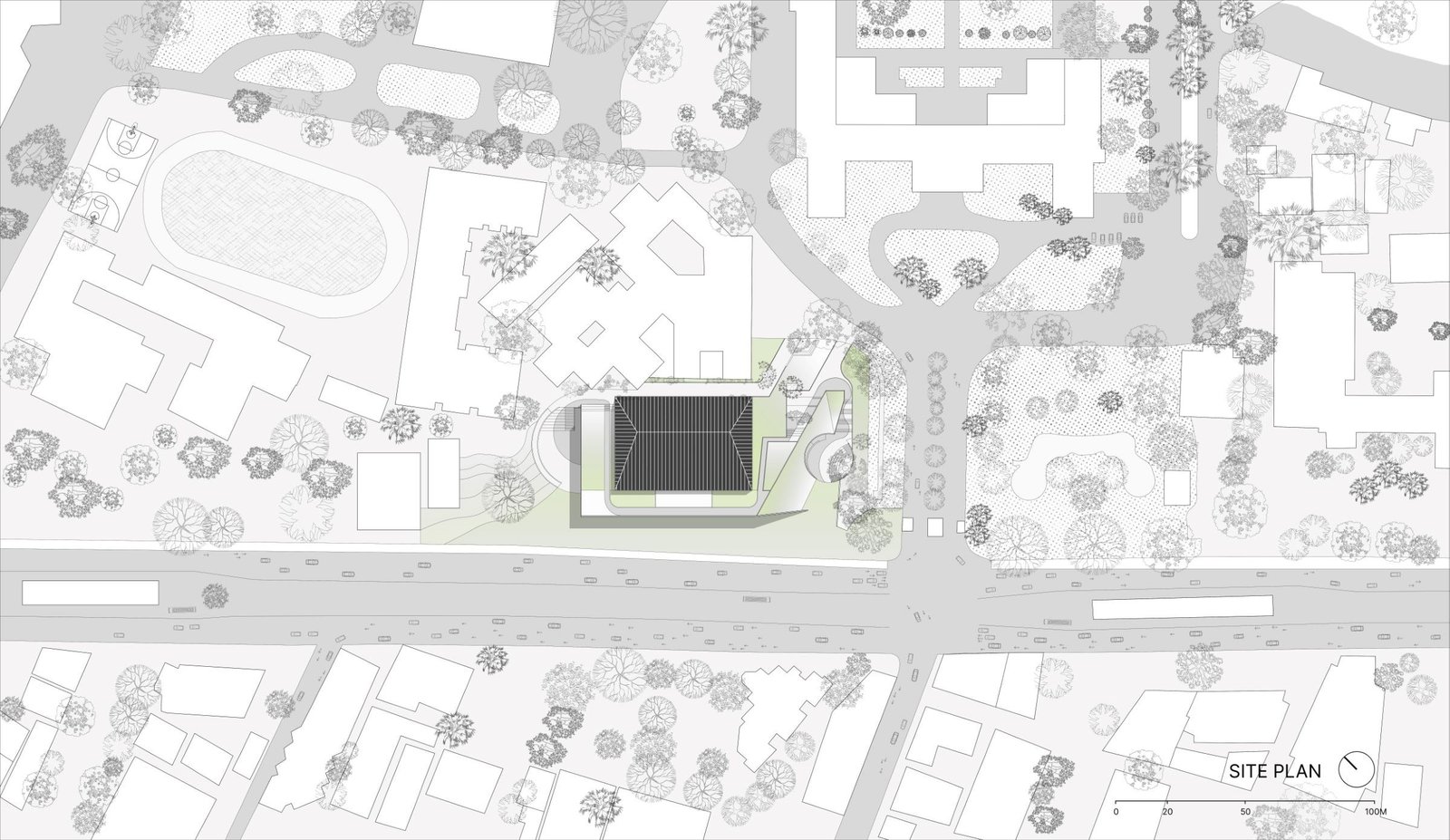
The site was one of the last residual spaces of green lung space in an 100 acre University Campus that also abutted one of the main arterial roads of the surrounding city.
In a way, the site had two fronts – the front along a busy 6 lane intercity road and another face towards the campus with its rolling greens interspersed with institutional buildings and cut off from the busy vehicular traffic just outside.
Two divergent views emerged from the clients. Whereas, the Chancellor of the University was sceptical of having an insular sports facility at the front of the campus, thus blocking the view of the campus from the city and also compromising on the last tract of untouched green spaces in the campus, the Vice Chancellor was a strong proponent of having the building in this location as it had the potential to redefine the street outside and provide an opportunity to assert the presence of the university in the city. This would also be a facility built to commemorate 75 years of the university and thus should have a prominent place in the campus and the city.
These two contradictory views, one of absence and the other of an assertive presence, were taken as an armature to generate the design.
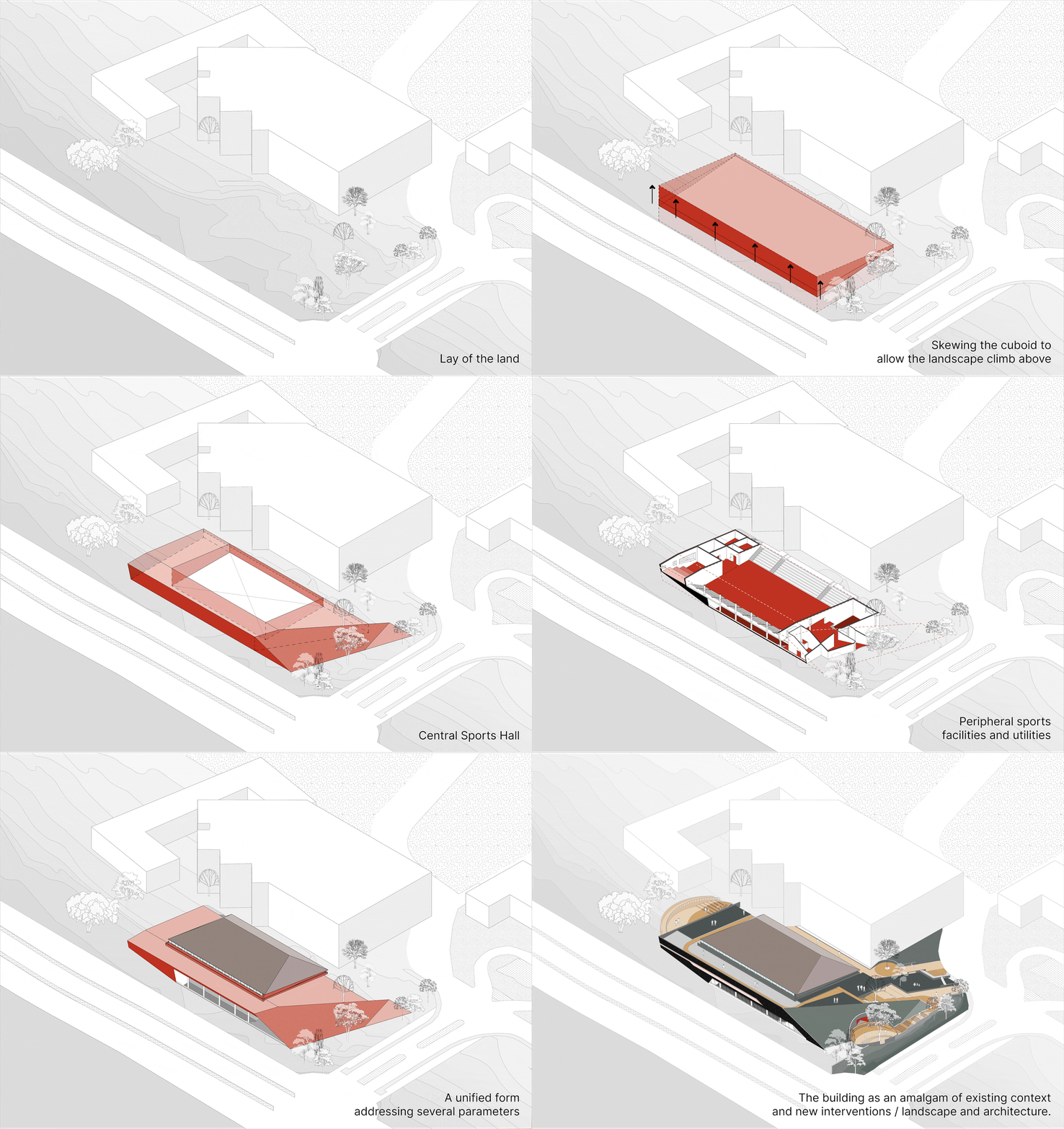
The site had a natural gradient, with the city road being on the lower side, and the university slowly rising to about 4 meters and beyond above this road.
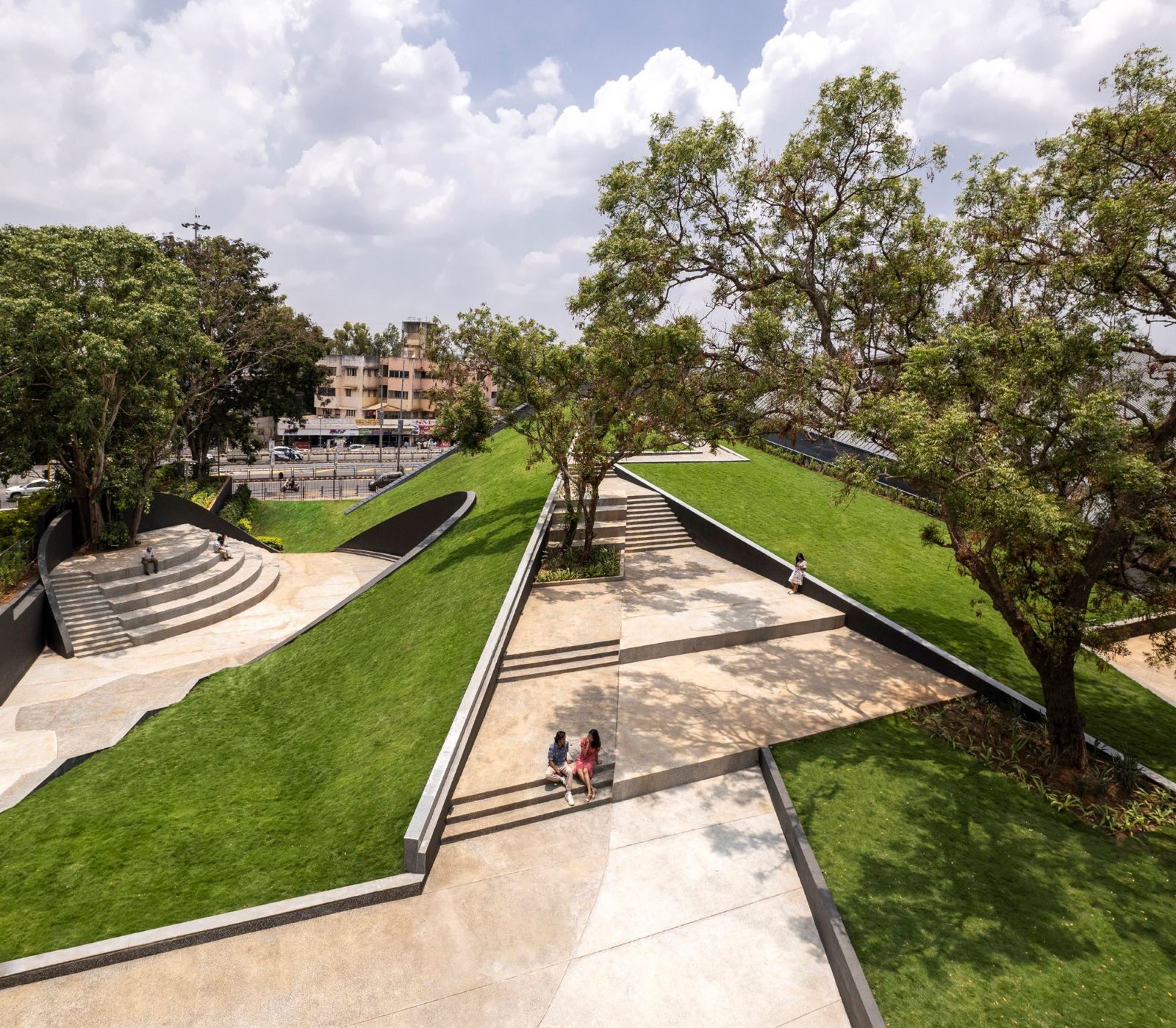
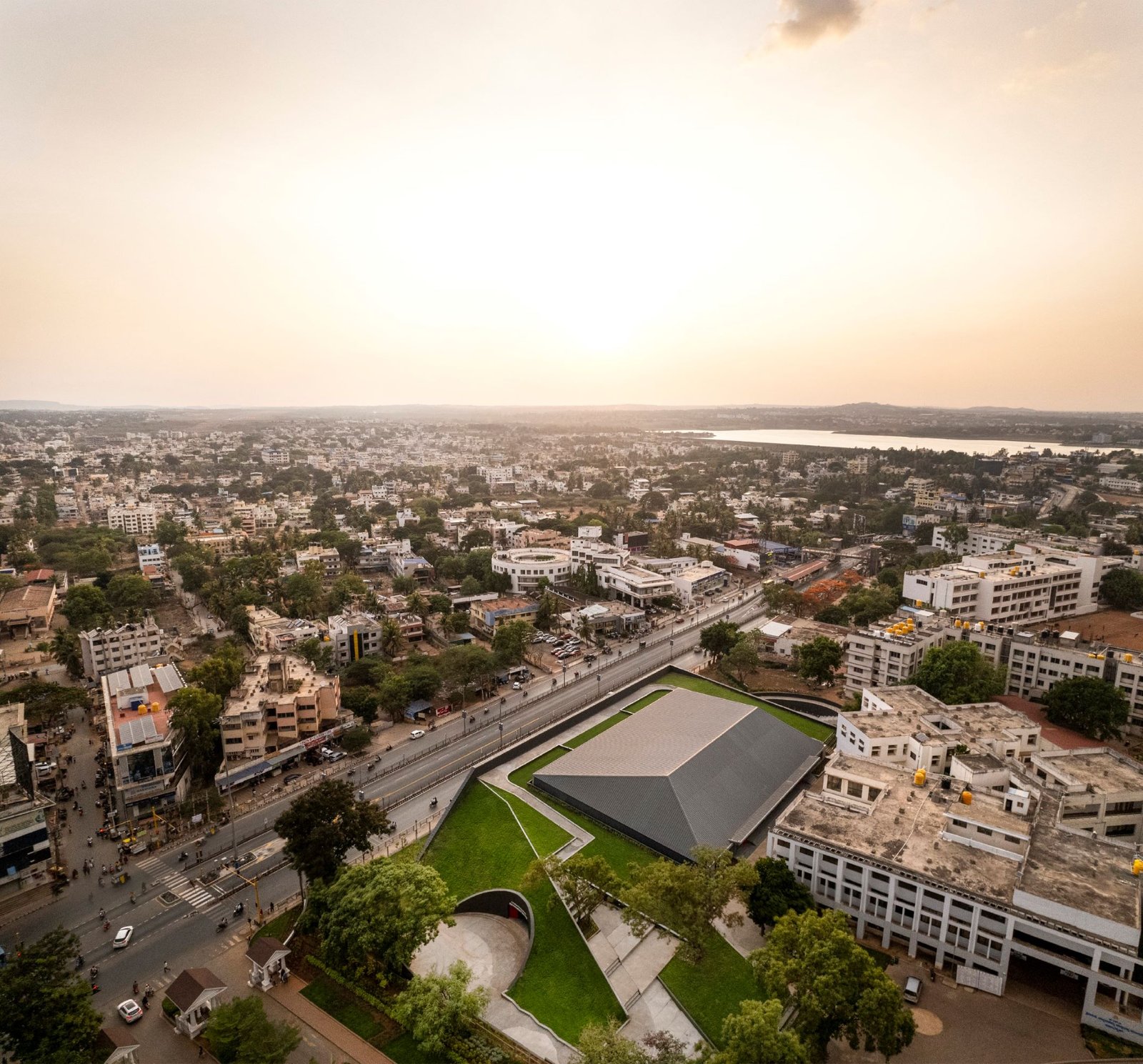
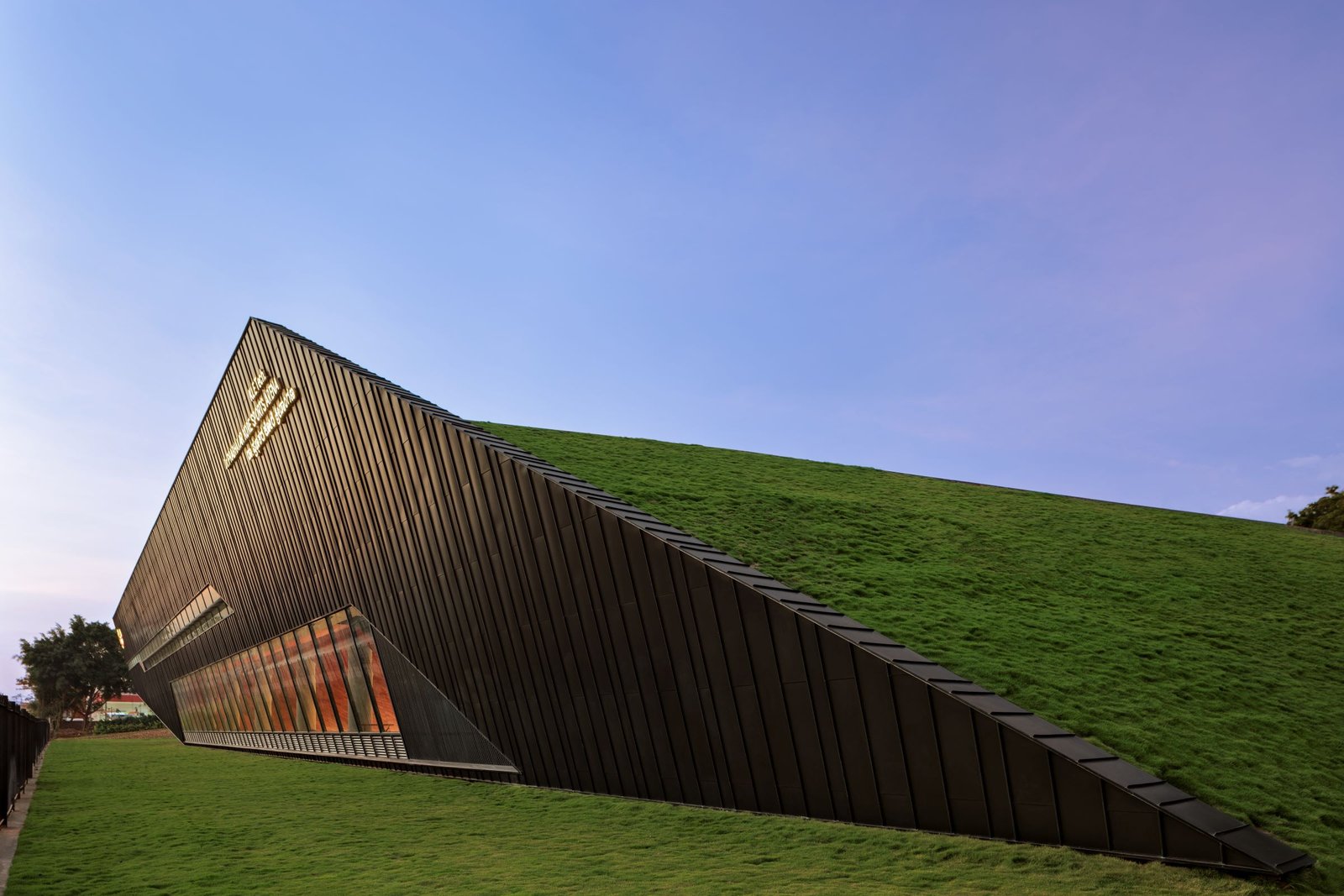
This sectional shift allowed the building to sink into the ground from the campus side while also emerge as a distinct formal gesture from the city side.
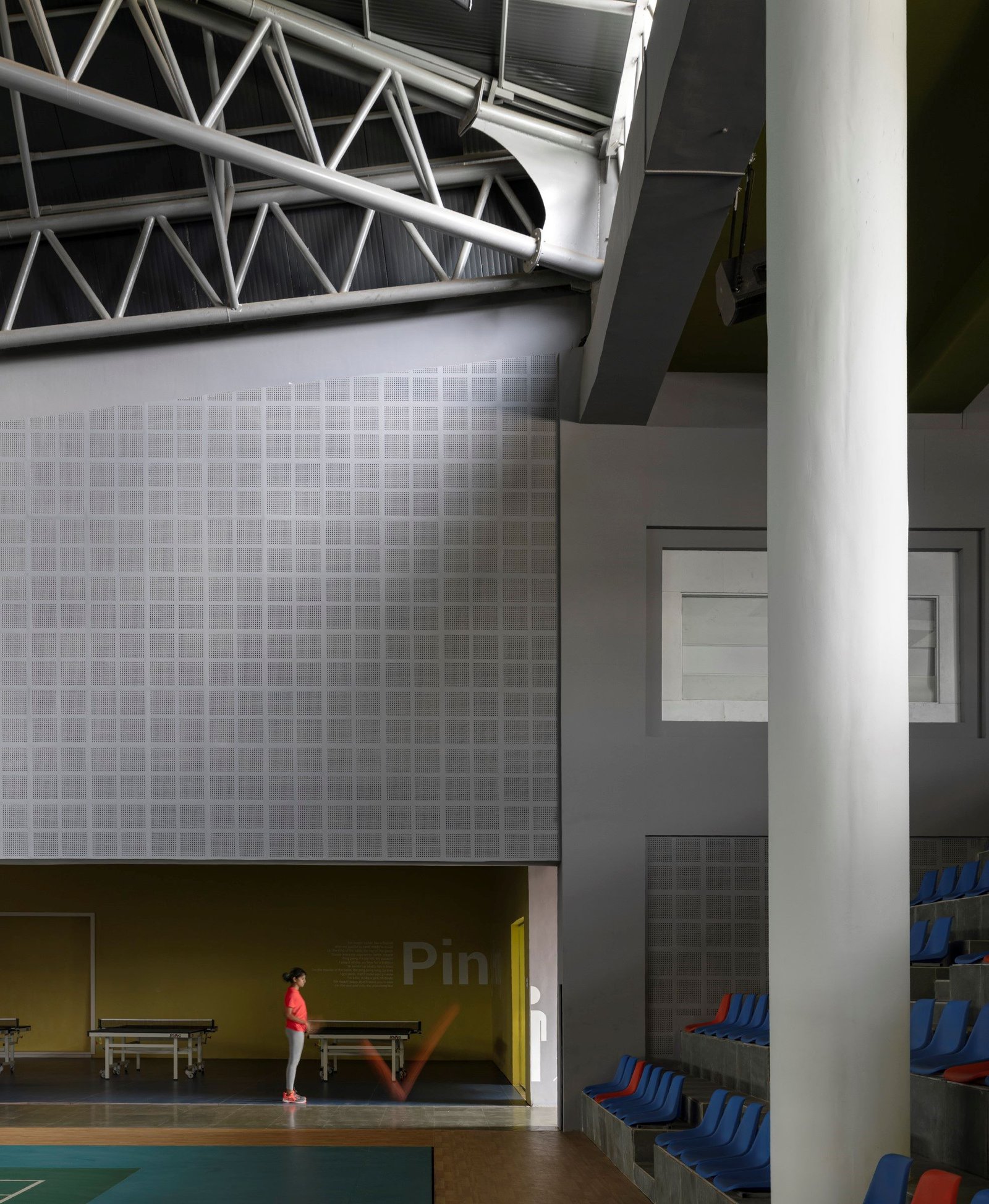
Sports facilities have to contend with a highly restrictive volumetric spatiality that is often dictated and prescribed by codes and rule books. Every sport needs spaces that leave little or no room for interpretation in form and size, and thus, in this case too, the interior spaces were dictated by the sports facilities it is supposed to house.
This created large volumes of space that could potentially overpower the site, and sinking these into the ground allowed the landscape to take precedence over the building from the campus side.
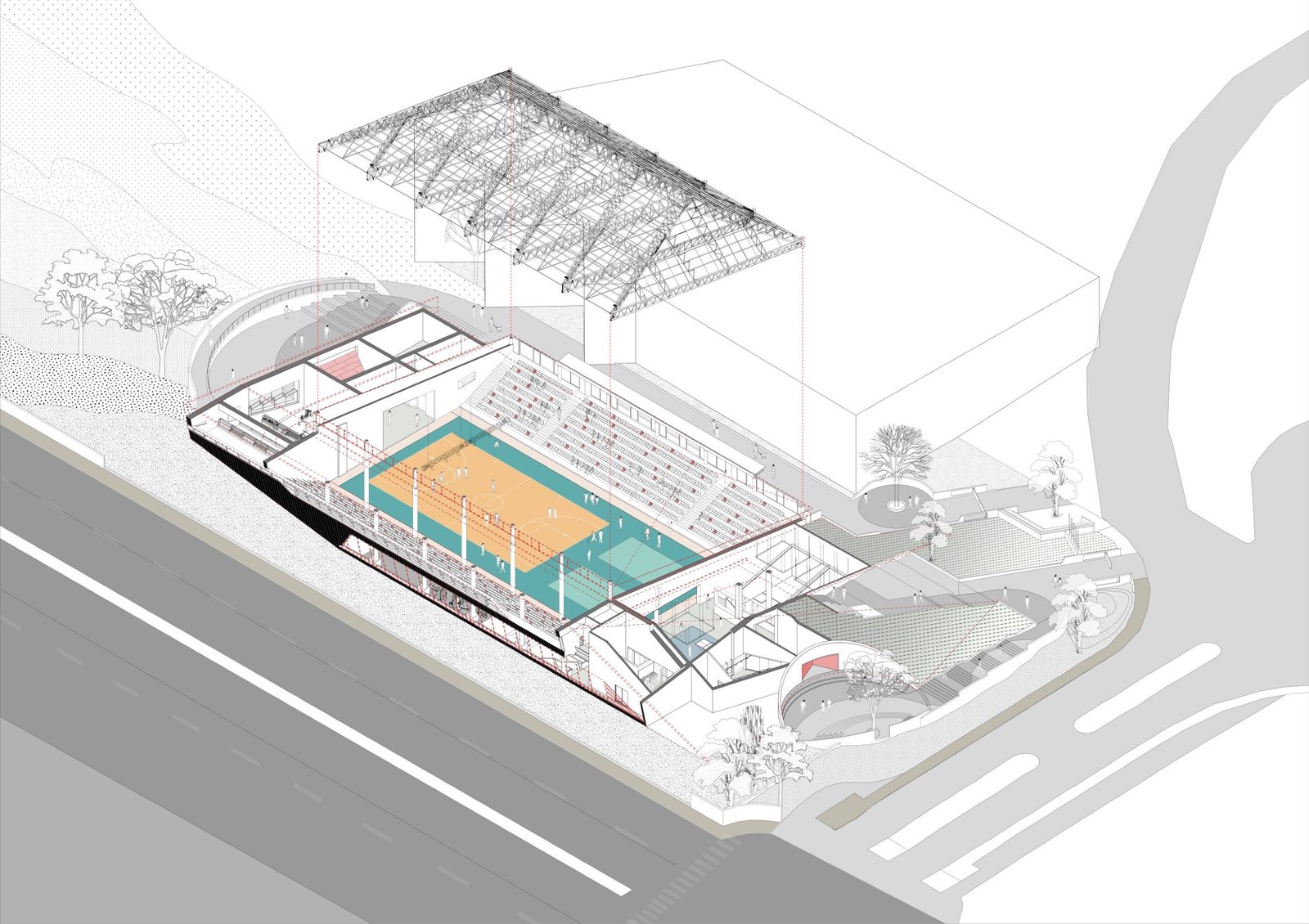
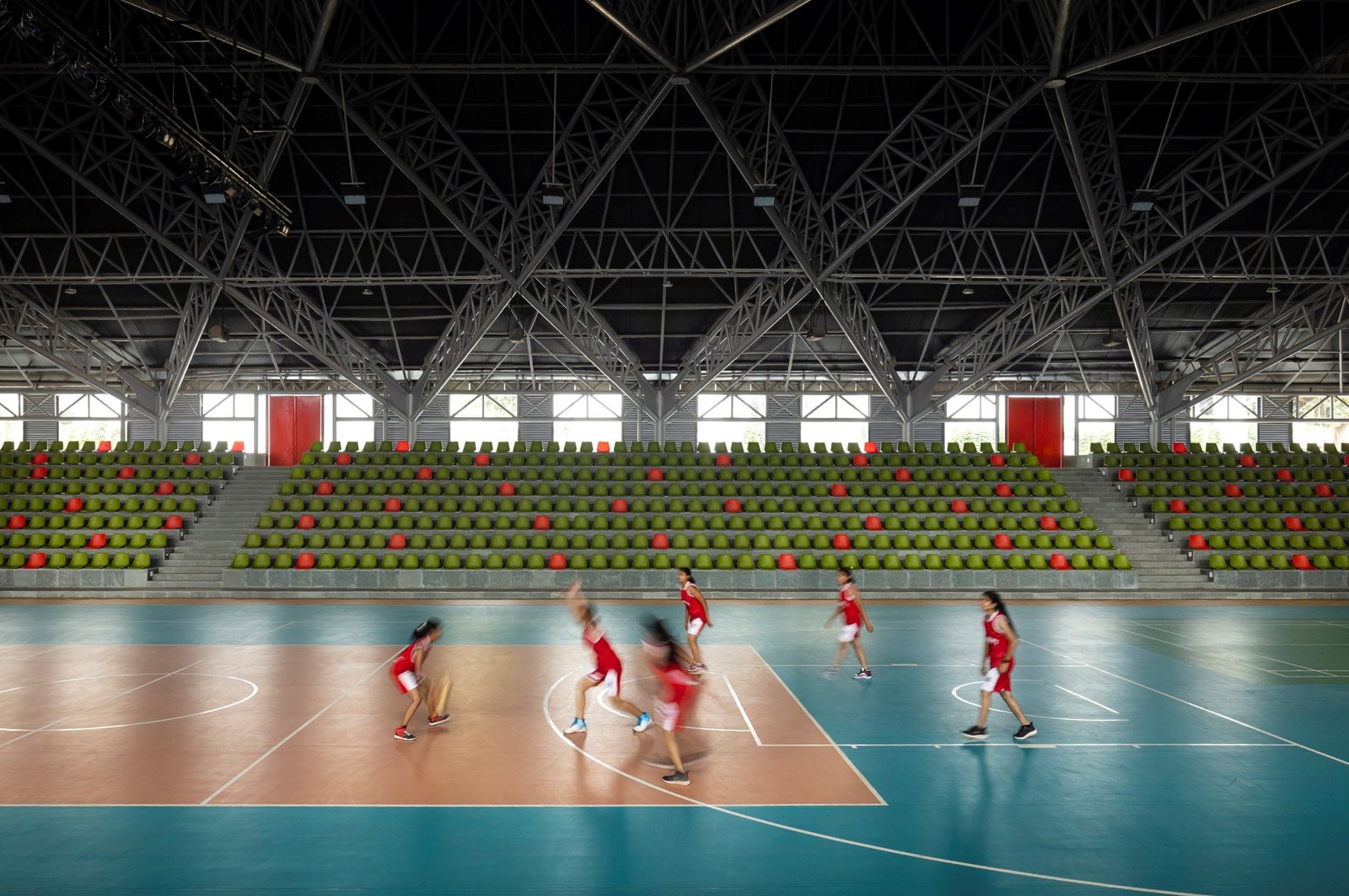
The Basketball and badminton courts are identified as the two anchor spaces in this mix of programs as they required larger spans and high ceilings. These are clubbed together as a central court around which all other facilities including the ancillary ones such as changing rooms and toilets are arranged. Spectator stands along the longer sides of the central courts are meant to house 1300 spectators. The building is also meant to serve as a convocation hall when close to 3500 people would be seated in the central courts and its two flanking stands.
The central courts are capped by a pyramidal steel roof, while the periphery has a green roof that melds into the campus landscape. The edges of the building are thus allowed to blur into the landscape and the figure merges into the ground.
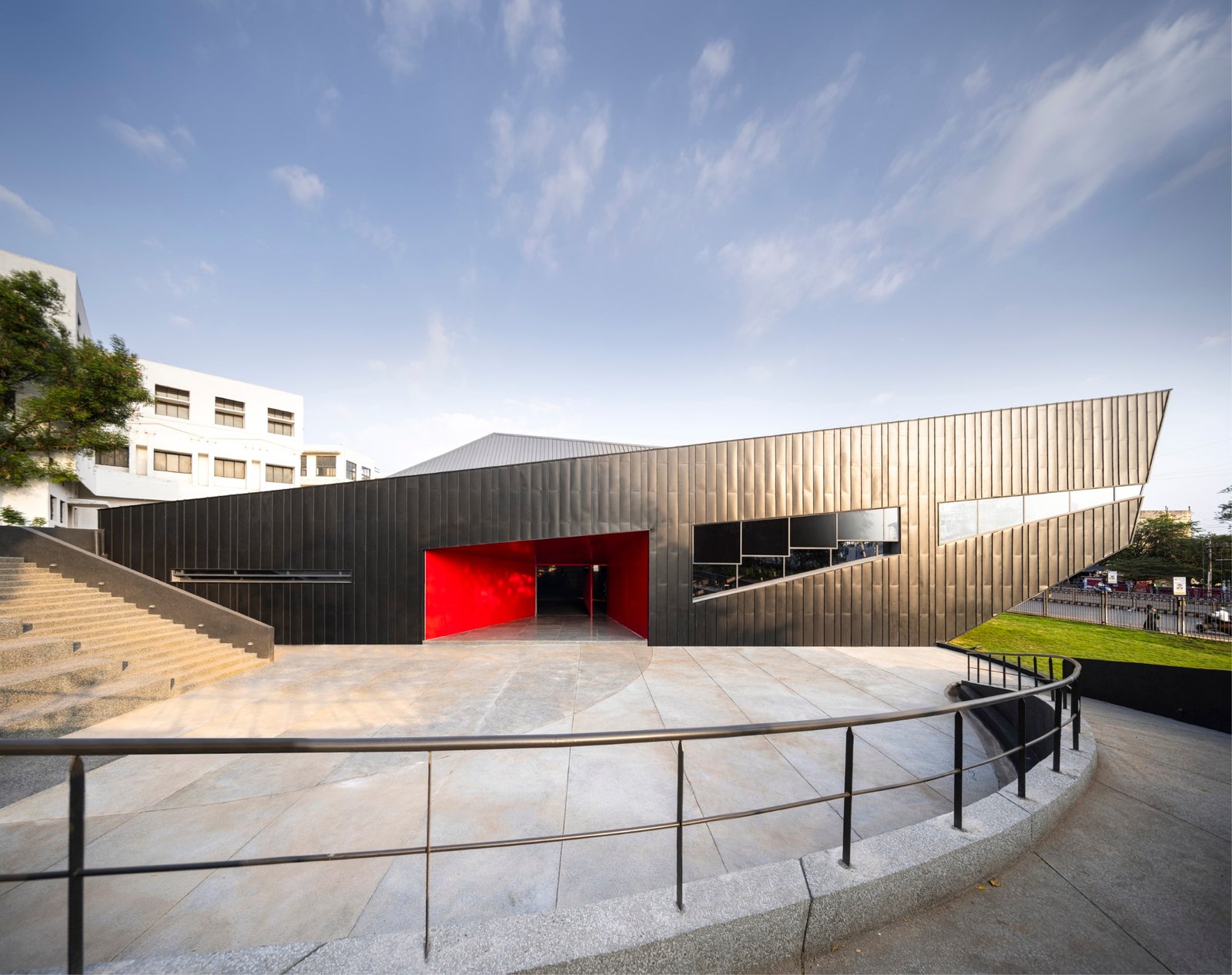
The building is accessed from the campus through two main plazas – the east plaza and the west plaza as well as from under the roof truss in the central courts area from the north.
The east and west plazas, as well as the north plaza are designed around existing trees and contours and they act as spaces that extend the campus social life to engulf around and even atop the facility. The building exhibits two different facets from the interior and exterior. Whereas from the exterior, it is an engagement with the ground plane and an extension of the campus urban space, from the inside it is an insular space that responds to the program.
Ever so often, sports facilities in a university are used by only the very few who actually play those sports, and these buildings do not engage with the larger community. This is sought to be dispelled by treating the building as much as an urban and a landscape intervention as it is an interior scape for an active lifestyle and competitive sports. This is achieved by creating plazas, pathways and gardens that engulf the building and make it indistinguishable from the campus greens.
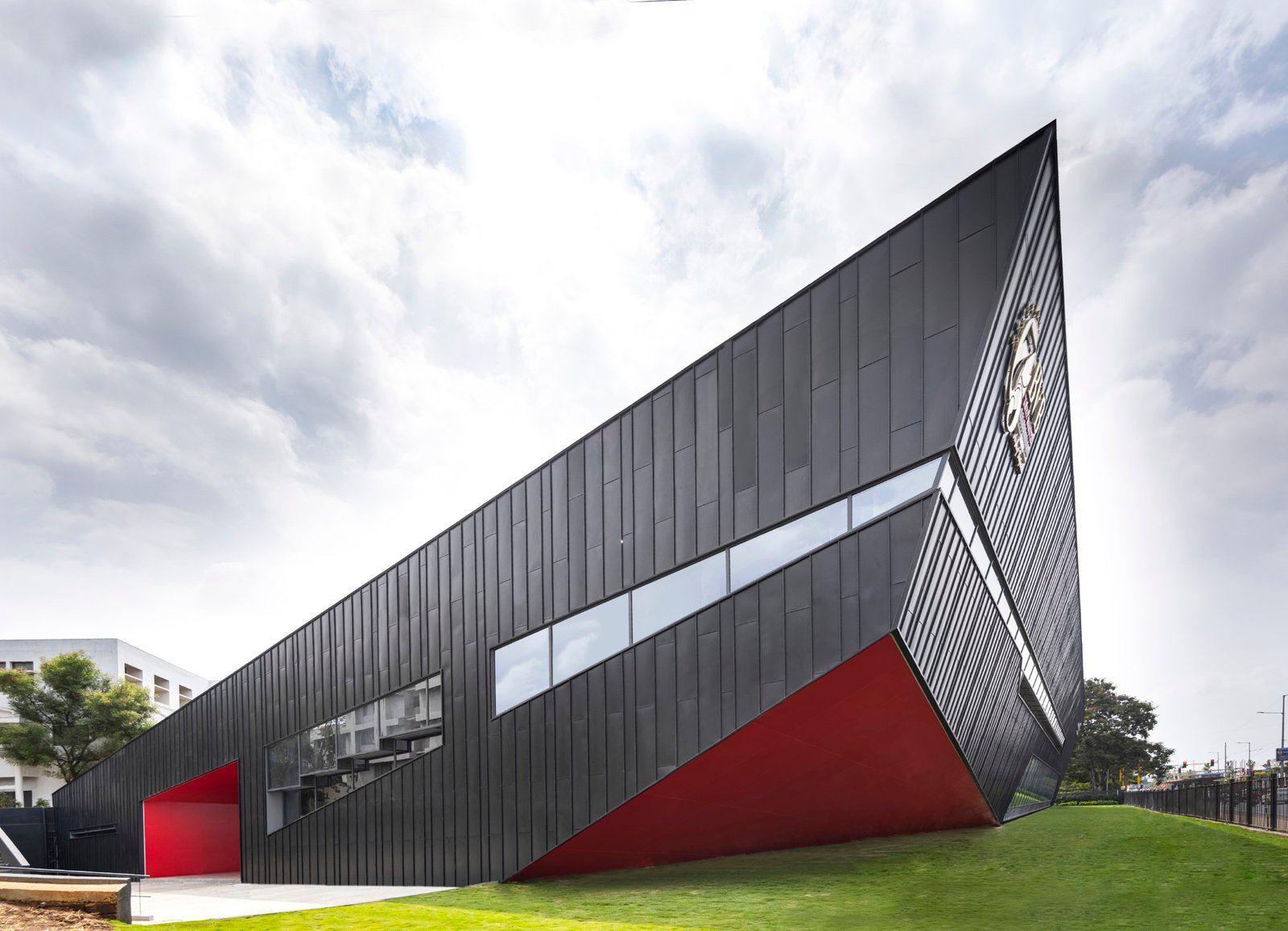
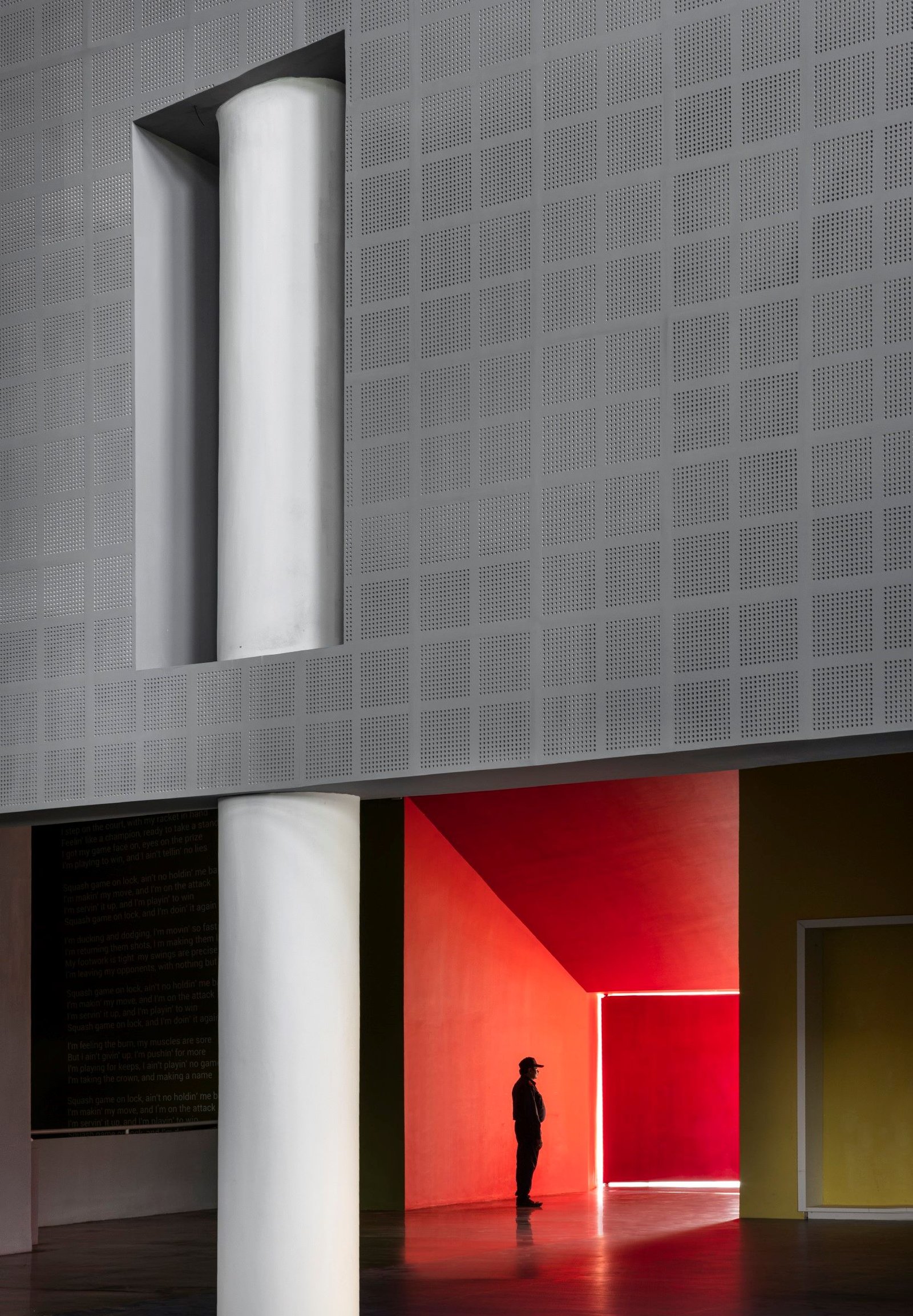
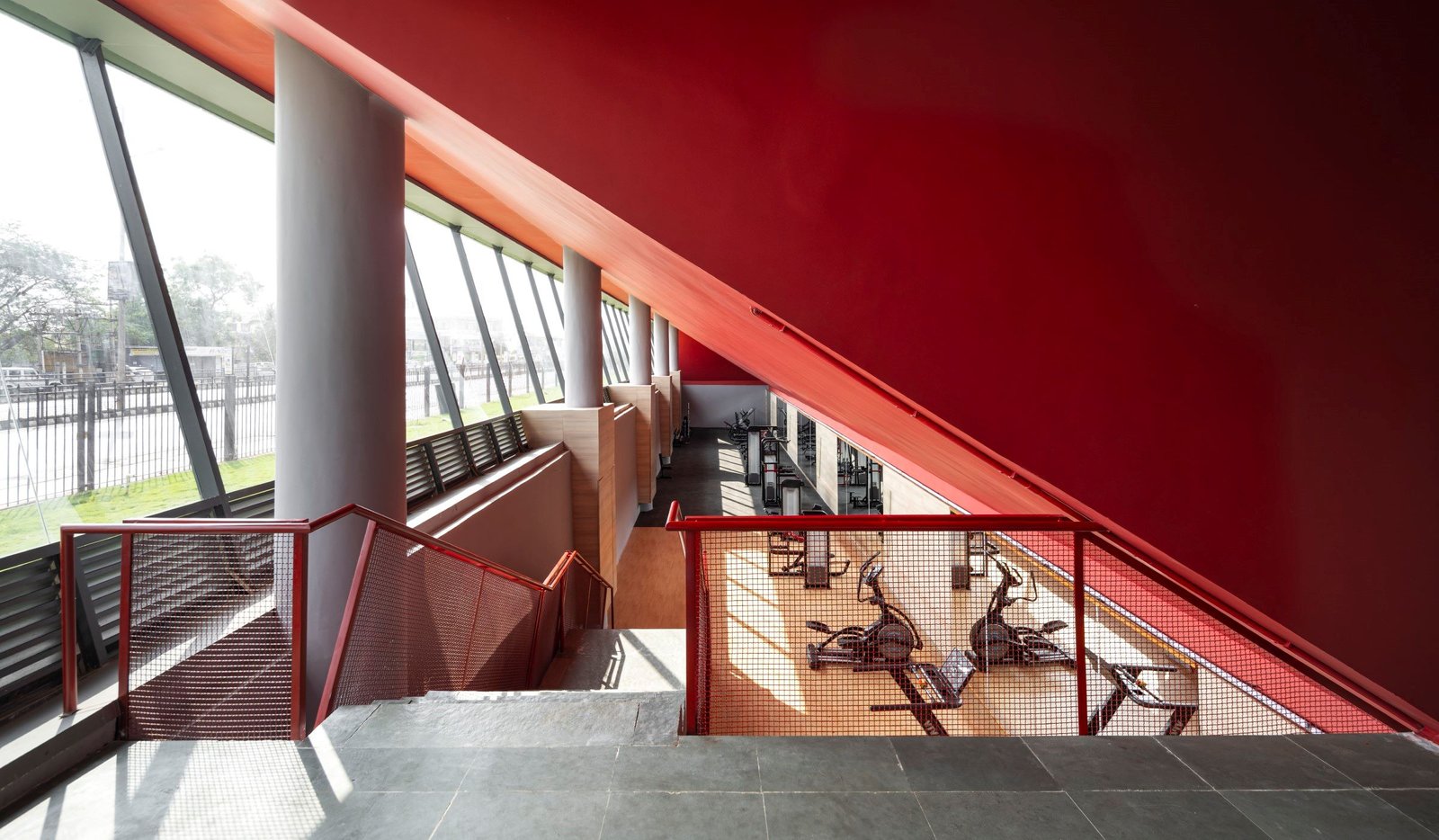
From the arterial road of the city, the building is seen as an imposing facade of zinc cladding and glass that emerges out of the ground from the east side, and rises to almost float above the landscape on the west end. The west end is upturned as the building turns the corner, and this gives a levity to the form. This upturned corner with its deep red underside creates its own nook underneath, an interstitial social space that users can script in their own way.
The building when not submerged in the greenscape is clad in zinc sheeting that creates a dark looming presence that accentuates its stark form and also animates it as it catches the sun at various times of the day. The playful interiors of this dark shadowy form are hinted by the touches of red that accentuate the entrances and some undersides of the spaces that reveal themselves ever so slightly.
The building firmly establishes itself as a presence on the road and yet disappears in the ground as one enters the campus.
The sports arena is a building which revels in the complexity of its brief and its urban siting and becomes a space that is at once simple in layout yet layered spatially.