Site and Program
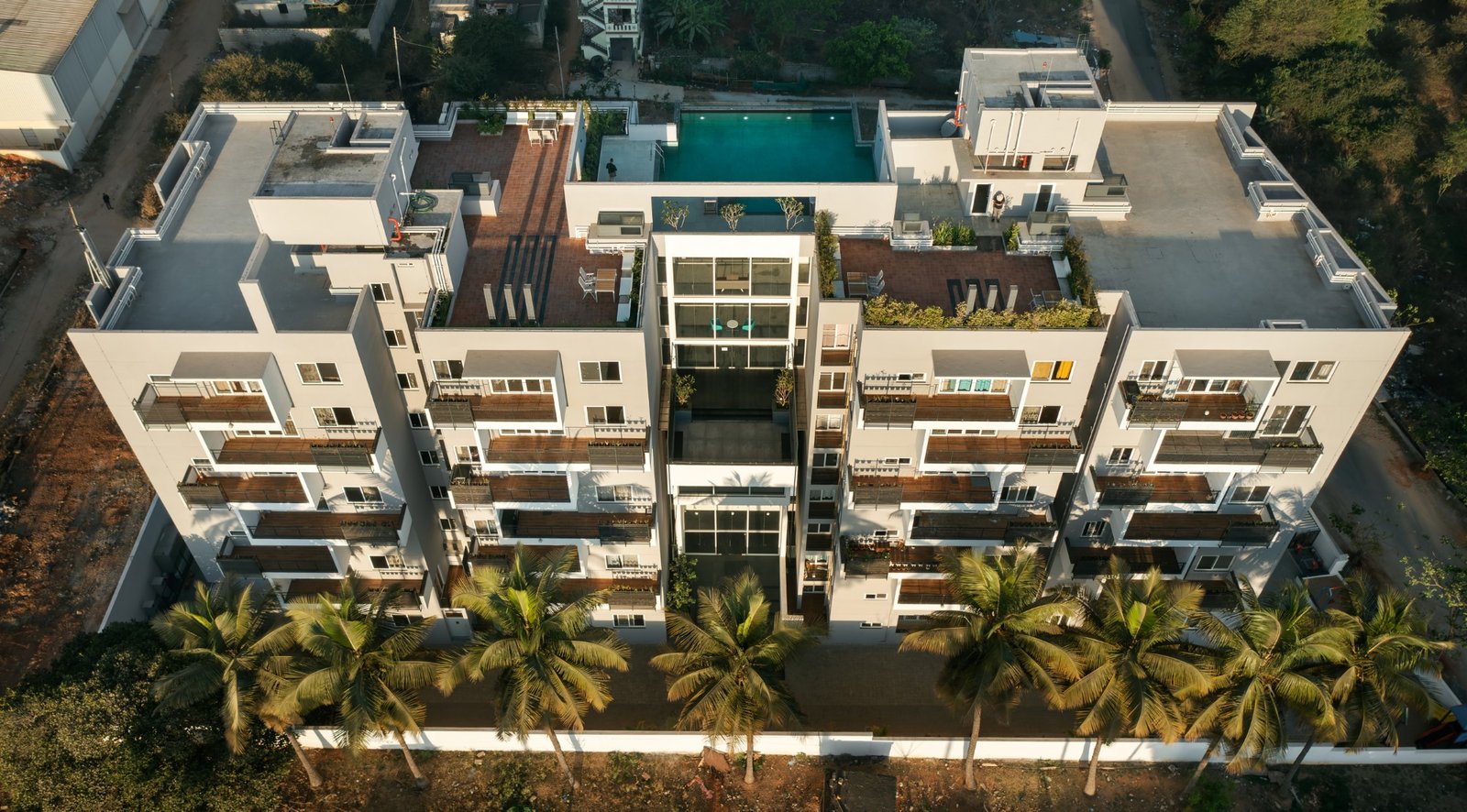
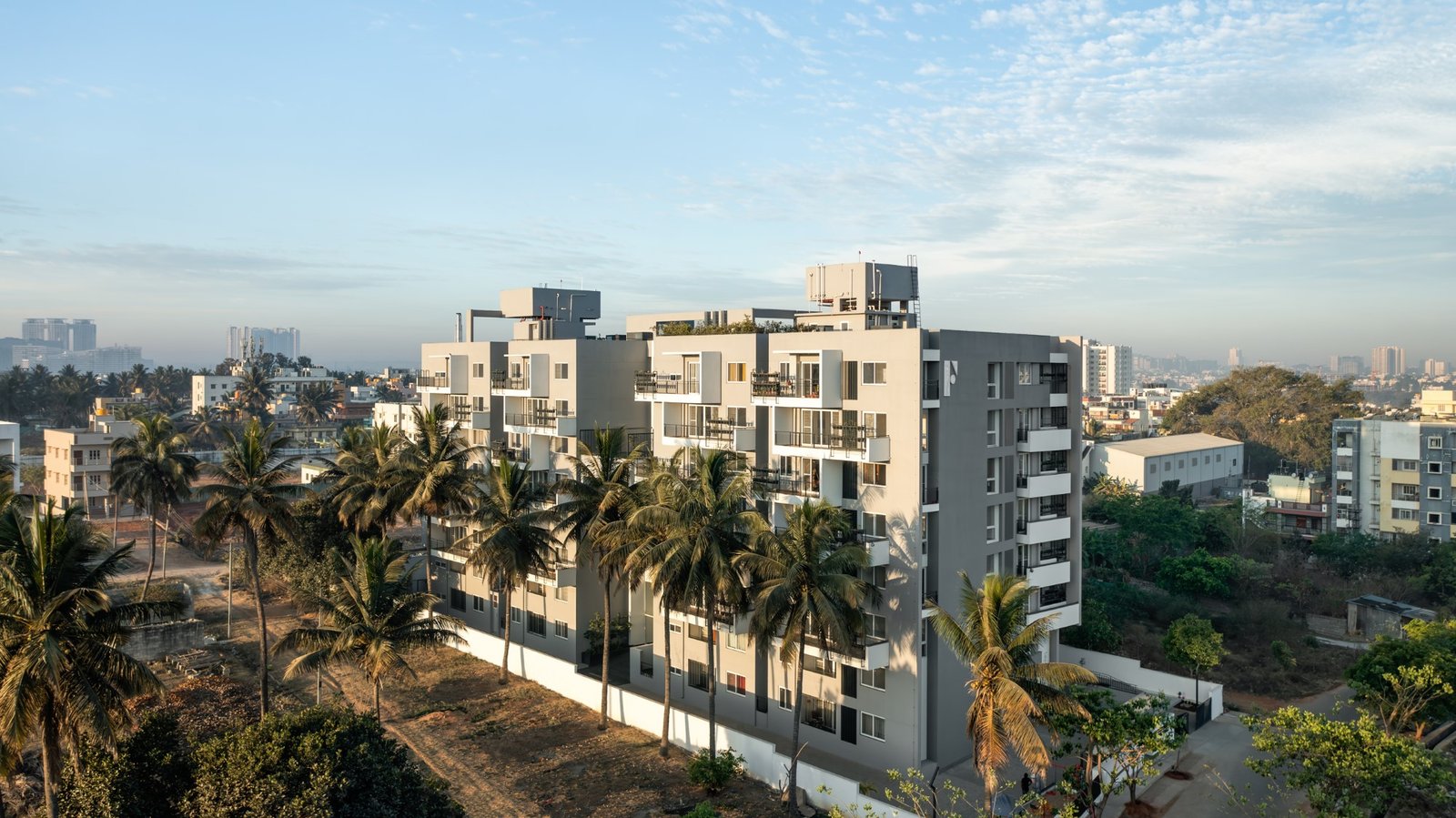
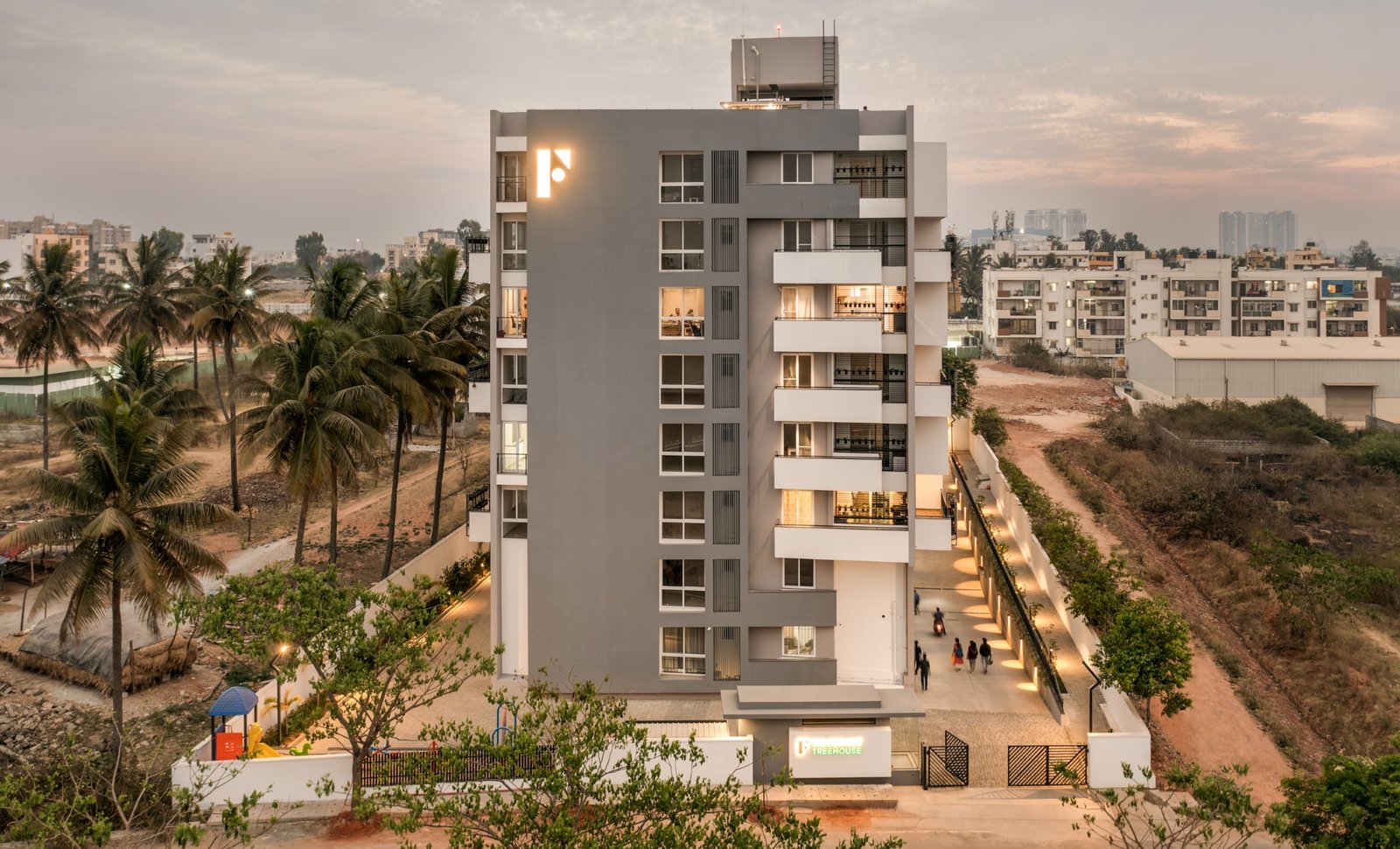
The Treehouse is one such apartment building on a 2500 sq.mt suburban site in North Bengaluru. Typically, these buildings follow a formulaic route – that of maximising the saleable area while providing two- and three-bedroom residences with some social facilities.
Design Strategy
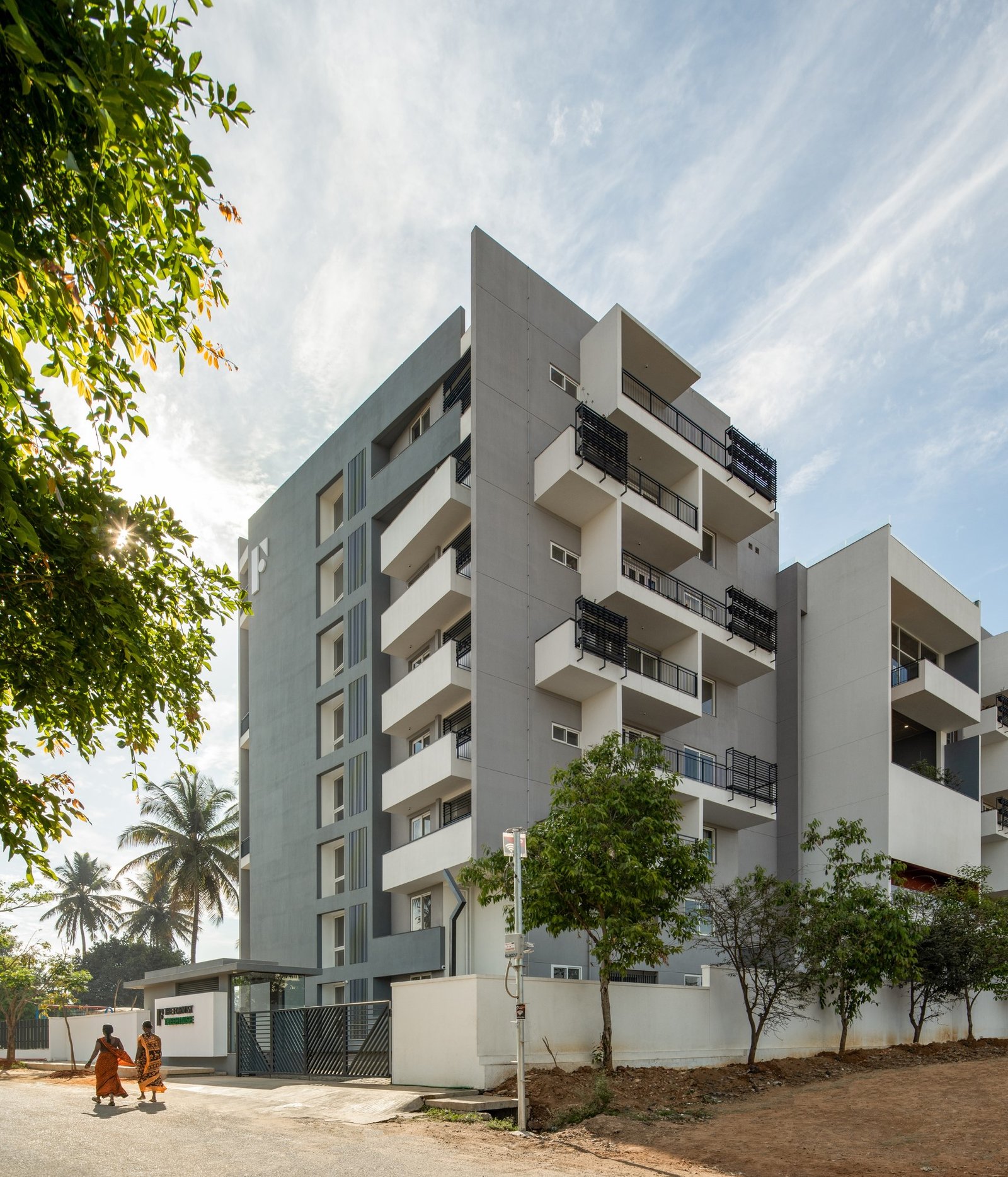
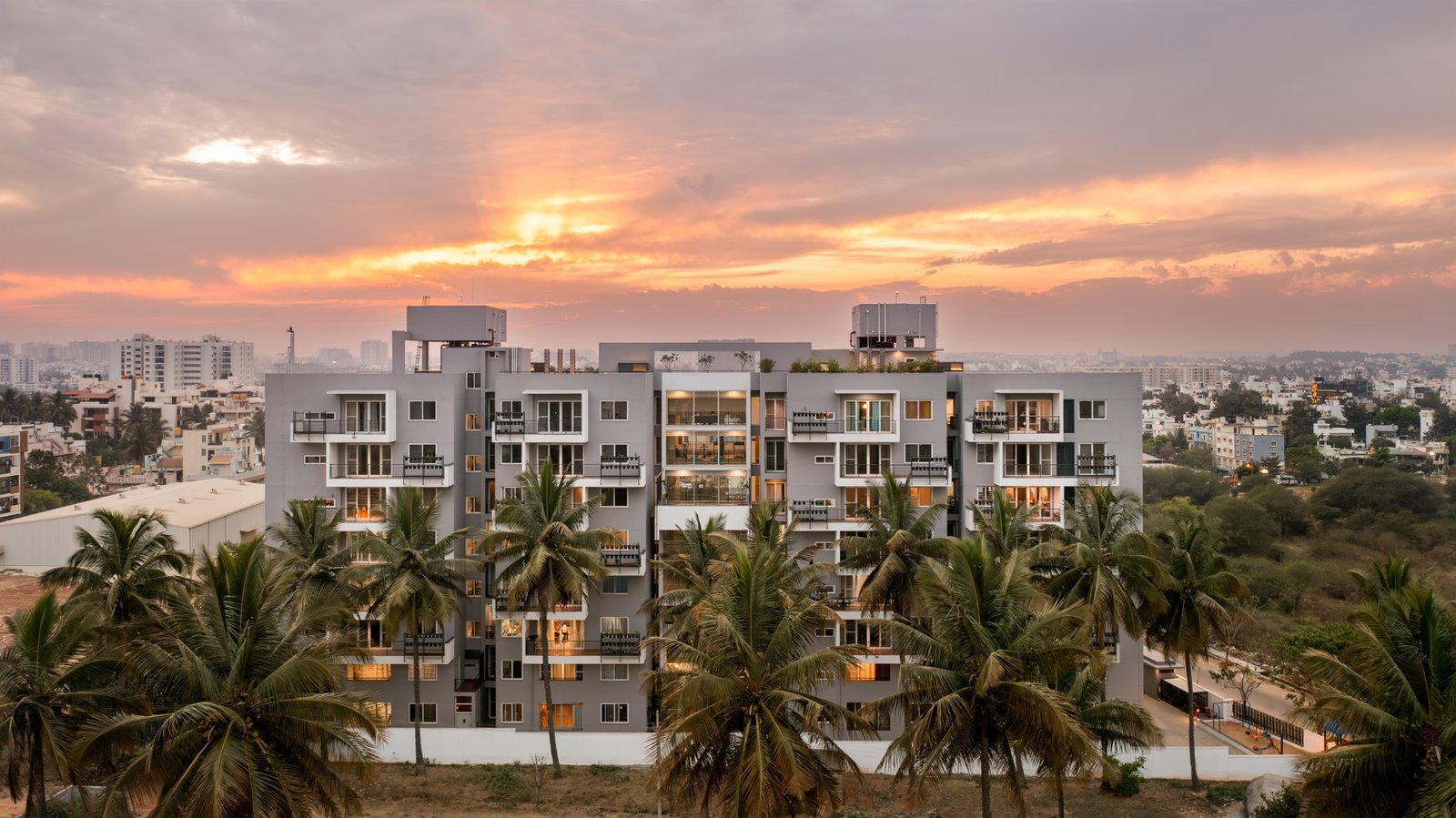
Here, 56 flats are laid out over 8 floors in configurations of two- and three- bedroom units. Each flat is optimised for vastushastra as well as for natural light and ventilation. What starts as a generic response to a speculative brief, is further nuanced by local interventions to accepted micro typologies such as the balcony, the lobby and the club facilities.
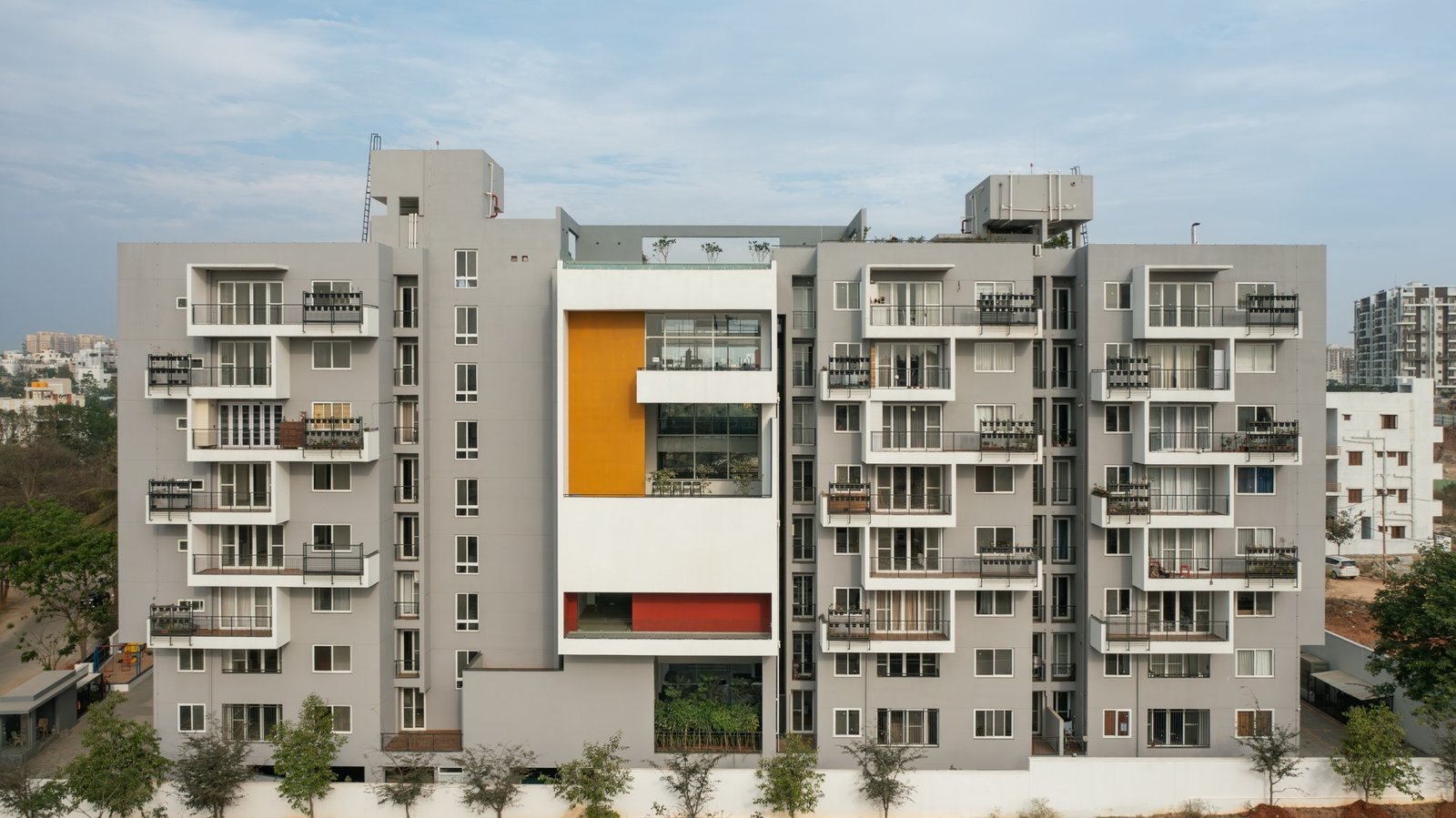
The balconies that front the main living areas are staggered in section so that they have double heights for at least half of their length. These balconies are further fronted with railing that are integrated with metal scaffolds for a potted edible landscape. Here, residents are encouraged to grow their own vegetables in their balconies and provisions are made to enable them to do so.
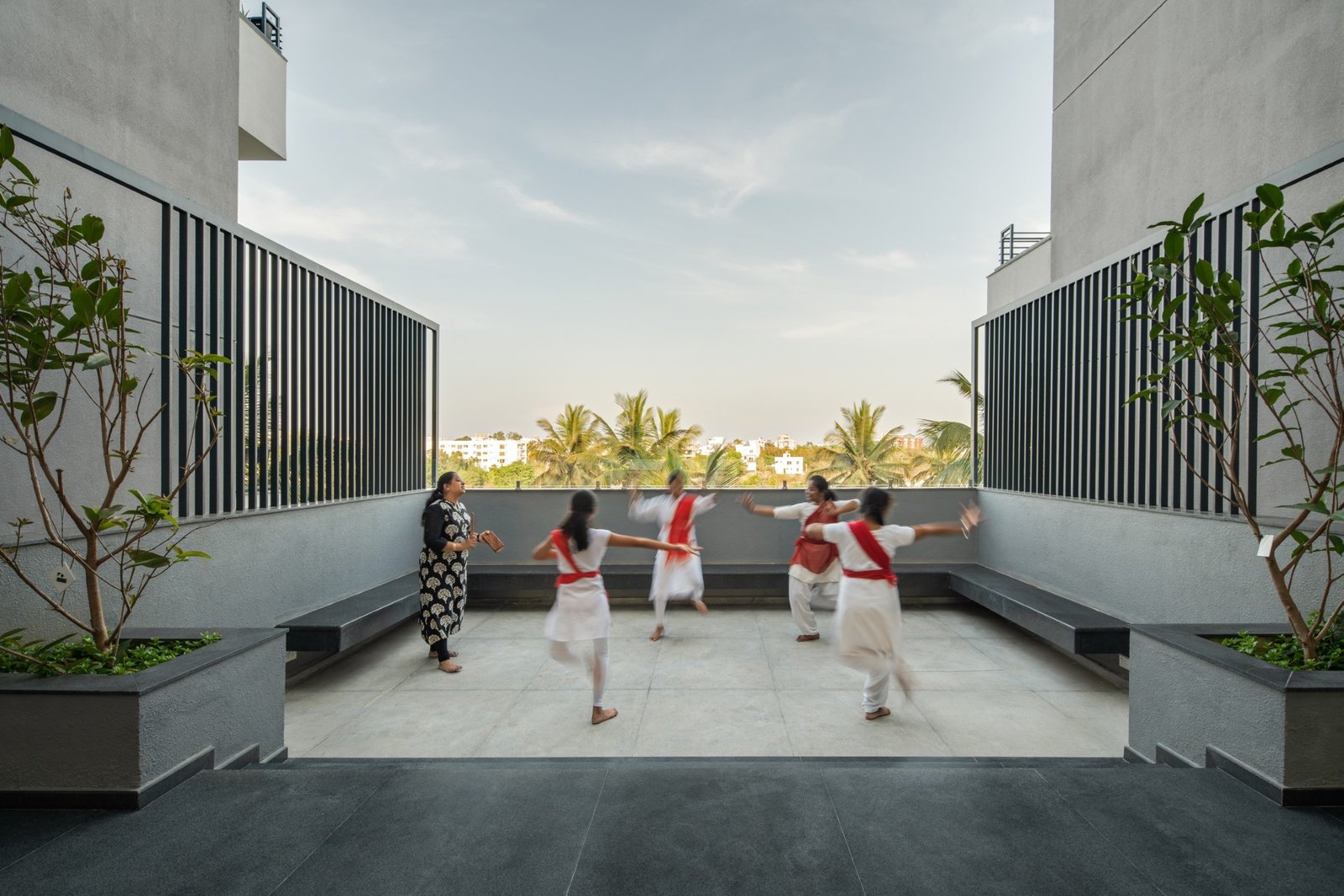
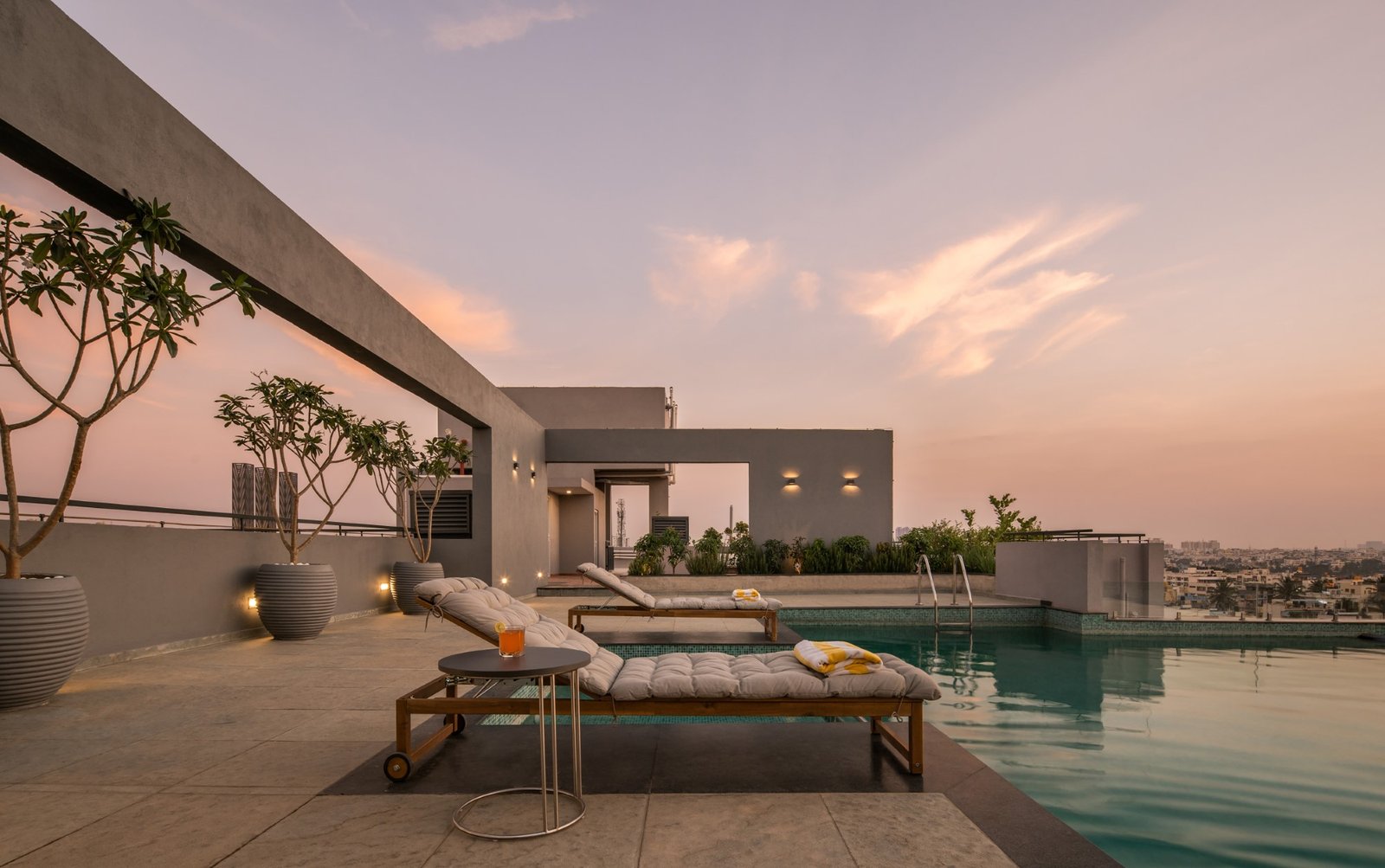
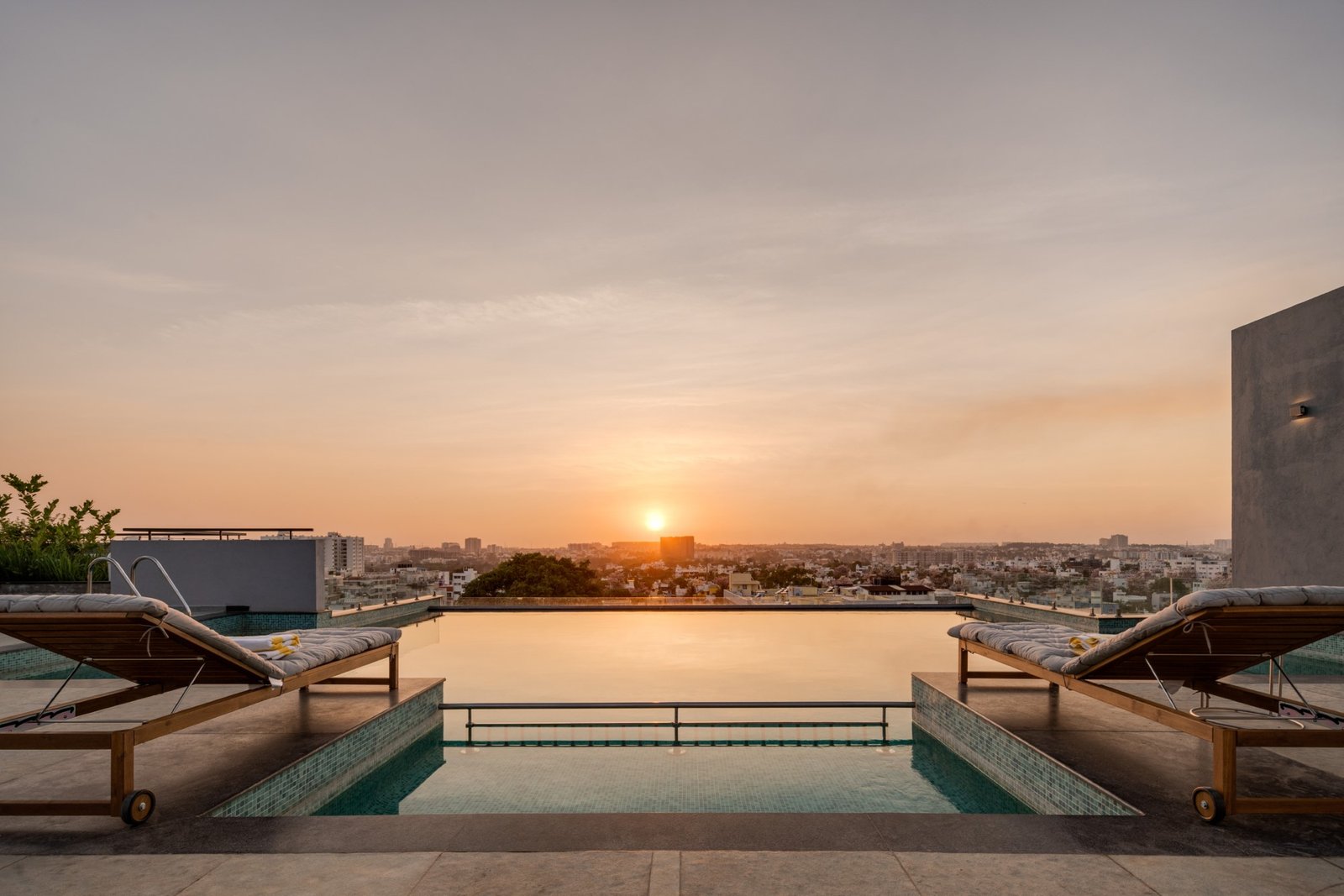
Treated water is used throughout the landscape of the building. Landscape is not merely decorative, but also is performative. Terrace gardens surrounding the pool are planted with fruit bearing trees ranging from pomegranate to mango and custard apple.
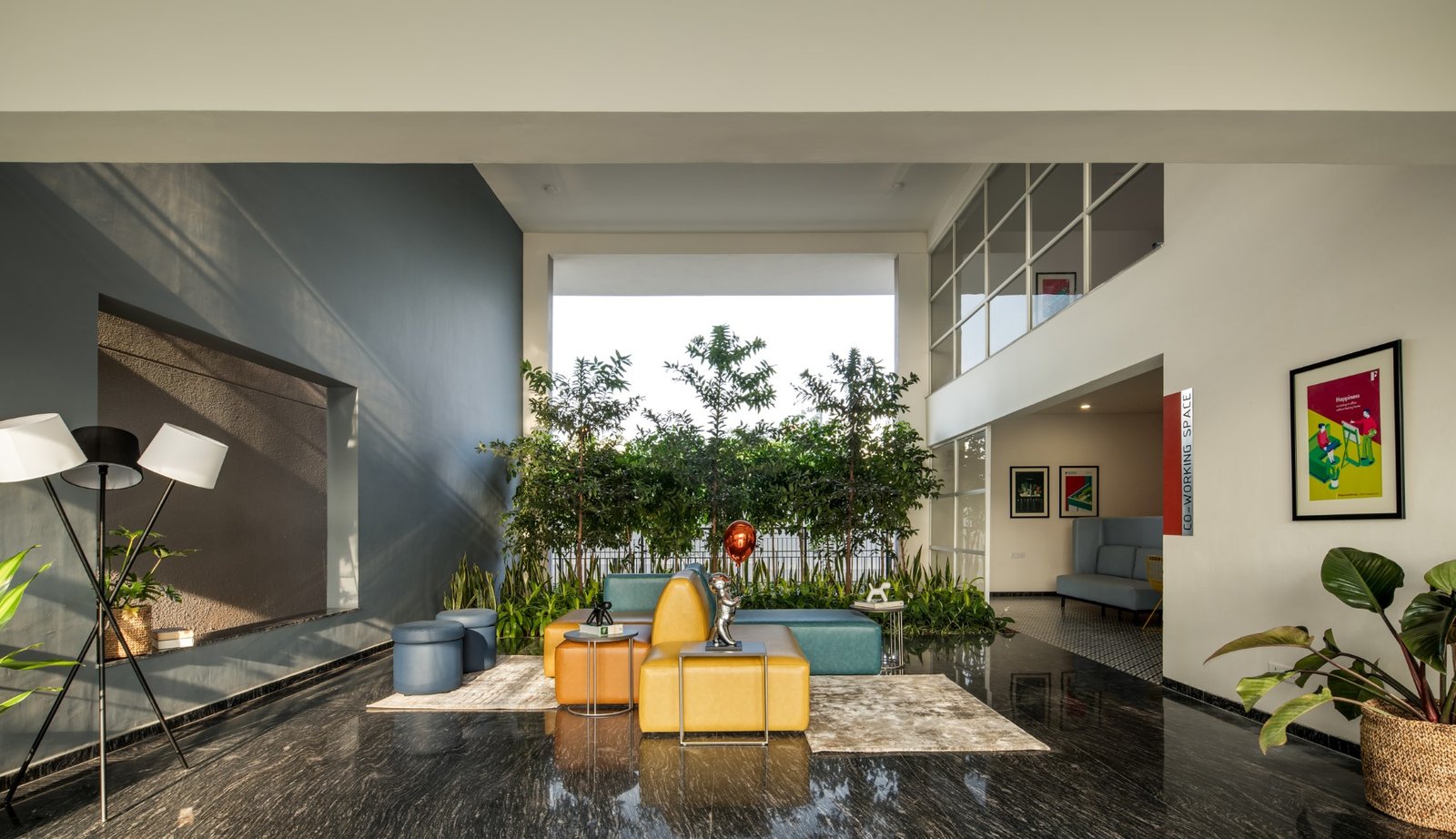
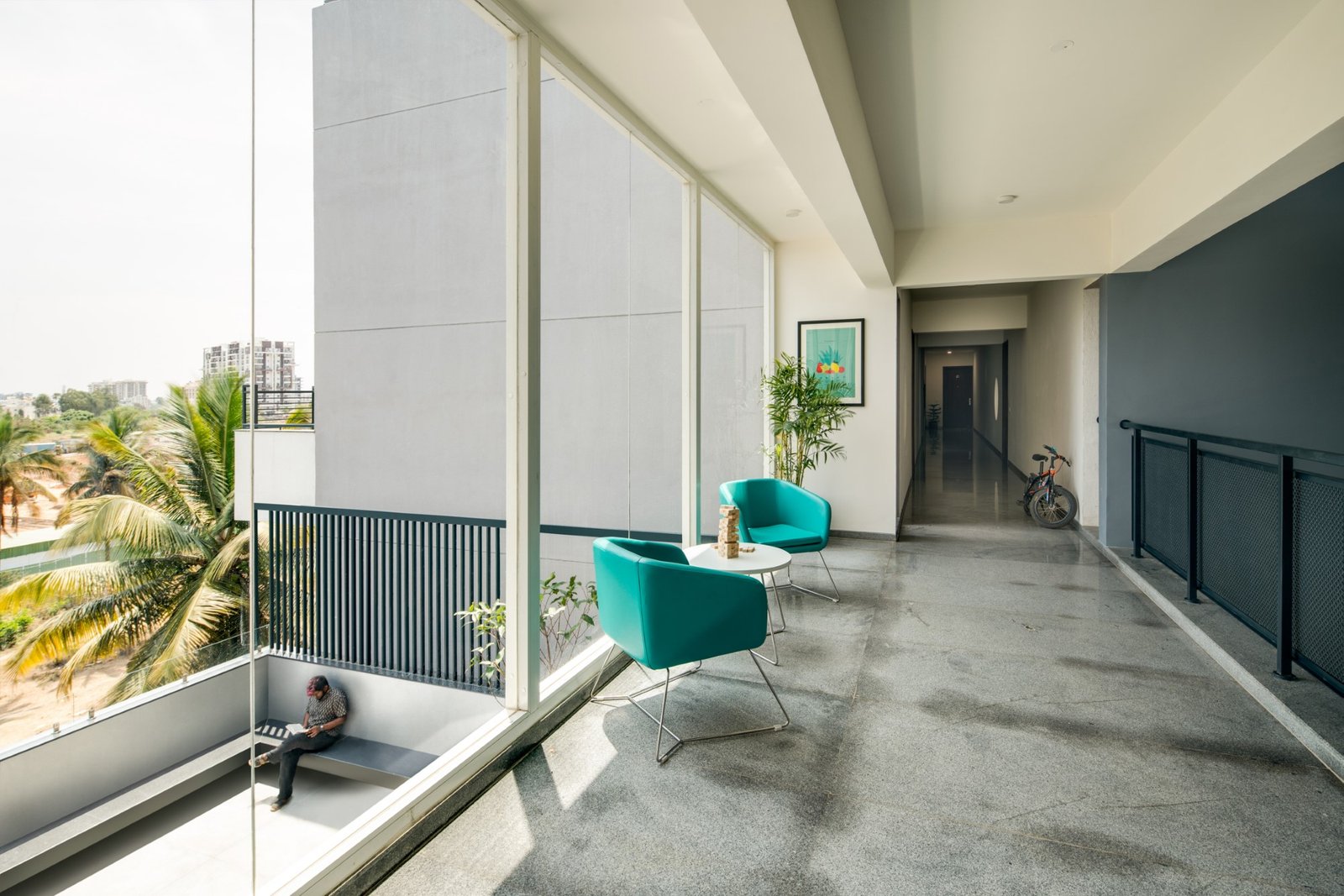
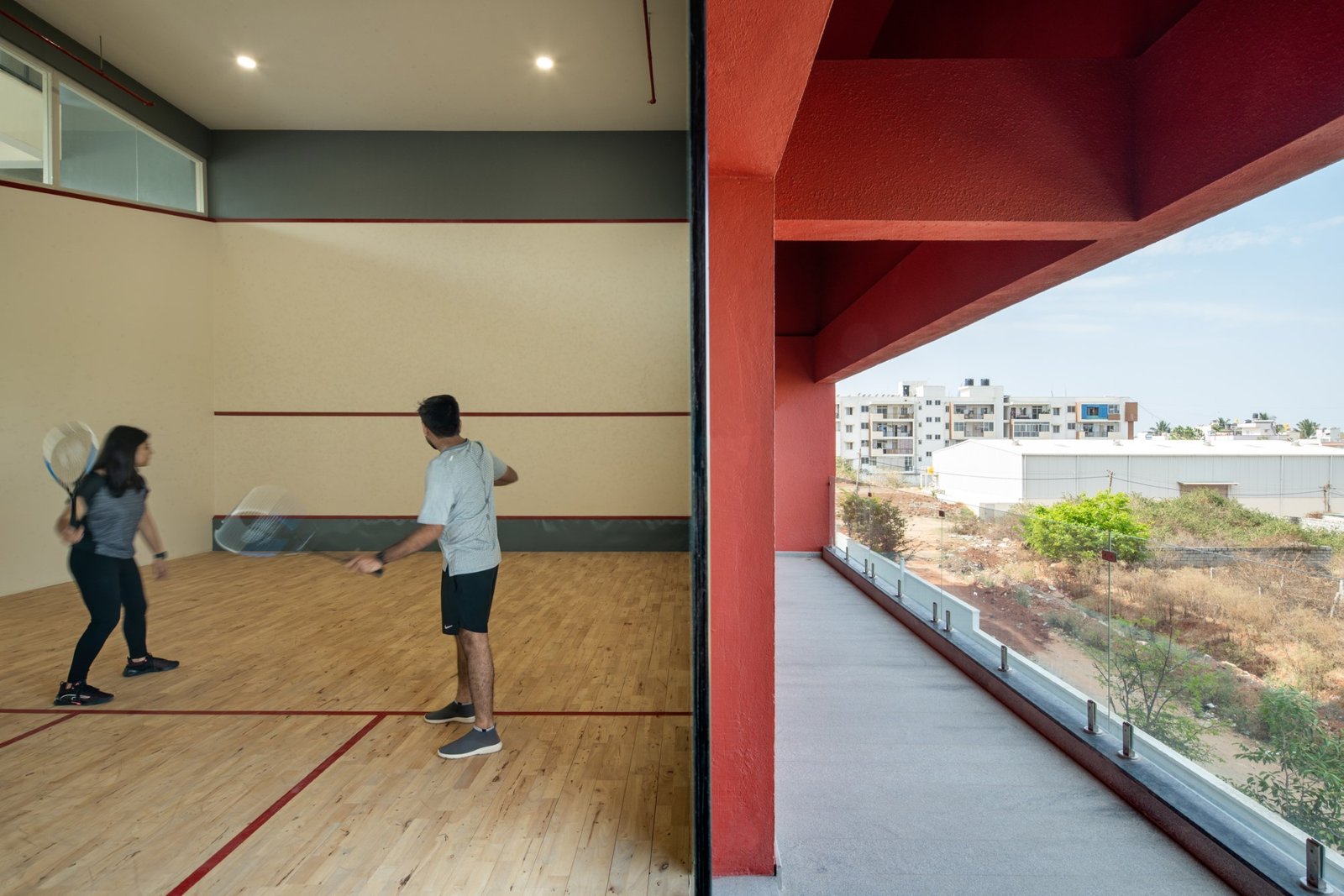
The defining feature of this apartment block is the Club. The Club, which is a ubiquitous feature of such developments, is reinterpreted as a vertical unfolding of social spaces that is located centrally in the layout. The social and sports activities in the building are layered vertically through the section so that each floor gets a social amenity. These club spaces, located centrally in the building like breakout spaces, allow for multiple visual trajectories across the vertical core. The club facilities are ‘de-clubbed’ and thus instead of a singular reading of these facilities as an entity, the whole building is permeated with this social space. The name treehouse also derives from this vertical displacement of recreational spaces. Like a child’s treehouse, these spaces are an extension of one’s home while also being physically separate from it.
The corridors of the building could be envisaged as small streets that pass through a central area that houses social spaces much like a Village Square. In a way, this reinterpretation of the club, allows for an active lifestyle that is centered around sports activities and social gatherings to permeate across the whole building.
The design, at its core, takes the familiar tropes of a suburban apartment building, and destabilizes them while also reinterpreting and rearranging them.