
Site and Program
The building was the product of an agreement between the University and the NGO where the University would give a site within its campus and, in turn, the NGO would build an auditorium that would be a shared facility with the university, The Foundation / NGO would also have offices and teaching facilities that they could use exclusively.
The brief called for a shared auditorium of 320 seats and a dedicated program of classrooms, office space and a library.
Design Strategy
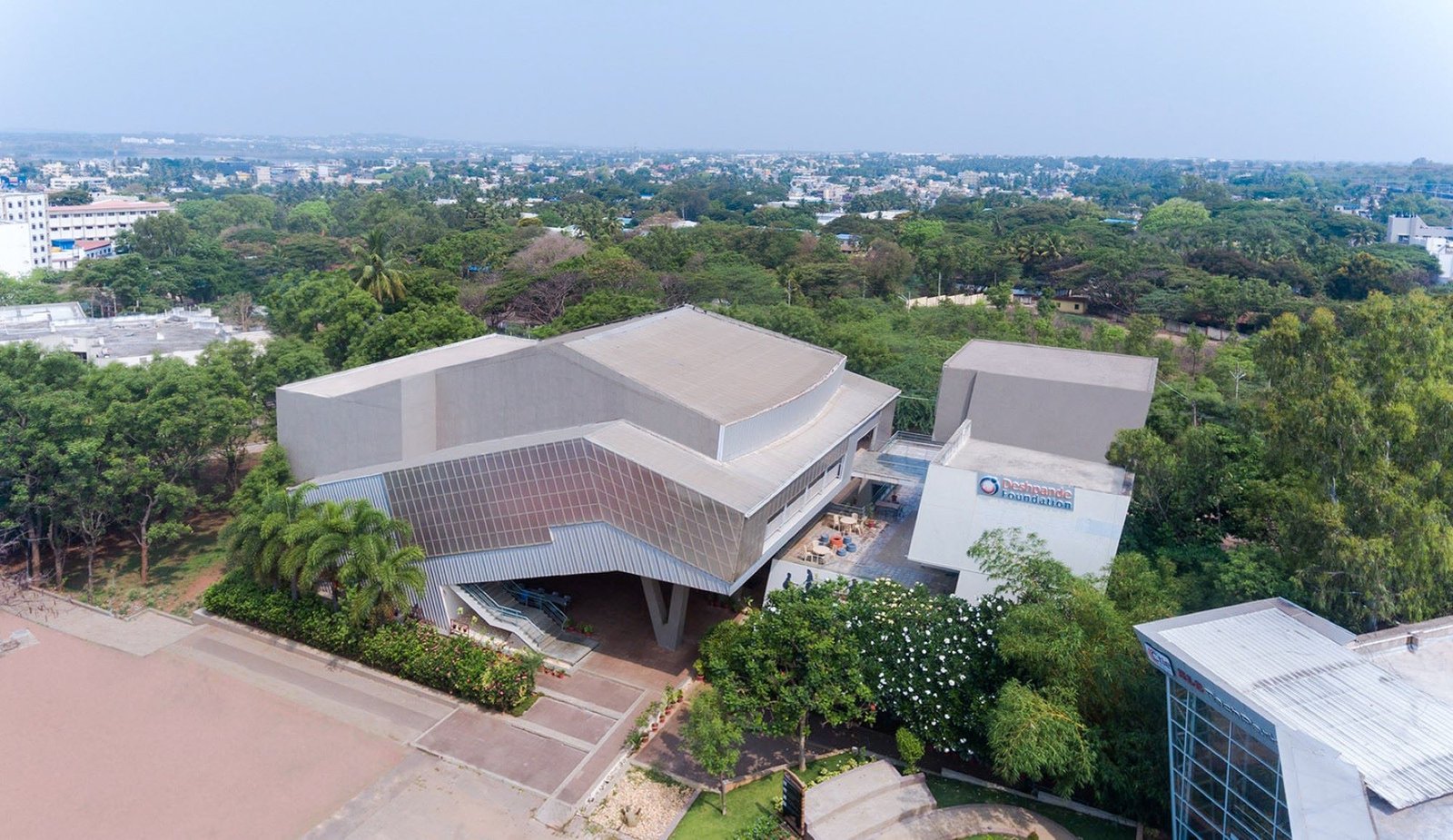
The program is divided into two blocks, one housing the institute and one housing the shared facilities such as the auditorium. In a way the design is an ossification of this negotiated agreement between the two organisations. These two blocks are juxtaposed against one another forming a common public space that is the culmination of an avenue of the university. The building further explores the phenomenon of being a micro campus within a larger macro campus. It defines its own open space by a manipulation of the built masses.
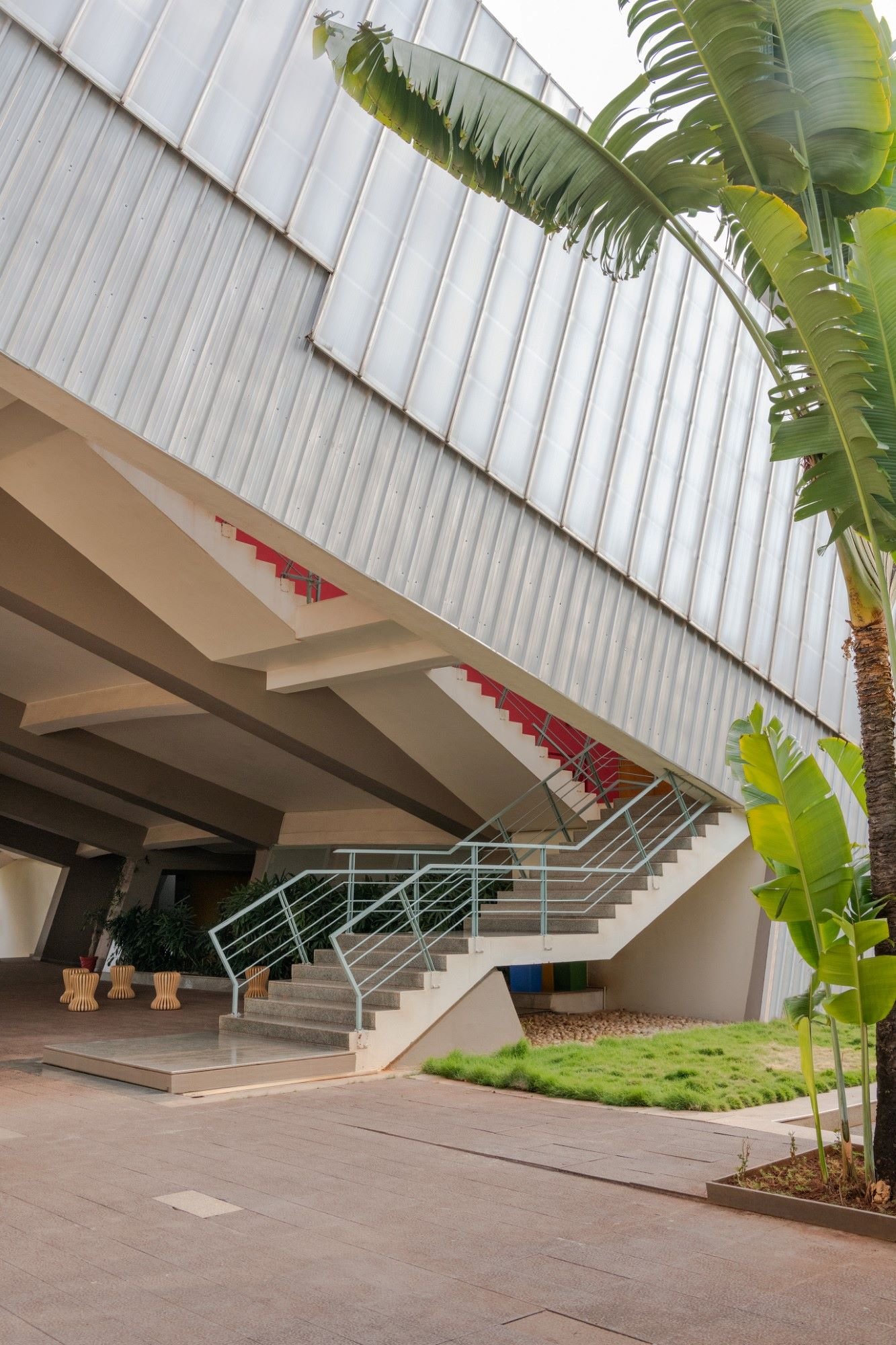
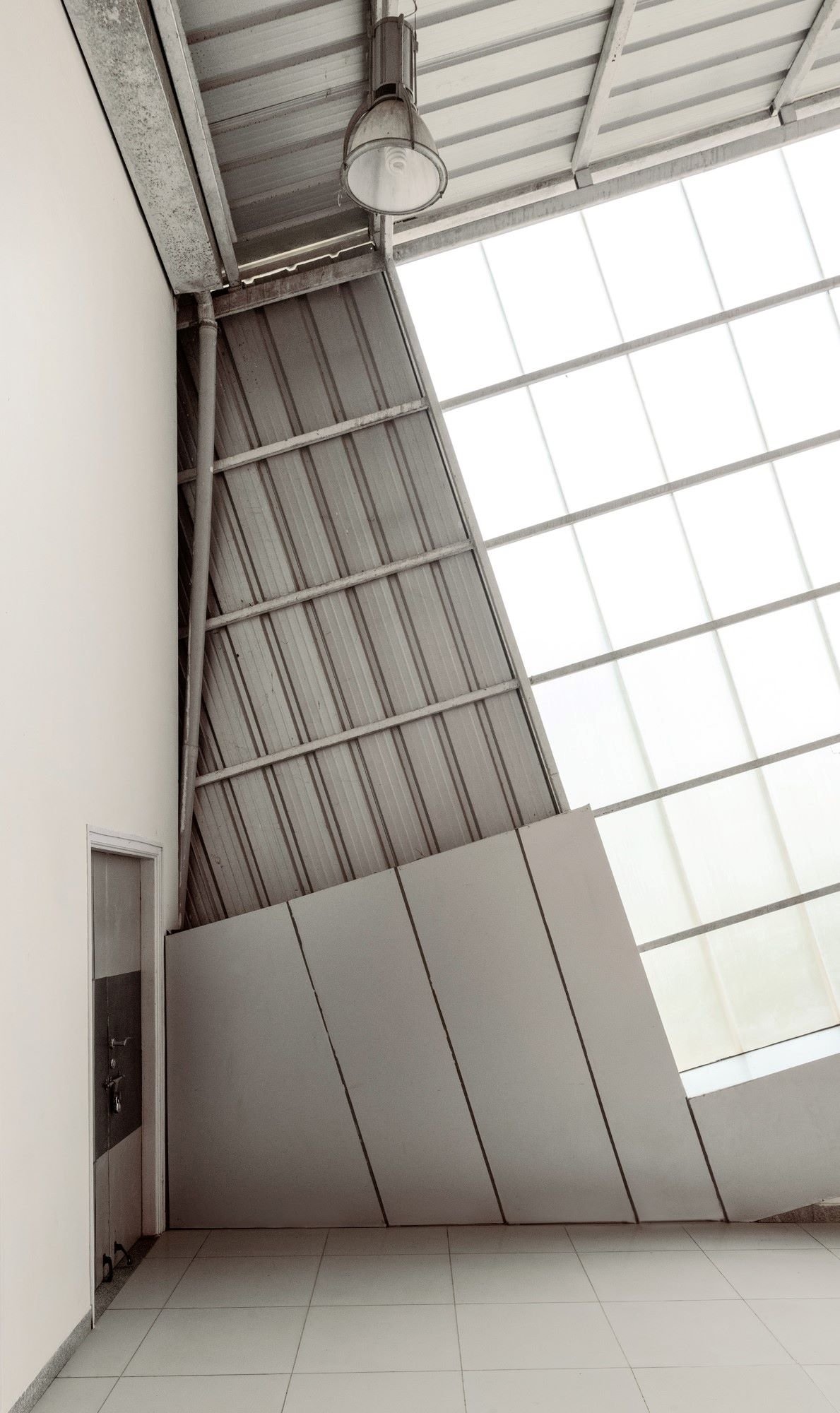
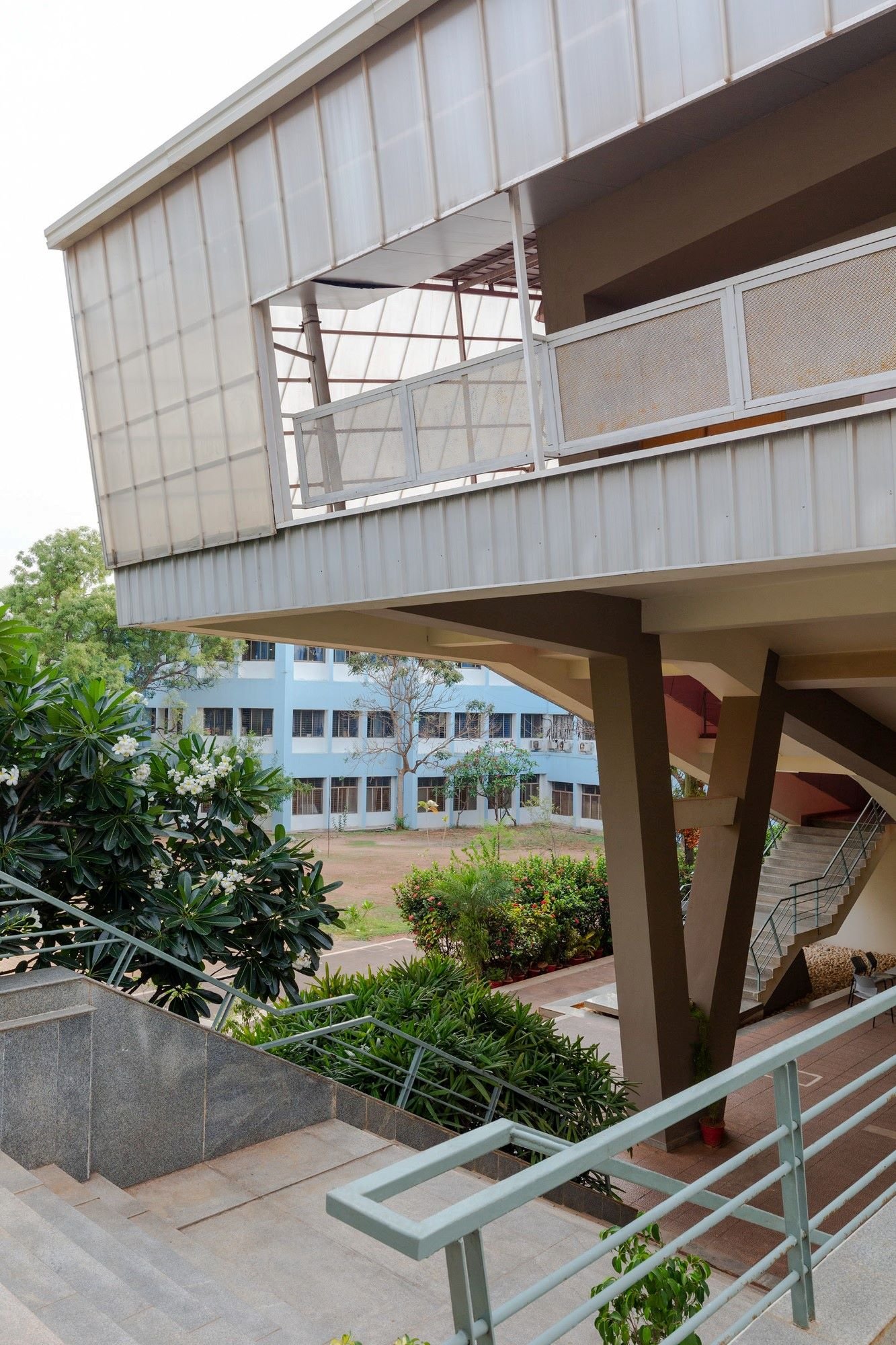
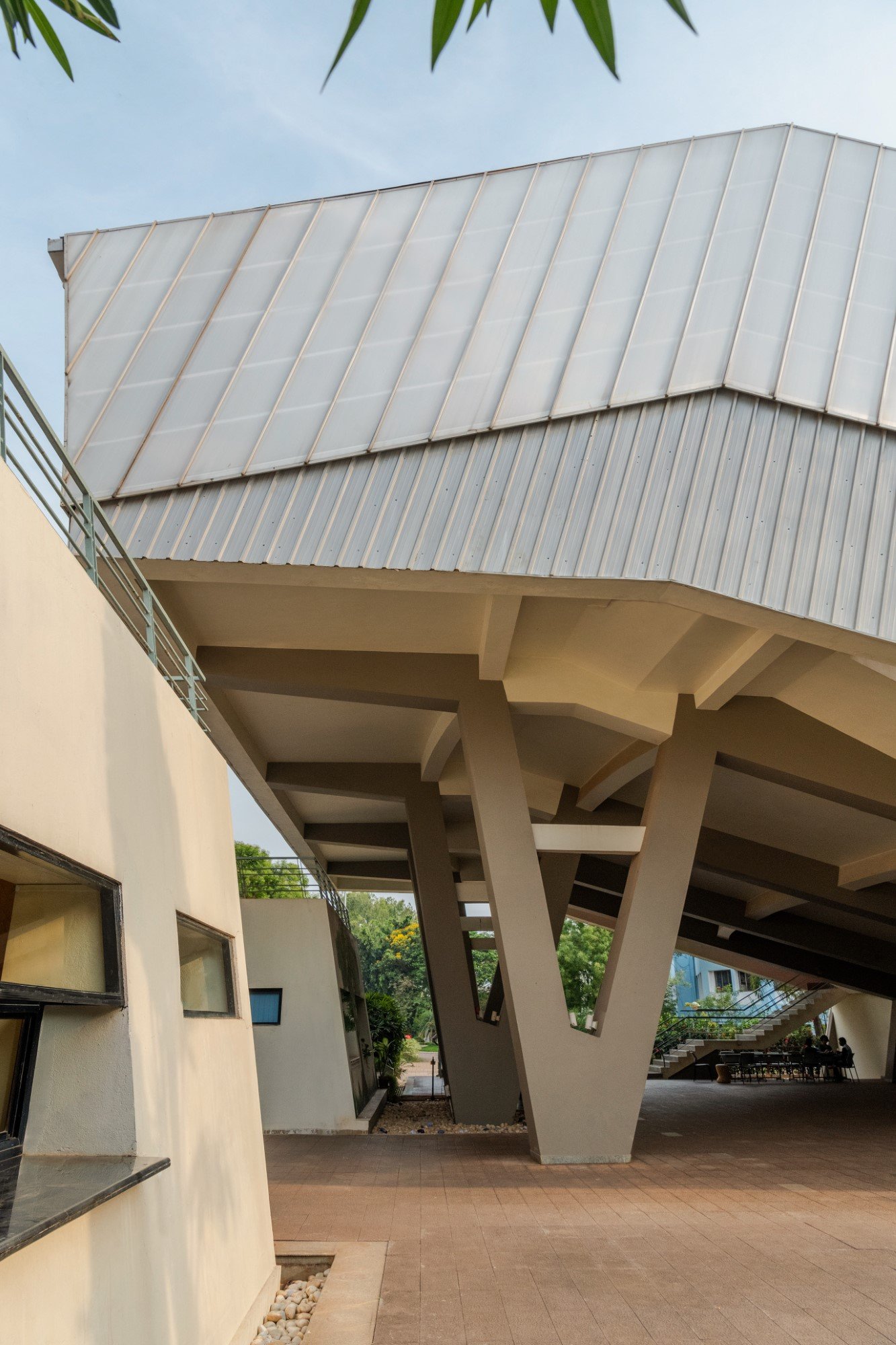
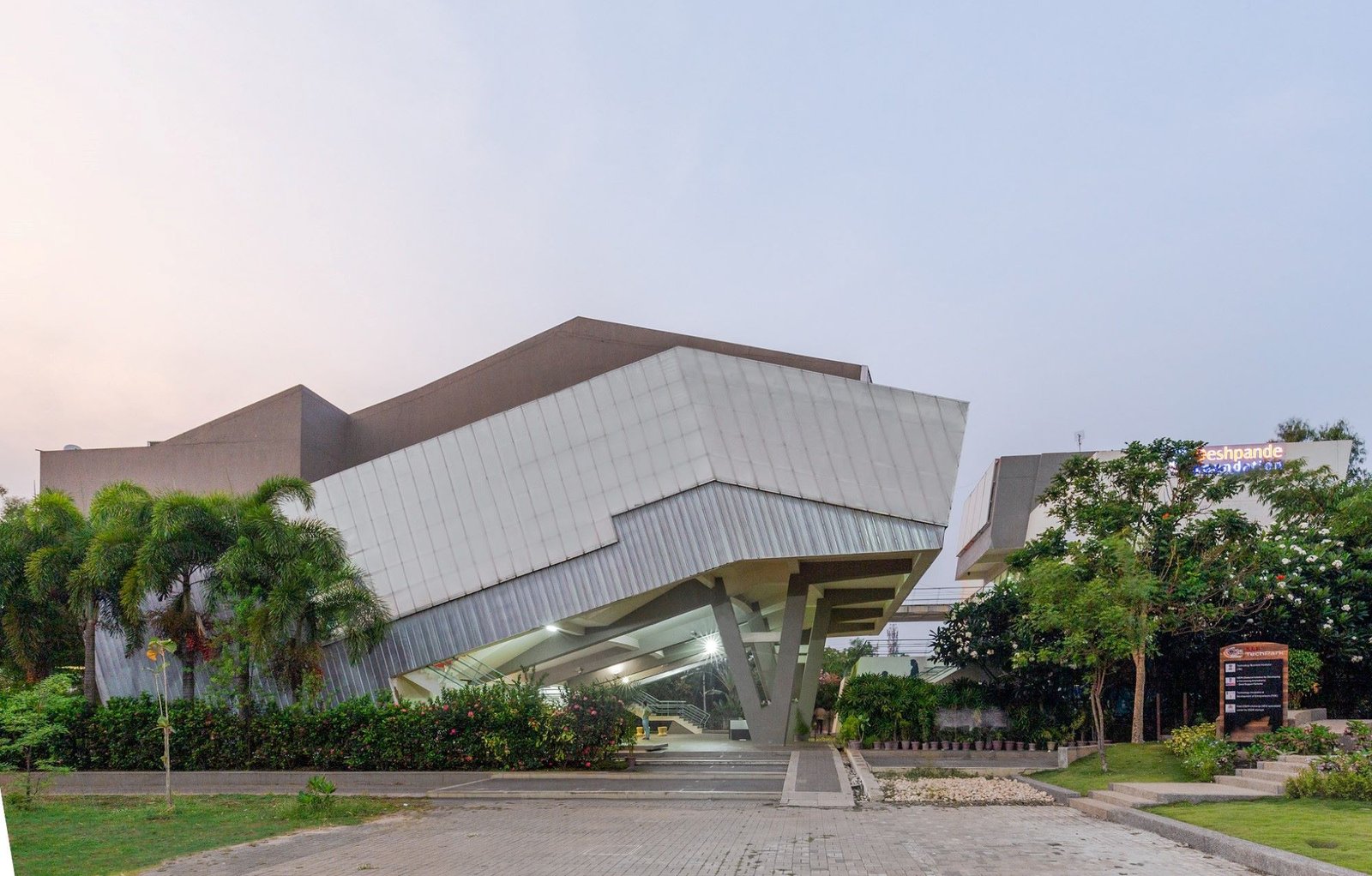
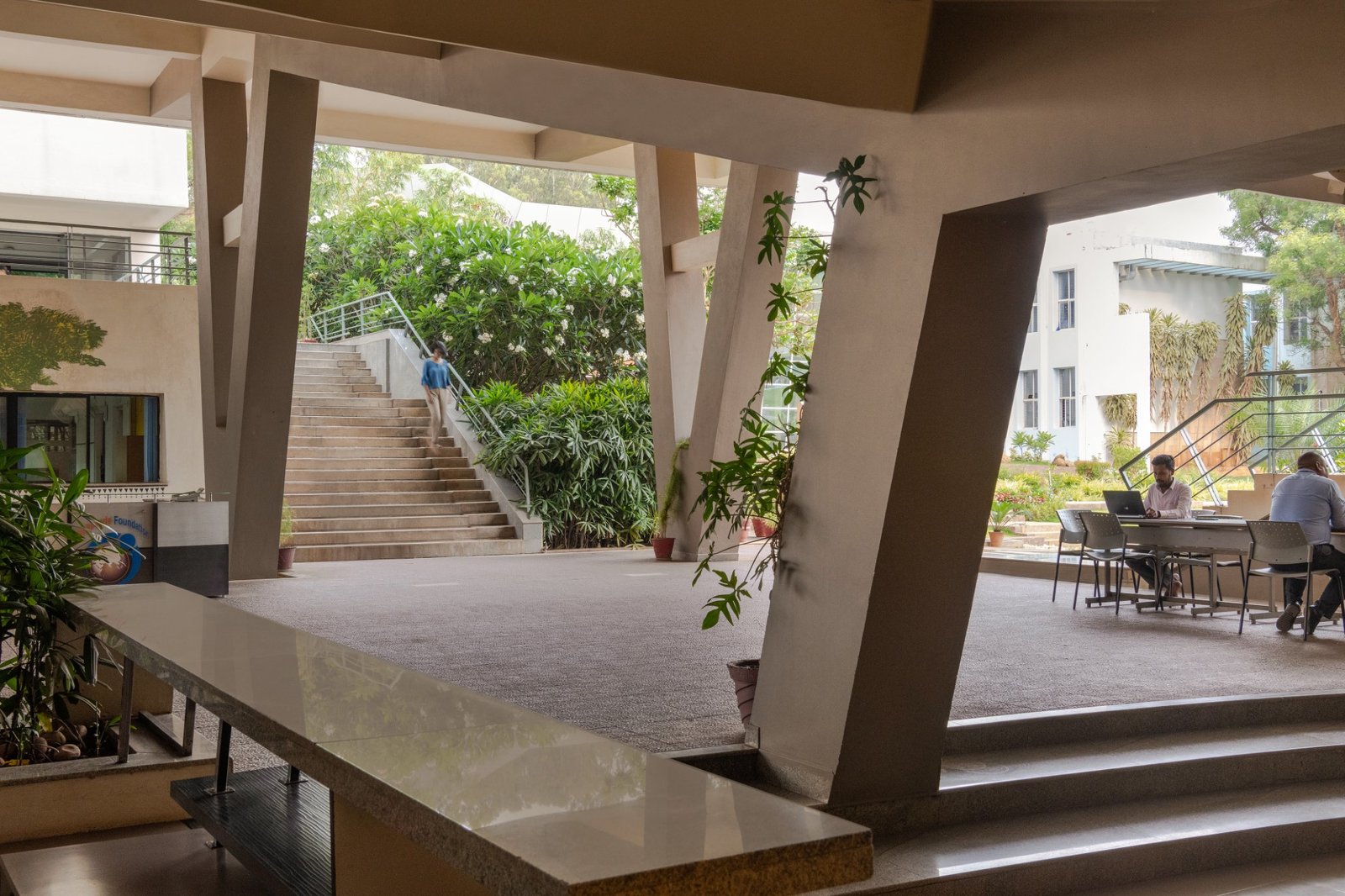
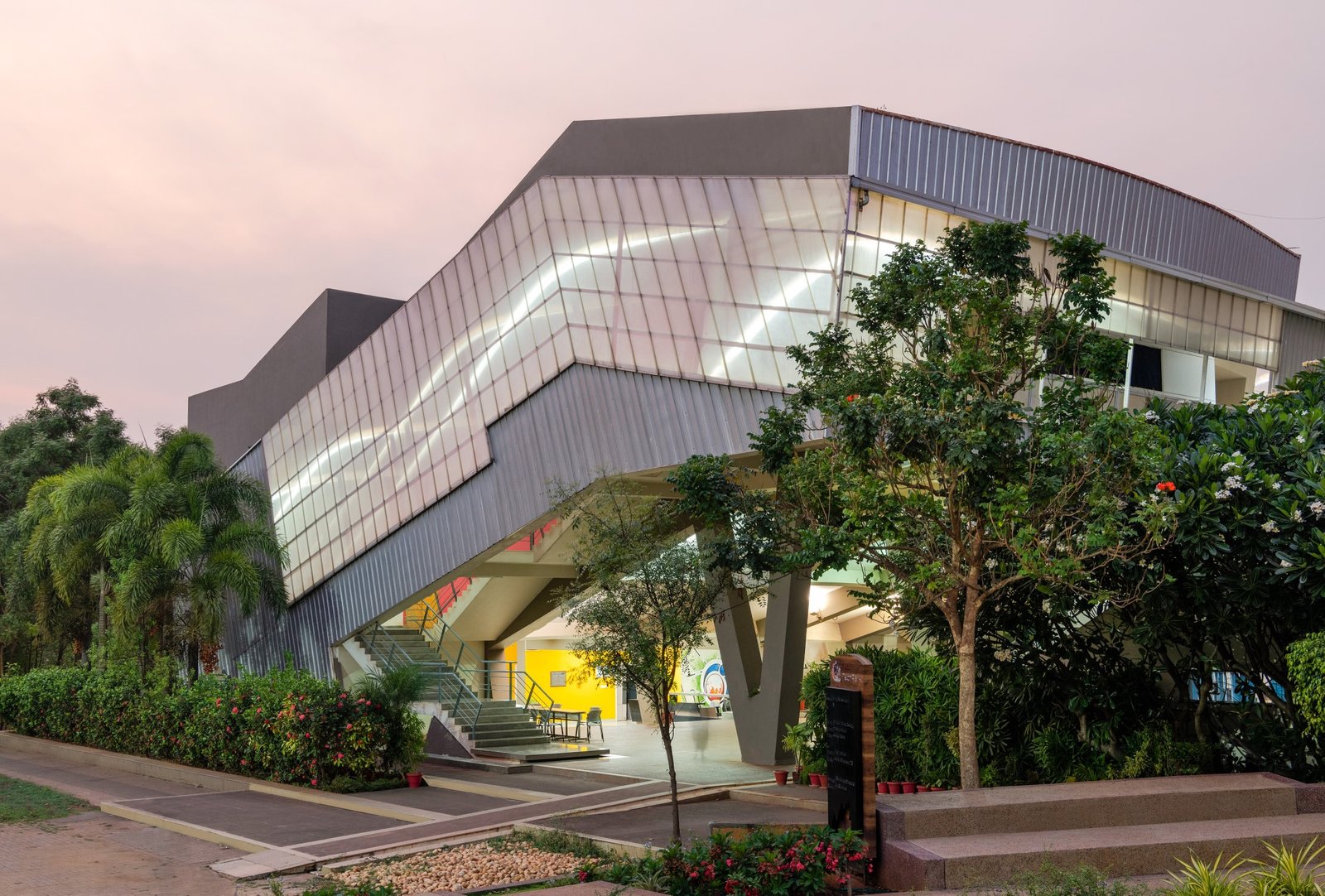
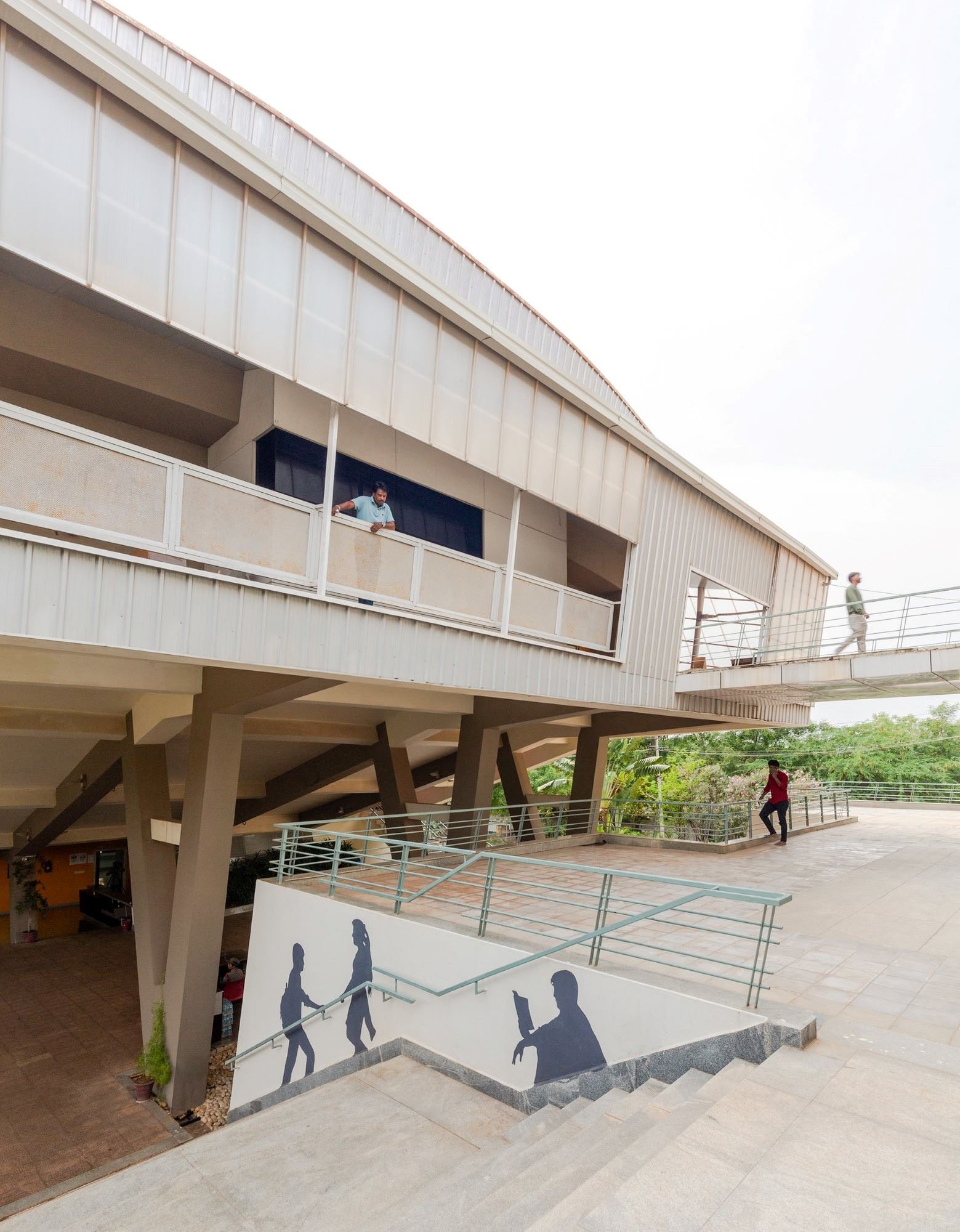
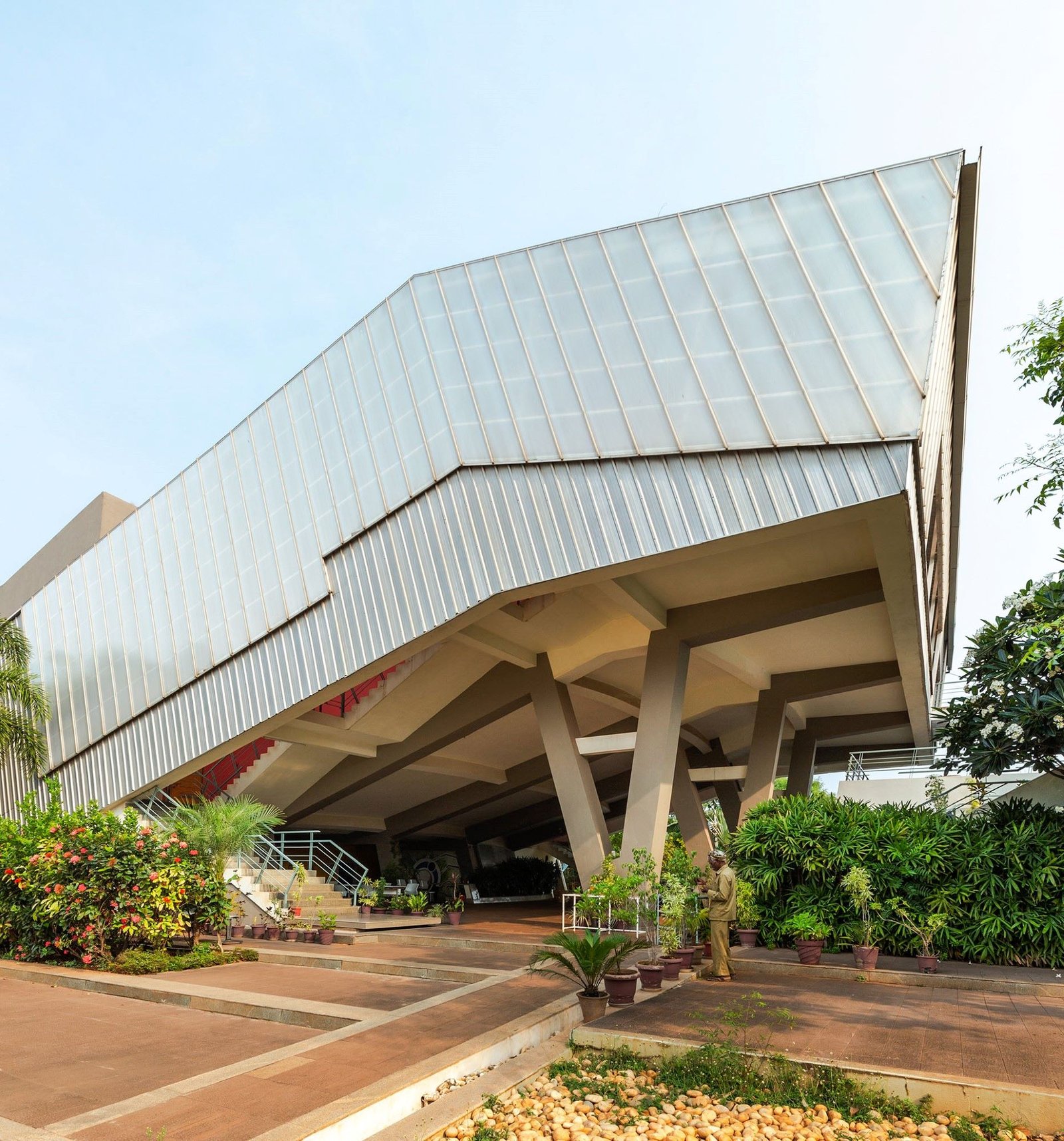
The raked auditorium is lifted off the ground to create an interstitial space that serves as a public space full of possibilities. This space also serves as a lobby for the entire building. The auditorium is wrapped with a metal skin that encloses a circumambulatory corridor. The design is a playoff between the institute’s core facilities and the shared auditorium as well as between closed monofunctional spaces and semi-open multifunctional interstices. Each form is an expression of the function that it supports, with the raked auditorium being the dominant form.
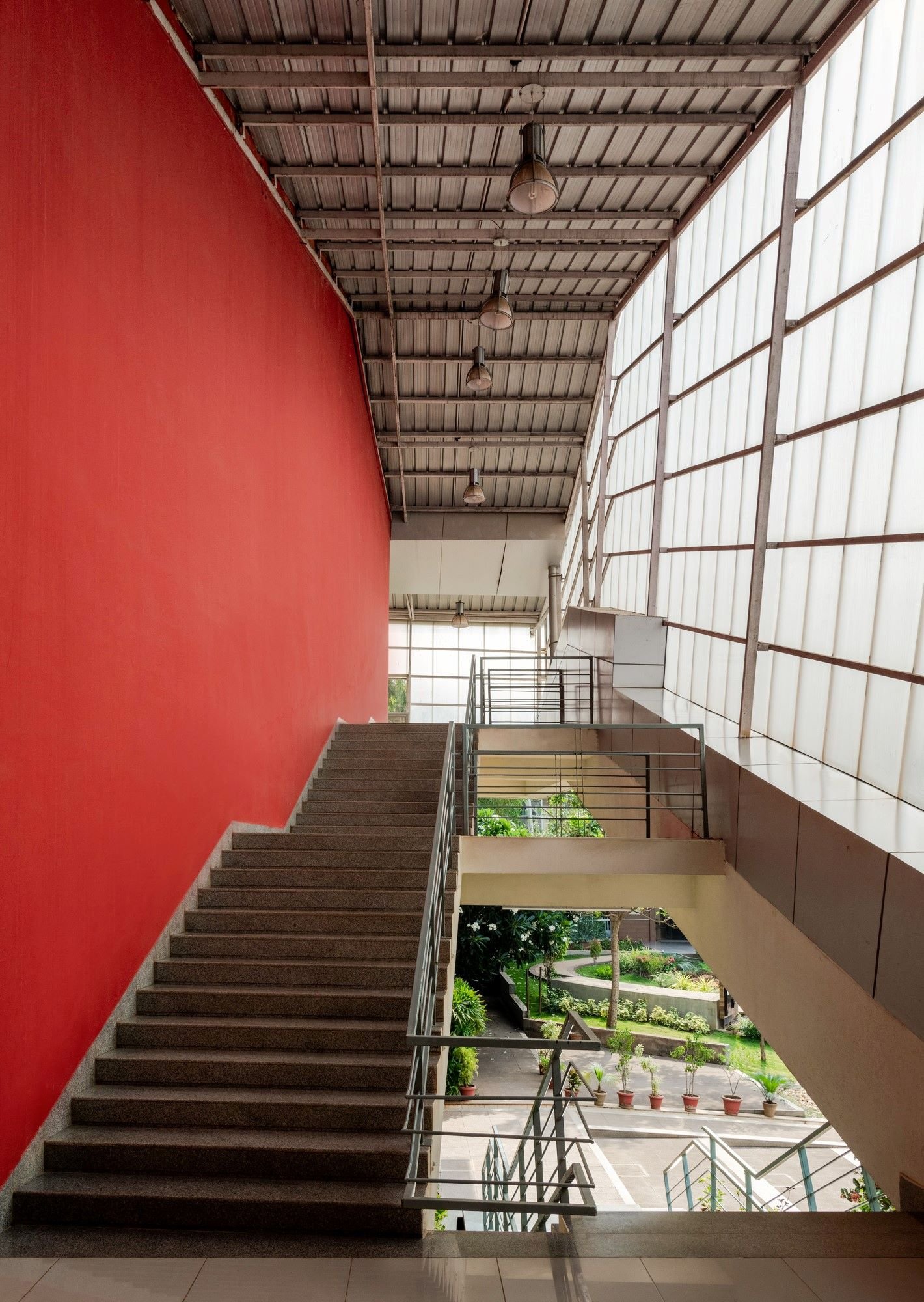
The auditorium block is sheathed in a light skin that is made of translucent polycarbonate and metal cladding. This skin fronts the circulation block that wraps the core space. A bridge at the upper level connects the two blocks.
The building is an expression of the section that is the result of a careful study of the programs involved, as well as a sectional exploration of built and unbuilt spaces.