Design Strategy
The design poses some pertinent queries which arise when small urban plots are imposed upon with a densification of functions, due to the evolving nature of our urban lifestyles. At its essence, it tries to reconcile the two divergent and contradictory set of requirements – to accommodate the dense program and also to keep the house open to the outdoors.
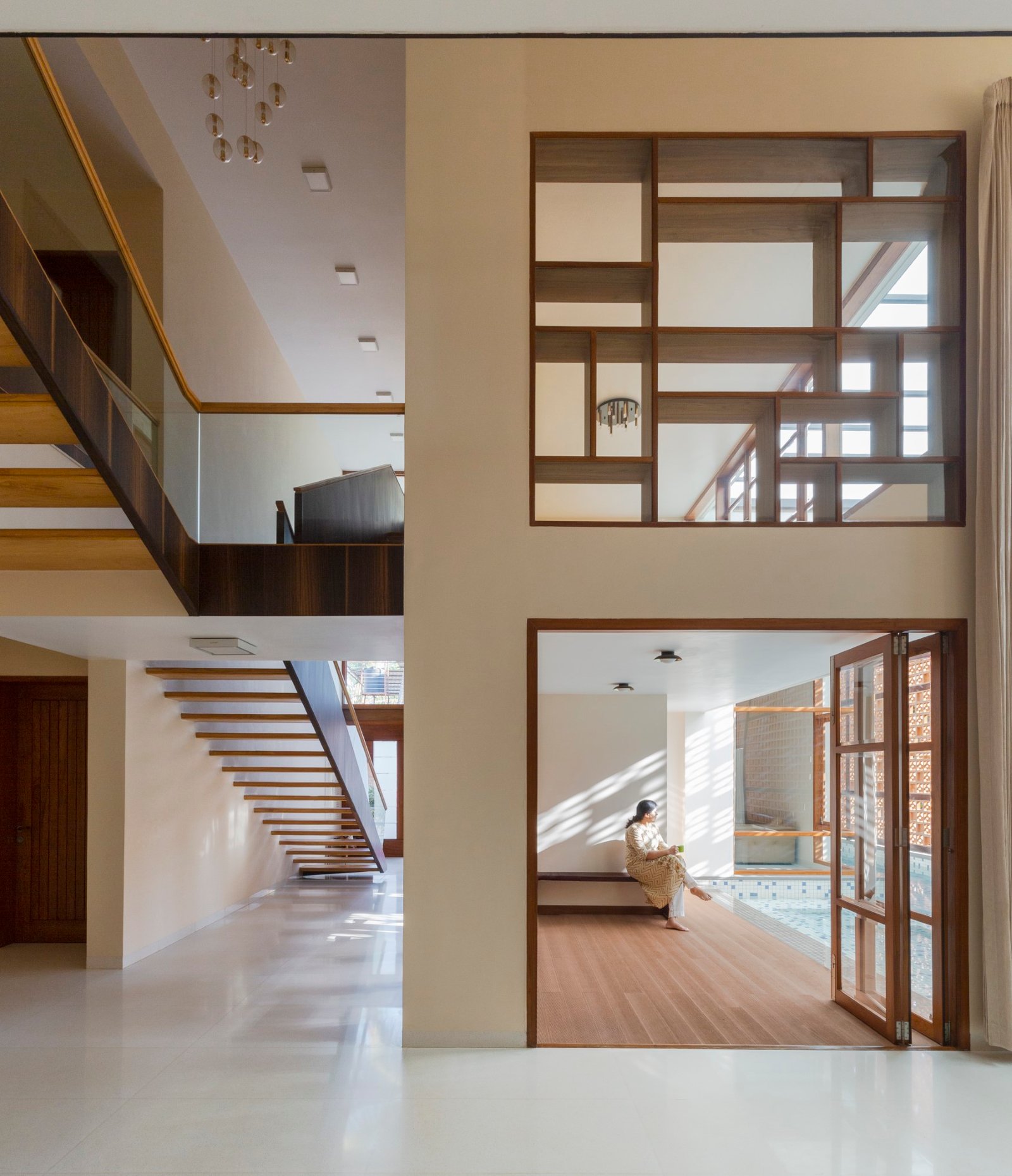
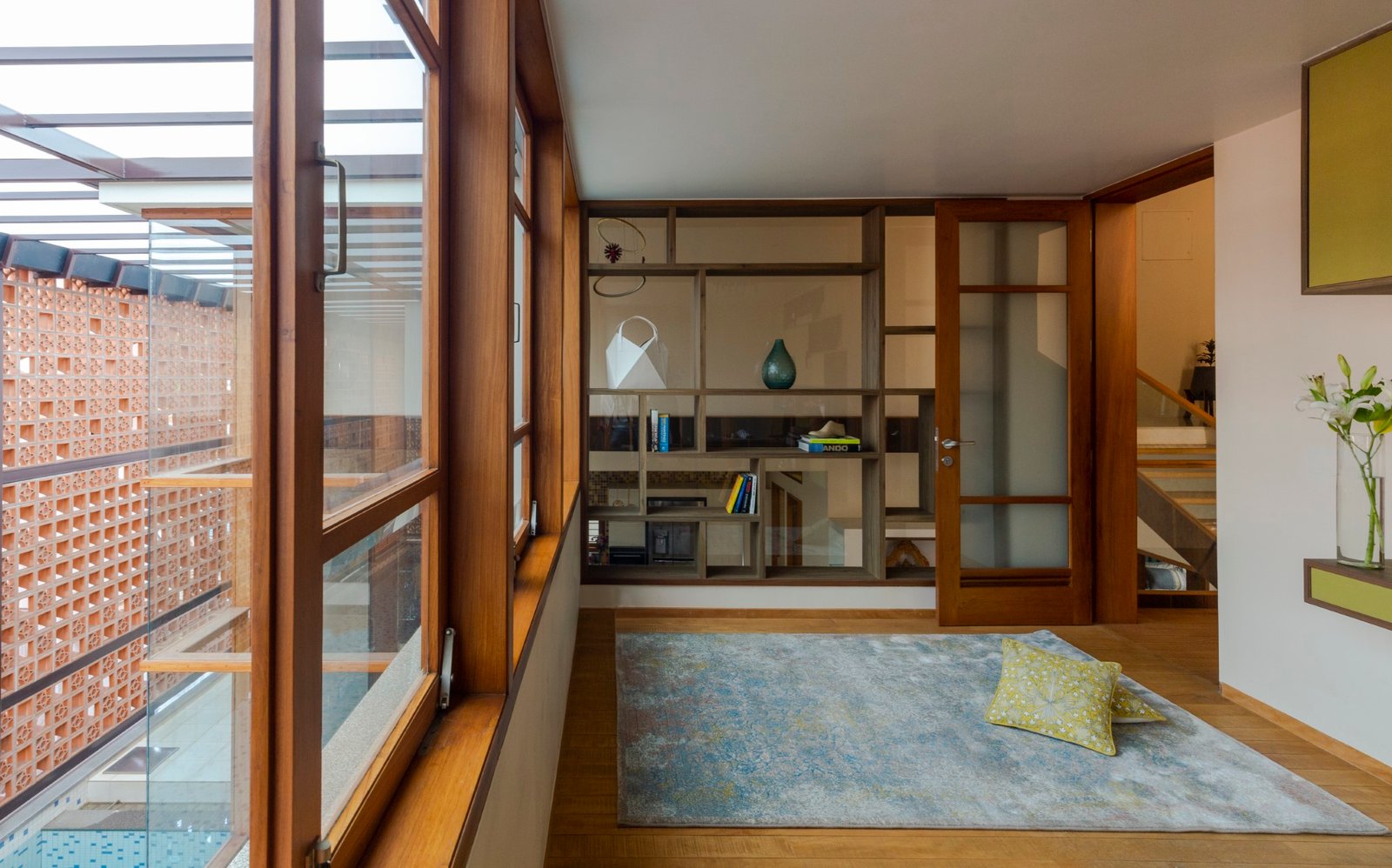
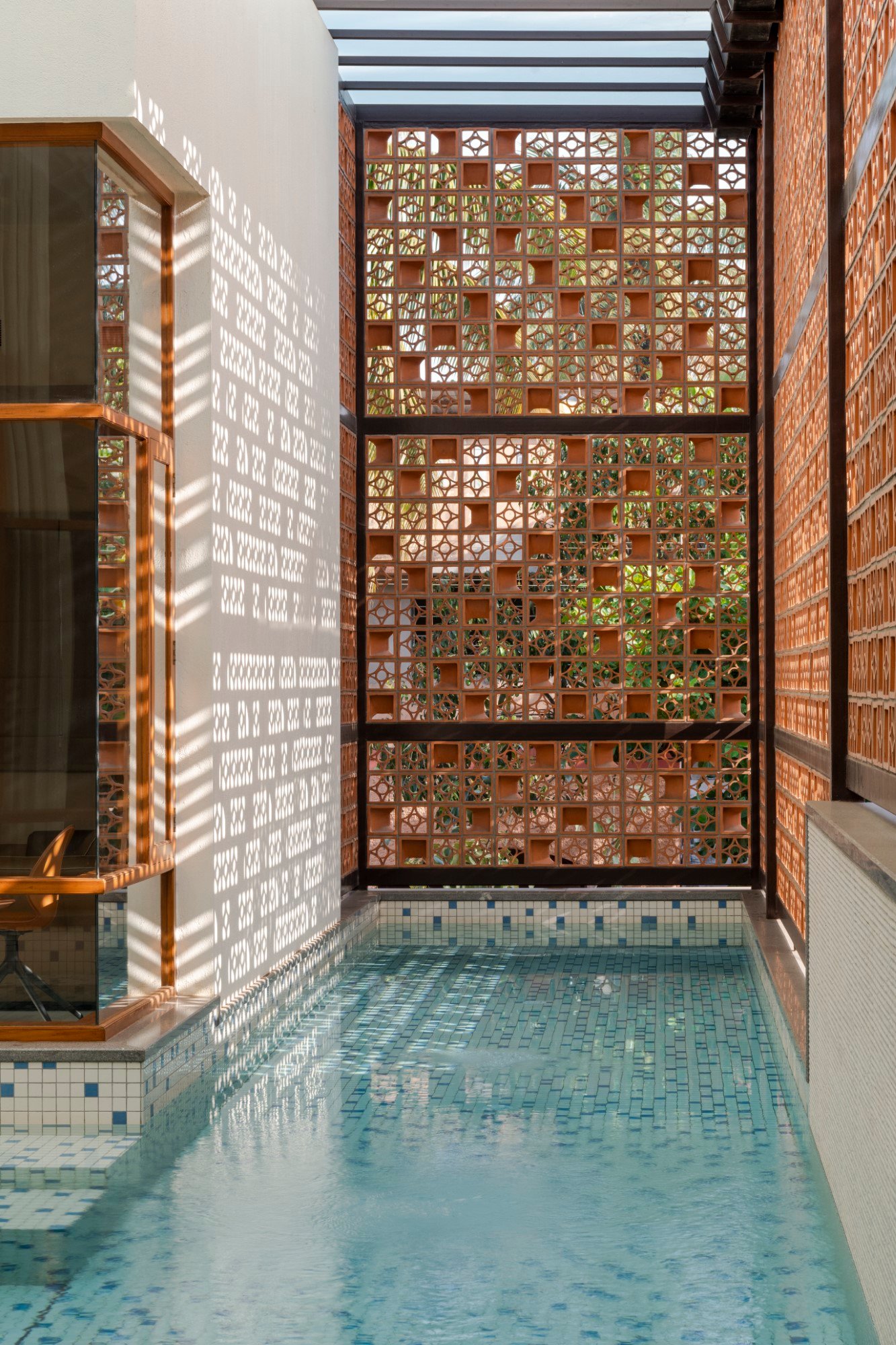
The design activates the side margin on the eastern side by locating a semi-enclosed swimming pool pavilion. Whereas the house maintains a certain opacity from the road, it internally opens up to this swimming pool pavilion. The swimming pool is not only a performative device that is used to foster an active lifestyle, but it also acts as a visual anchor throughout the house, opening vistas and connecting spaces. It also humidifies the interiors, cools the breeze that flows through, filters the sunlight and thus acts as a passive climatic device.
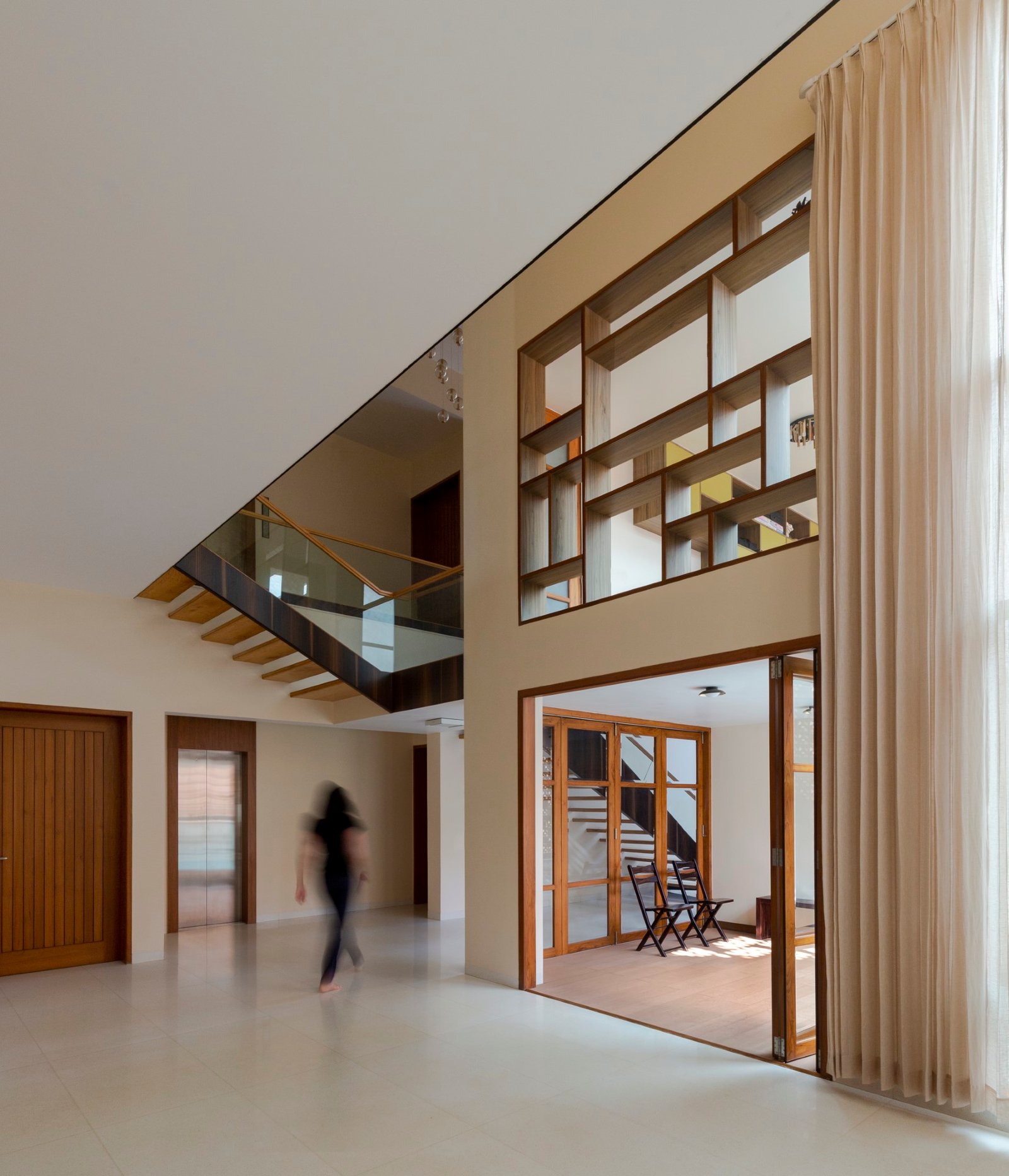
In Plan, the house reads as a simple layering of spaces, with the pool on the eastern side, and the bedrooms and private spaces on the western side. The social spaces of the house occupy the interstices between these two strong mono-functional bands. The Kitchen, Dining and living spaces on the ground floor, as well as the mezzanine library coagulate around the pool and its deck. Each of these social spaces, though modest in their own size, open up in expanse spatially because of their relation to this waterbody.
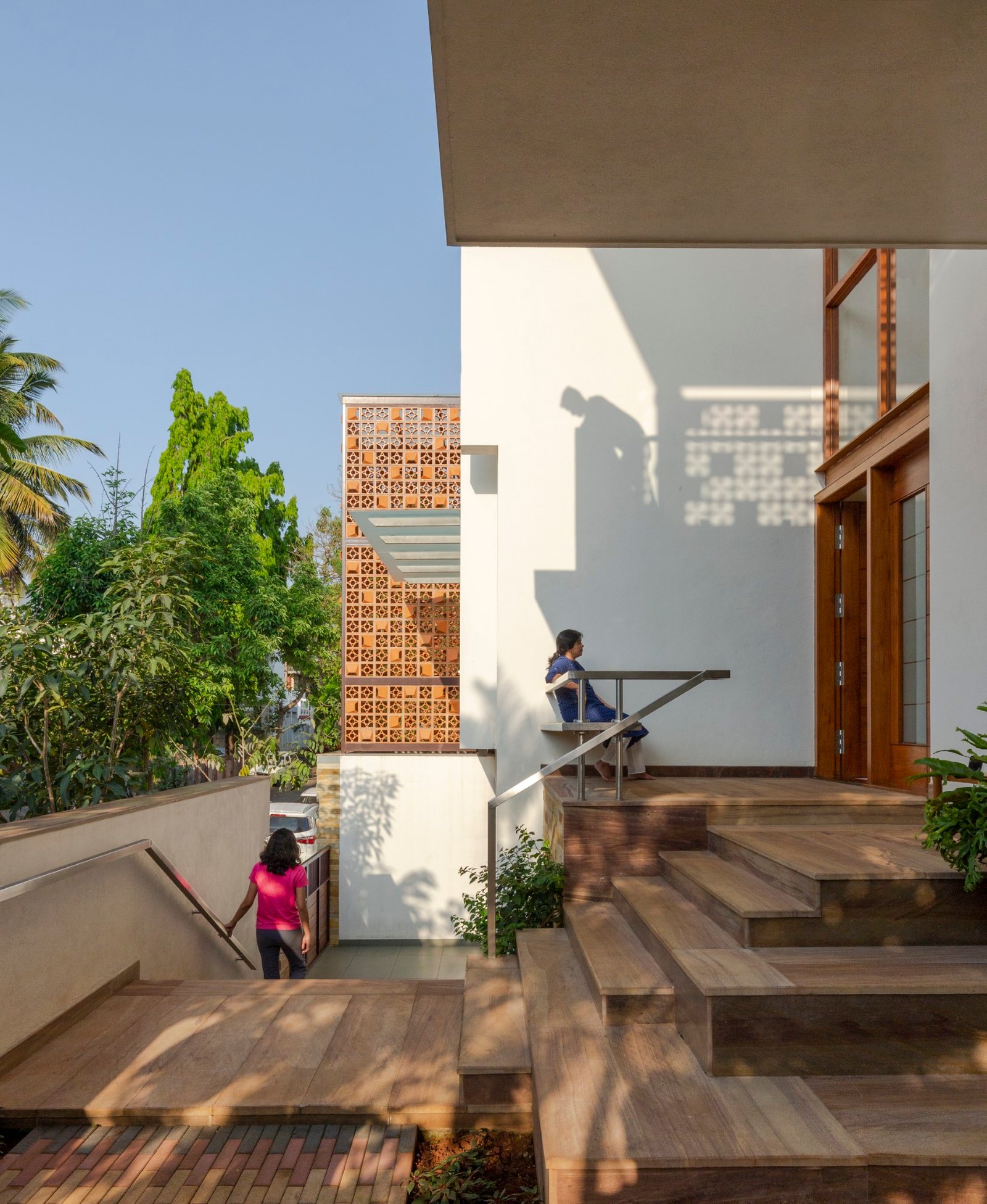
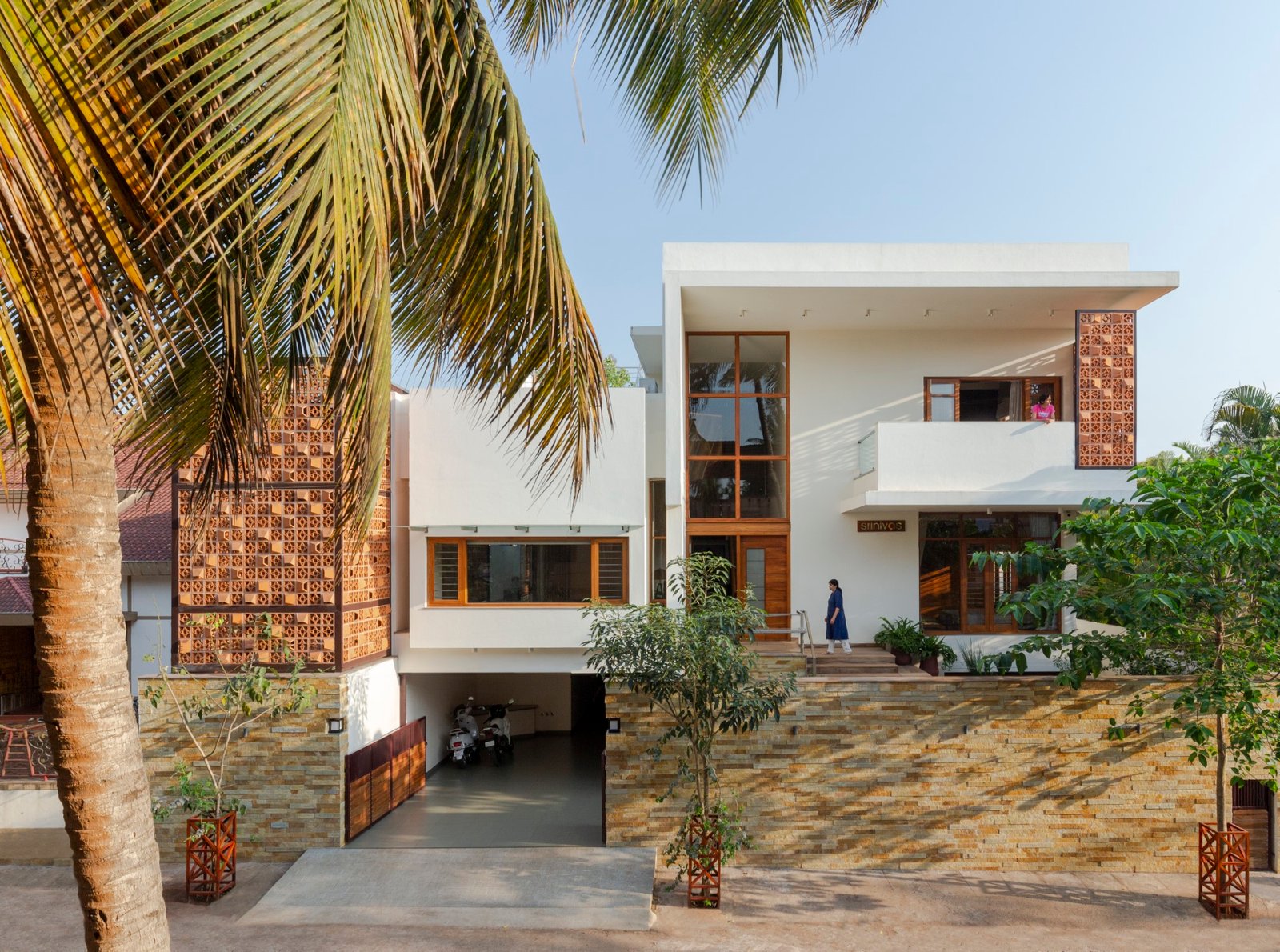
There is a move to elevate the house from the road, thus allowing the back of house / servant spaces to be shoehorned into the high plinth. This gives further privacy to the interiors.
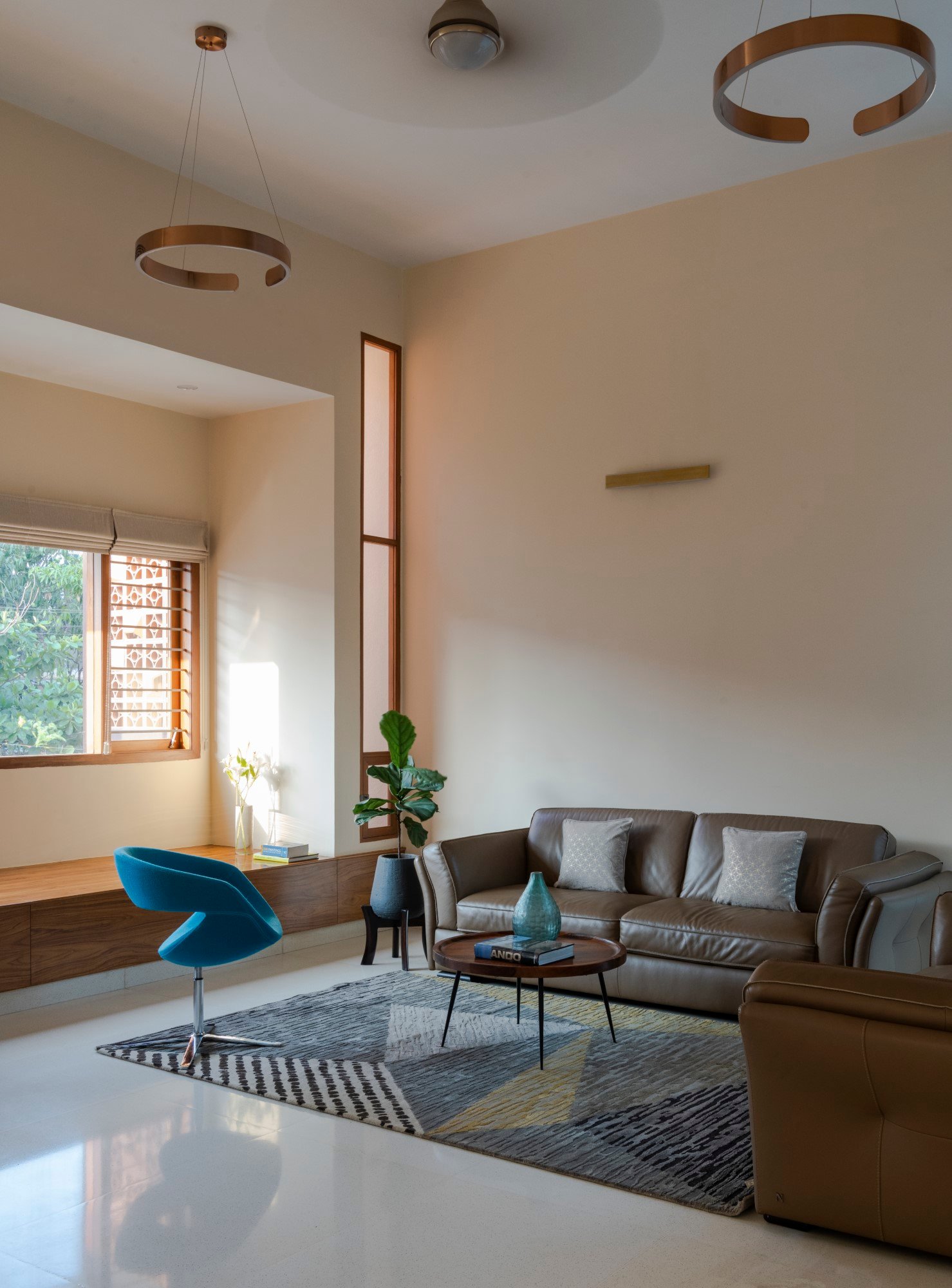
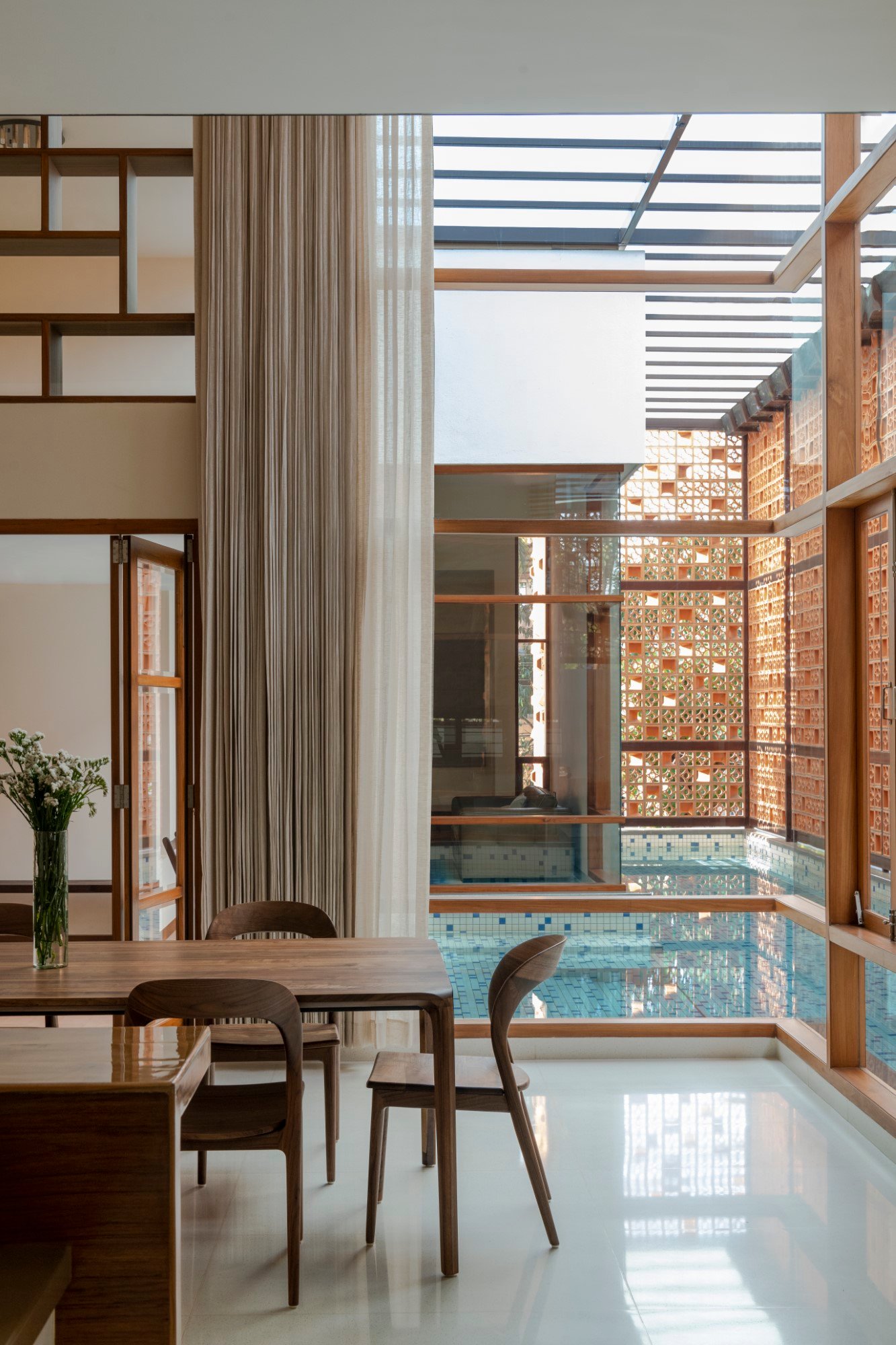
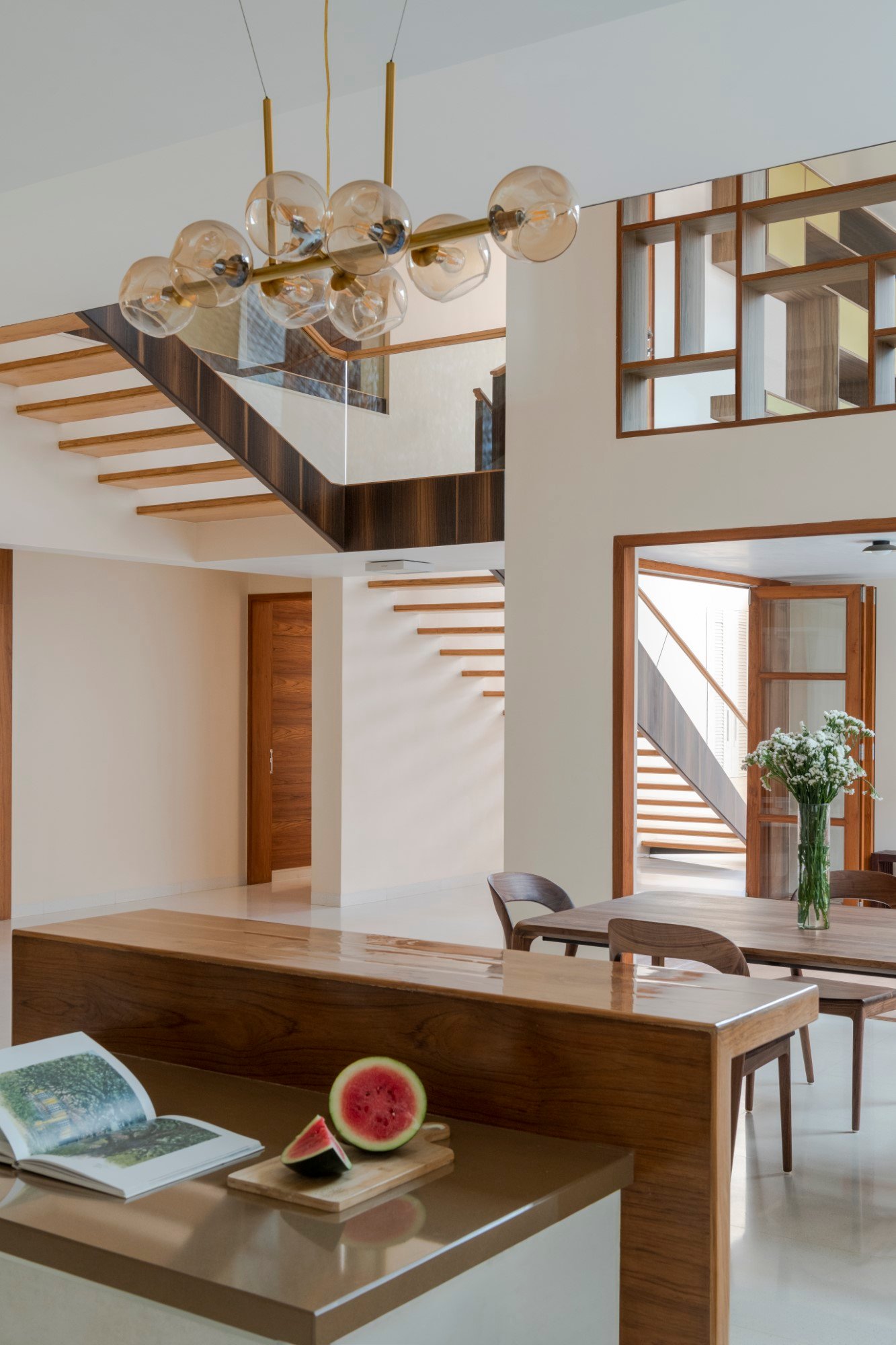
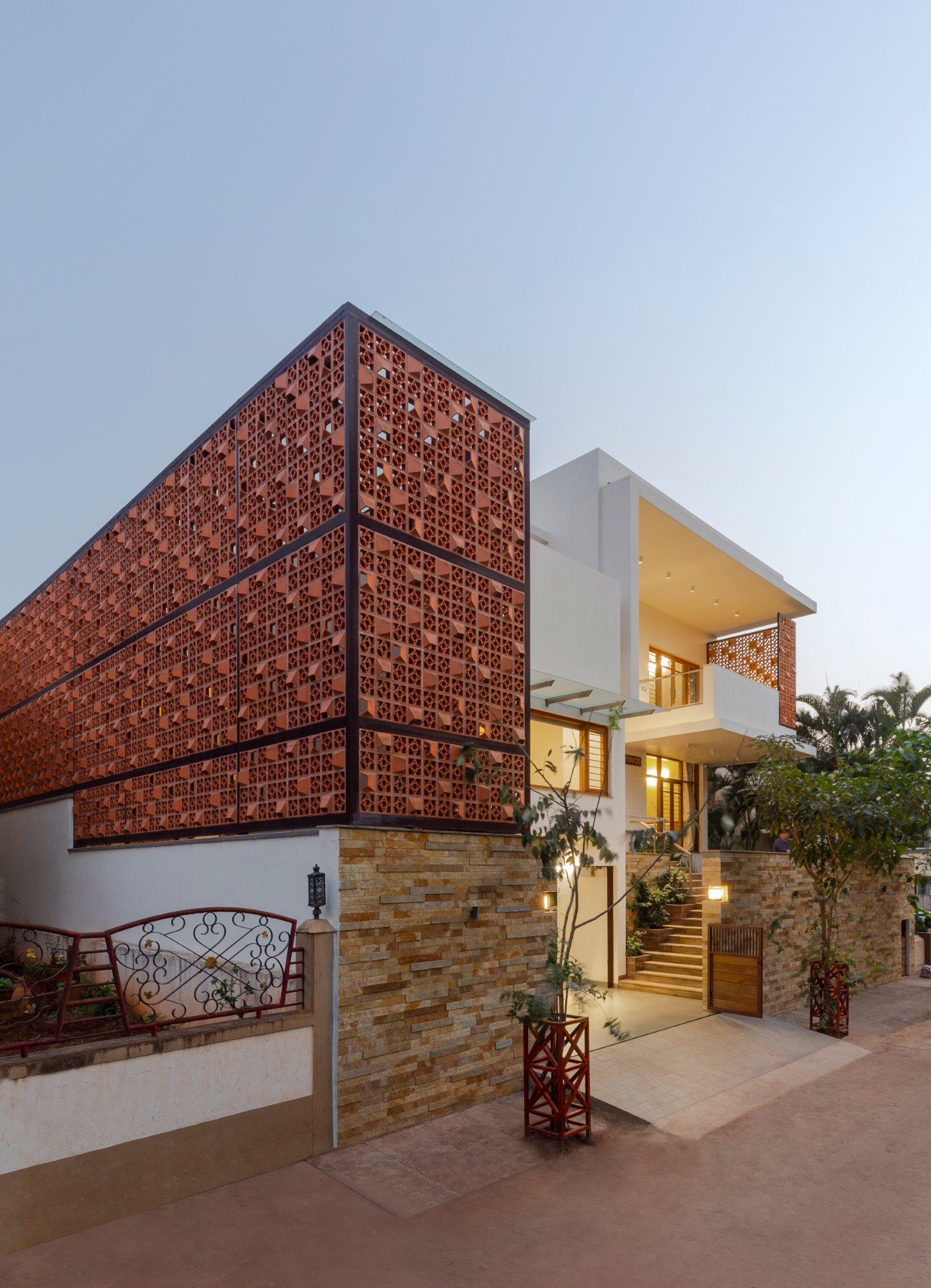
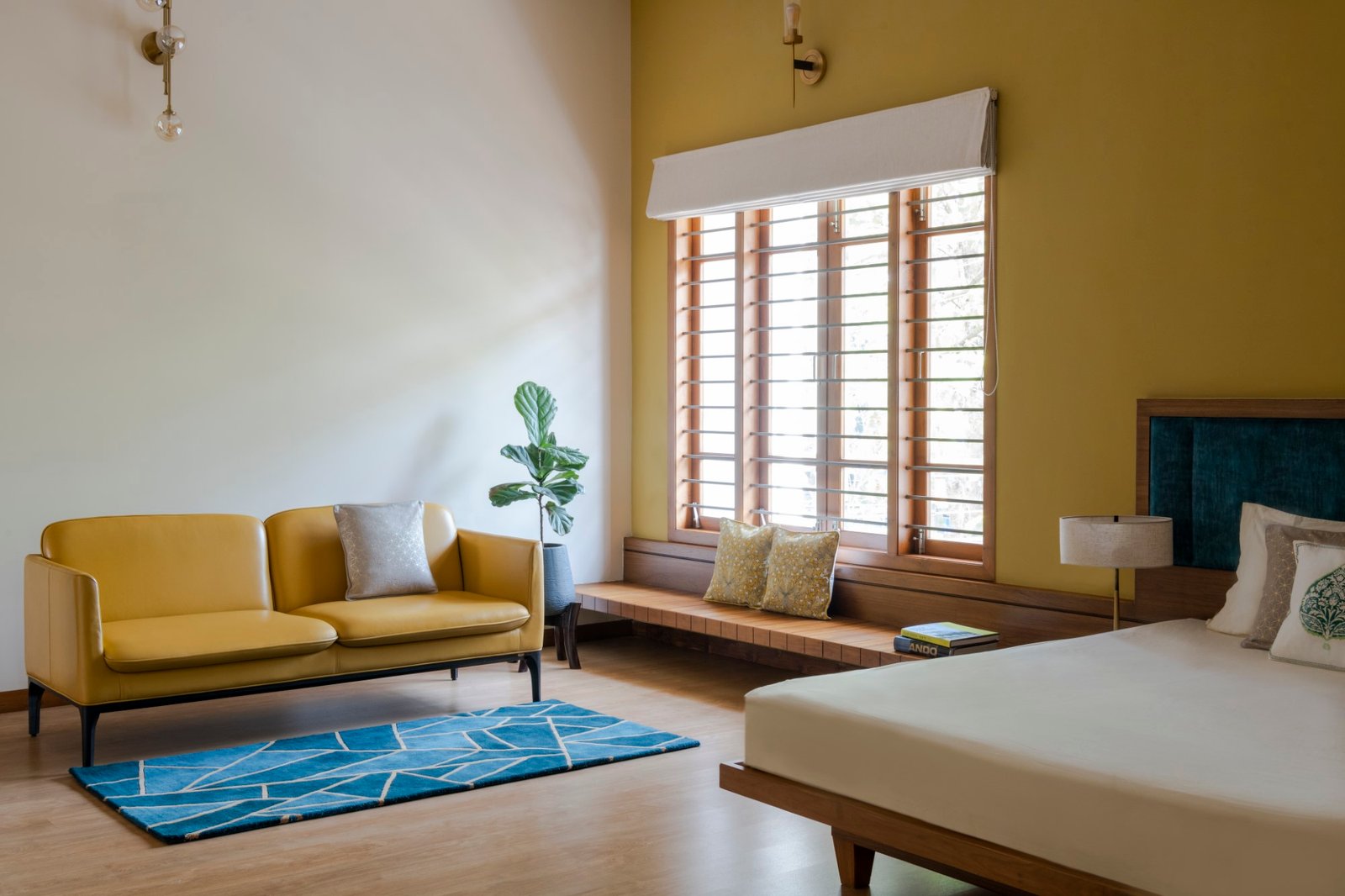
Formally, the house takes its cues from the neighbourhood that it is a part of, and seeks to harmonise with the scale of the street. A restrained palette of materials that range from terracotta fenestration to locally sourced teak wood and white stucco walls allows the house to be seen as a reflection of the minimalist lifestyle of its inhabitants.
The swimming pool pavilion is expressed as a singular feature that defines the exteriors and it is animated with the play of light as morning turns to evening, as well as the soft sounds of the gurgling waterfalls that is a part of the pool filtration system.
Overall, the house is reflective of the way domestic spaces in the subcontinent have been traditionally formulated – Inscrutable and opaque from the street and yet open and connected in the interiors. This interplay of open and closed, private and public as well as servant and served is ultimately what this design is about.