Design Strategy
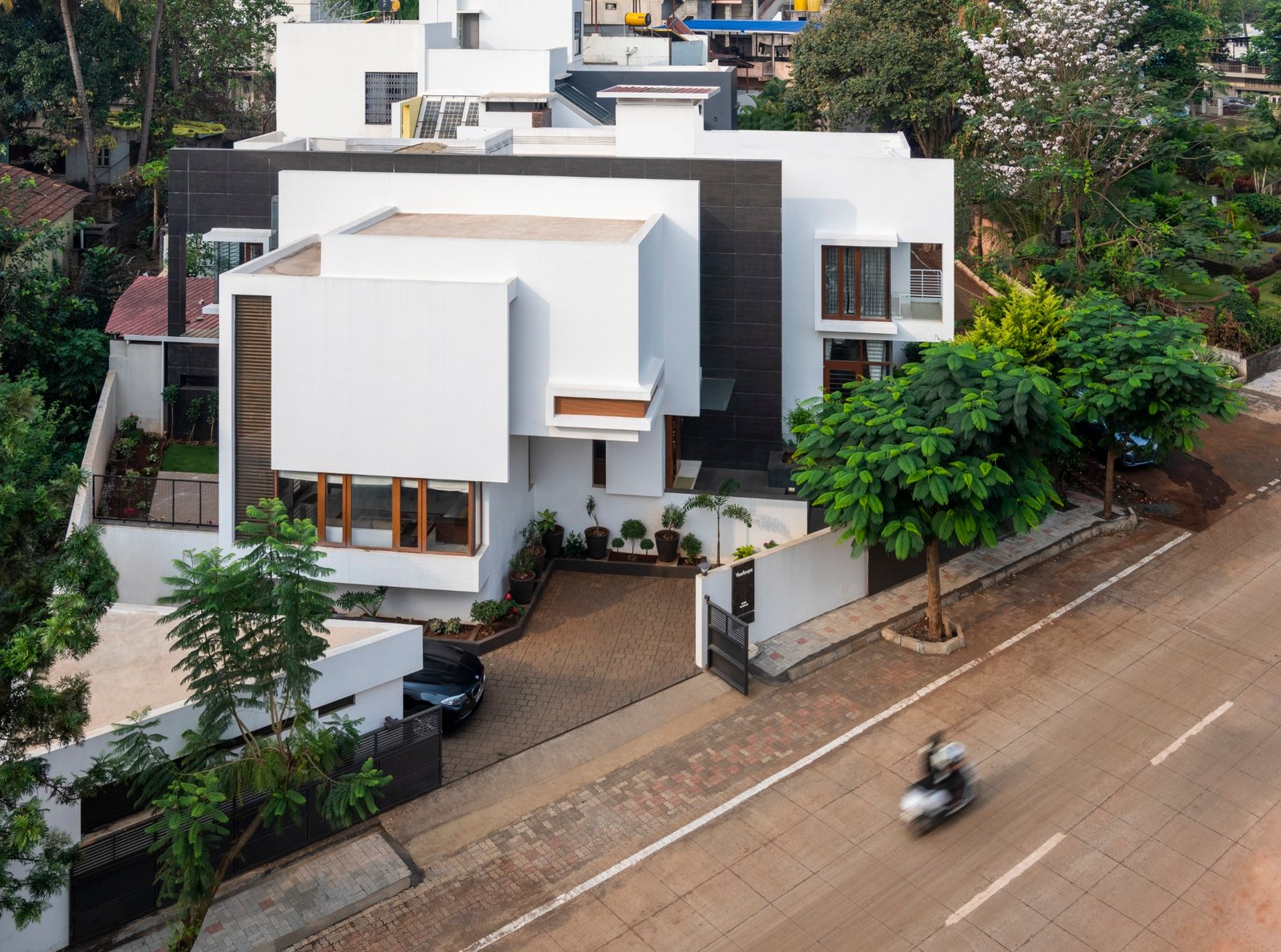
Several attempts were made to fit in the requirements, while also taking the plot’s shape and contours into consideration, but they all resulted in an awkward mass that refused to read coherently as a whole. A strategy was gradually developed after several iterations. The mass was broken down and was treated as a set of parallel lines that stretched from one end of the site to the other. These parallel lines would then become walls that rose along the contours and were broken down into openings and portals. The spaces of the house would unfold between these walls, ranging from the public spaces such as the living room at the front to the kitchen and dining in the middle to the bedrooms at the very rear.
These parallel walls helped resolve a complex plan into a legible whole that allowed for visual and programmatic leakages between the functions. As the walls extended beyond the house and into the side margins, they also redefined the relation of the interiors with the exteriors, and created small pockets of trapezoidal landscapes and courtyards.
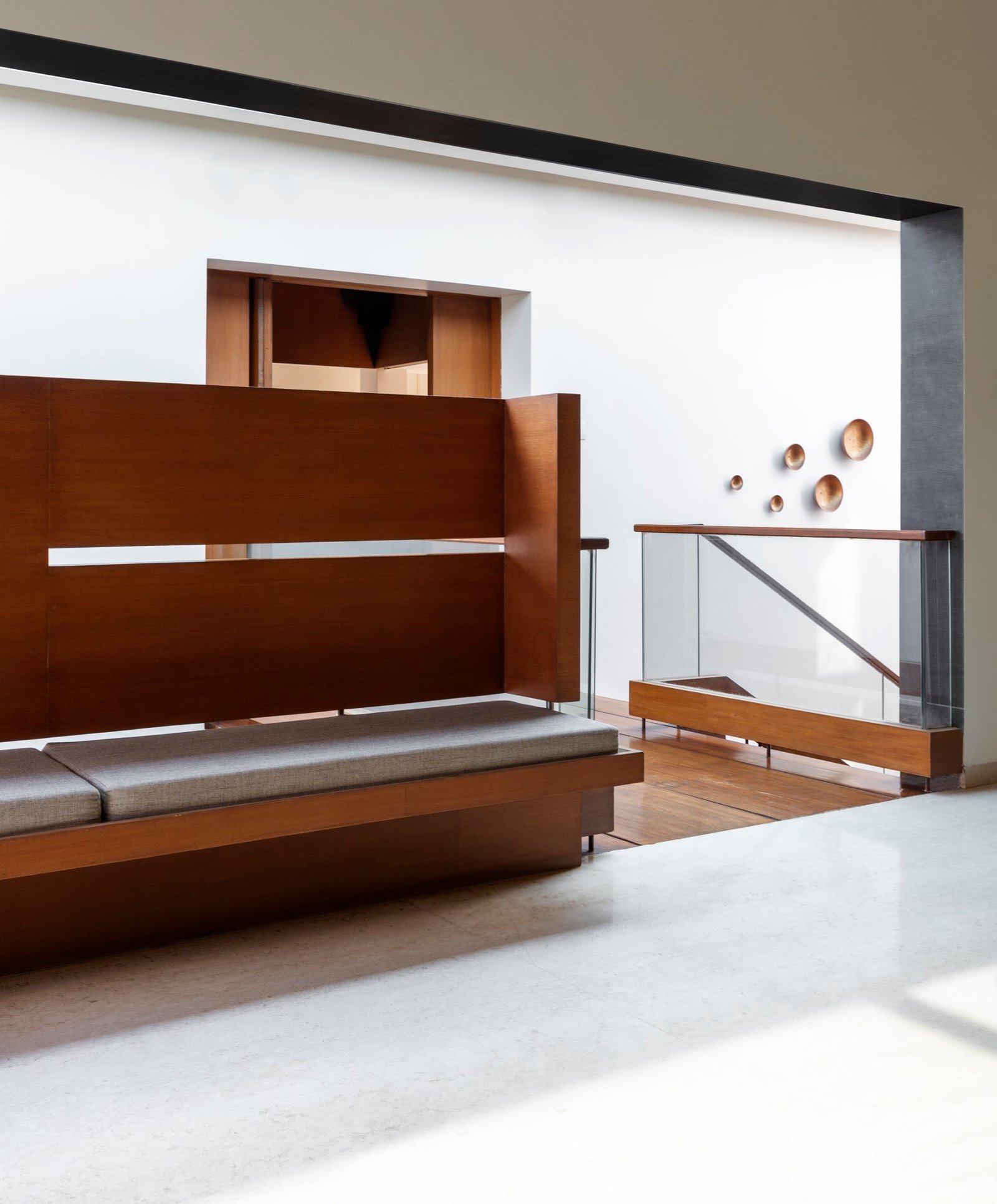
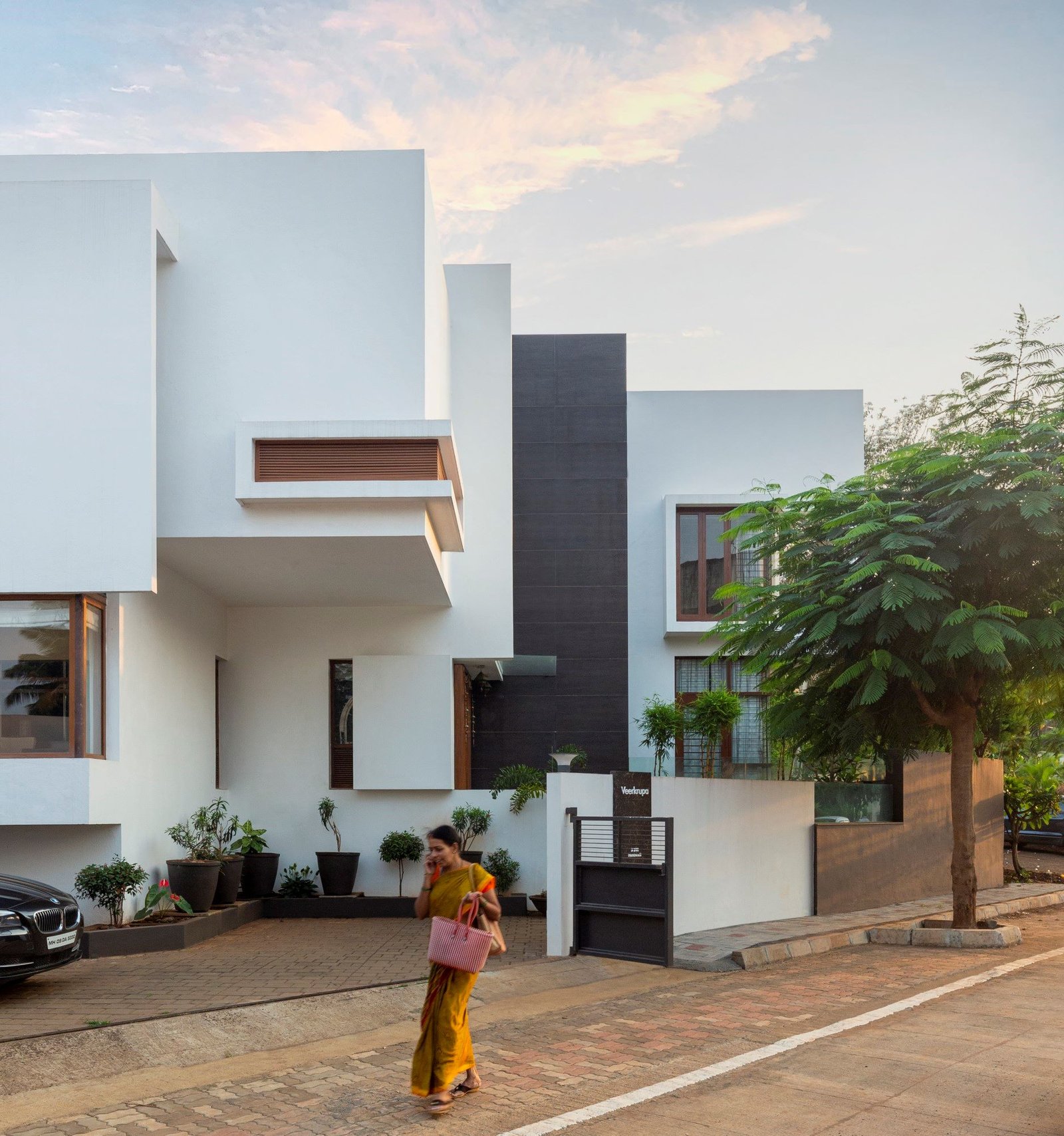
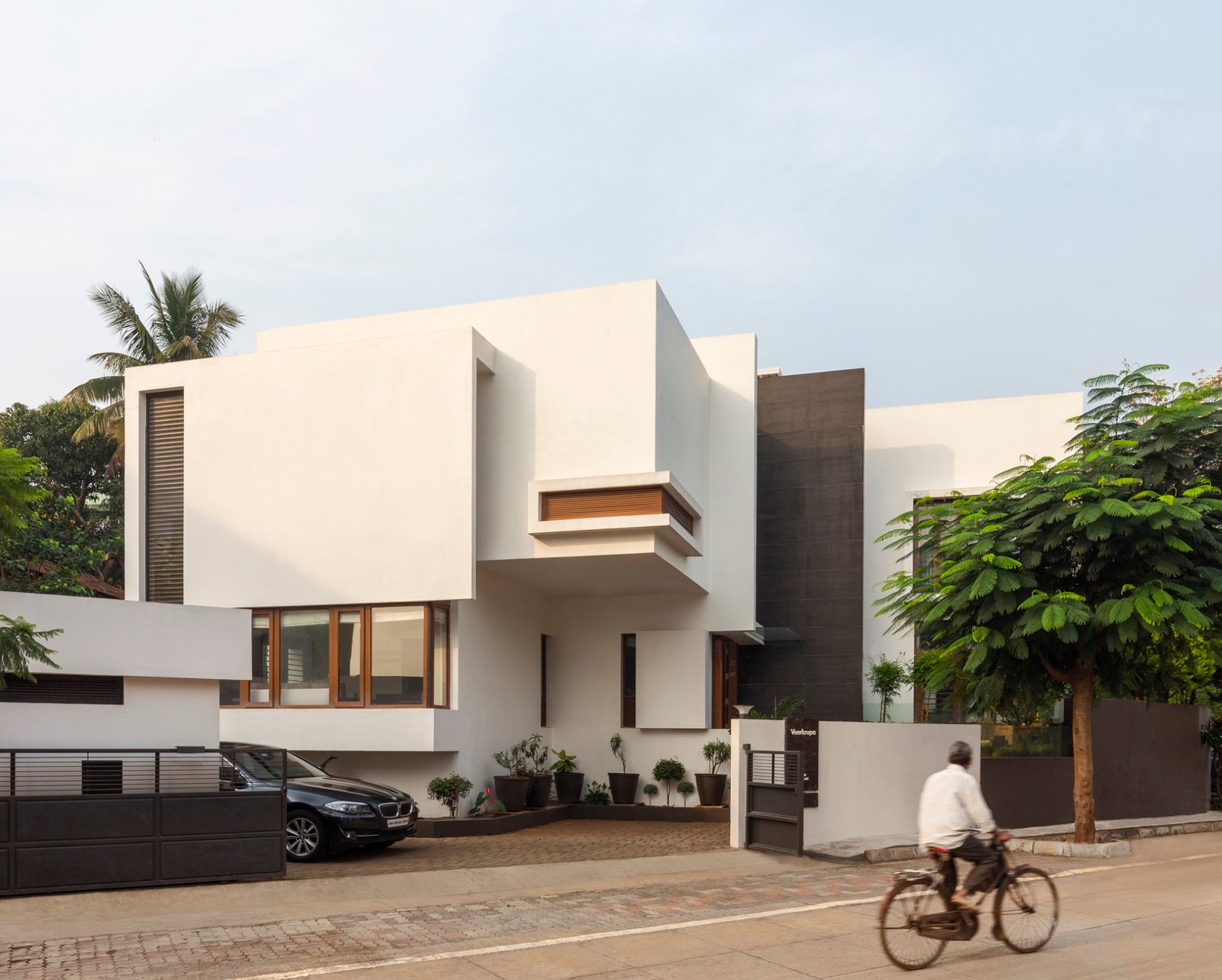
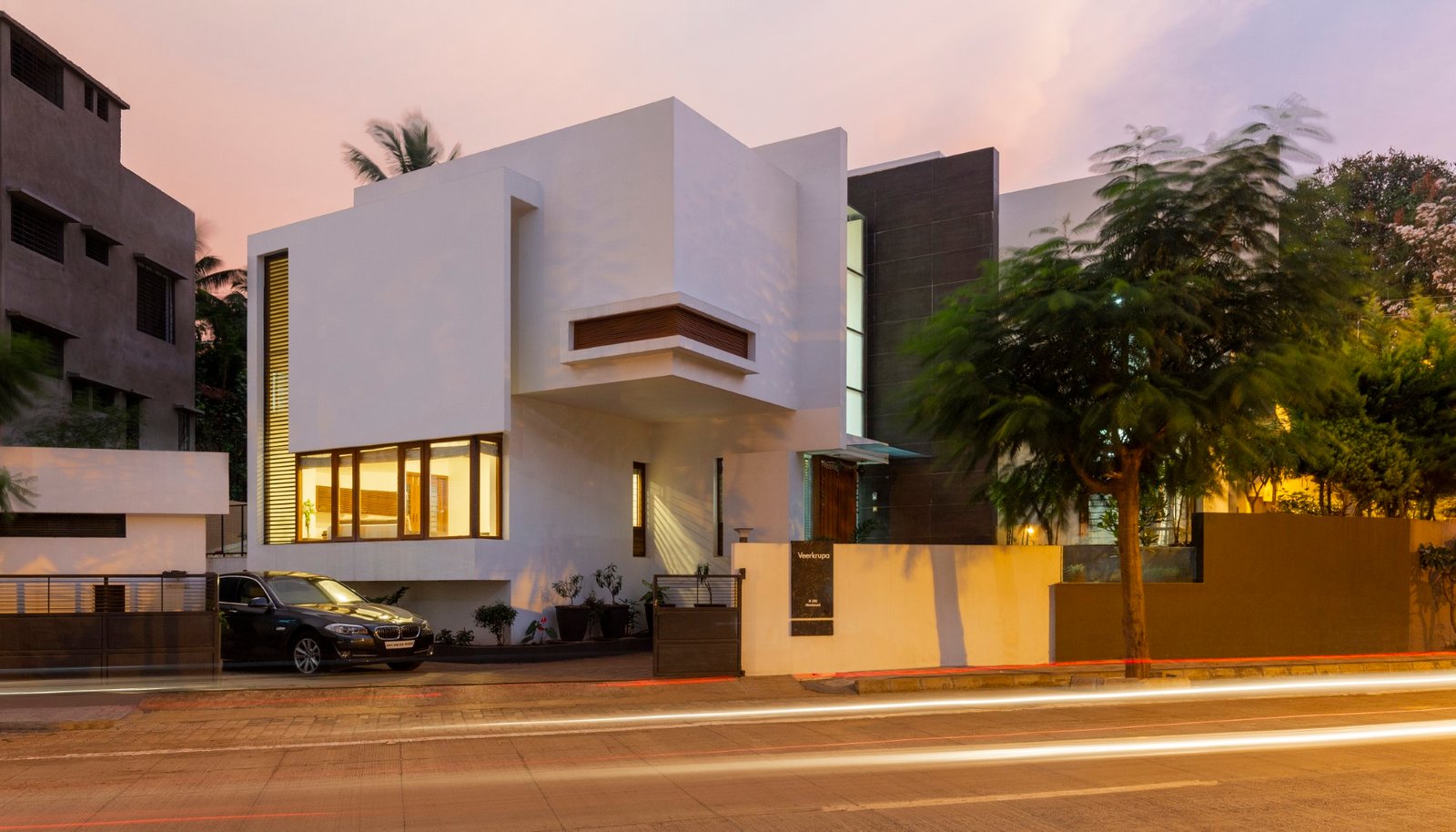
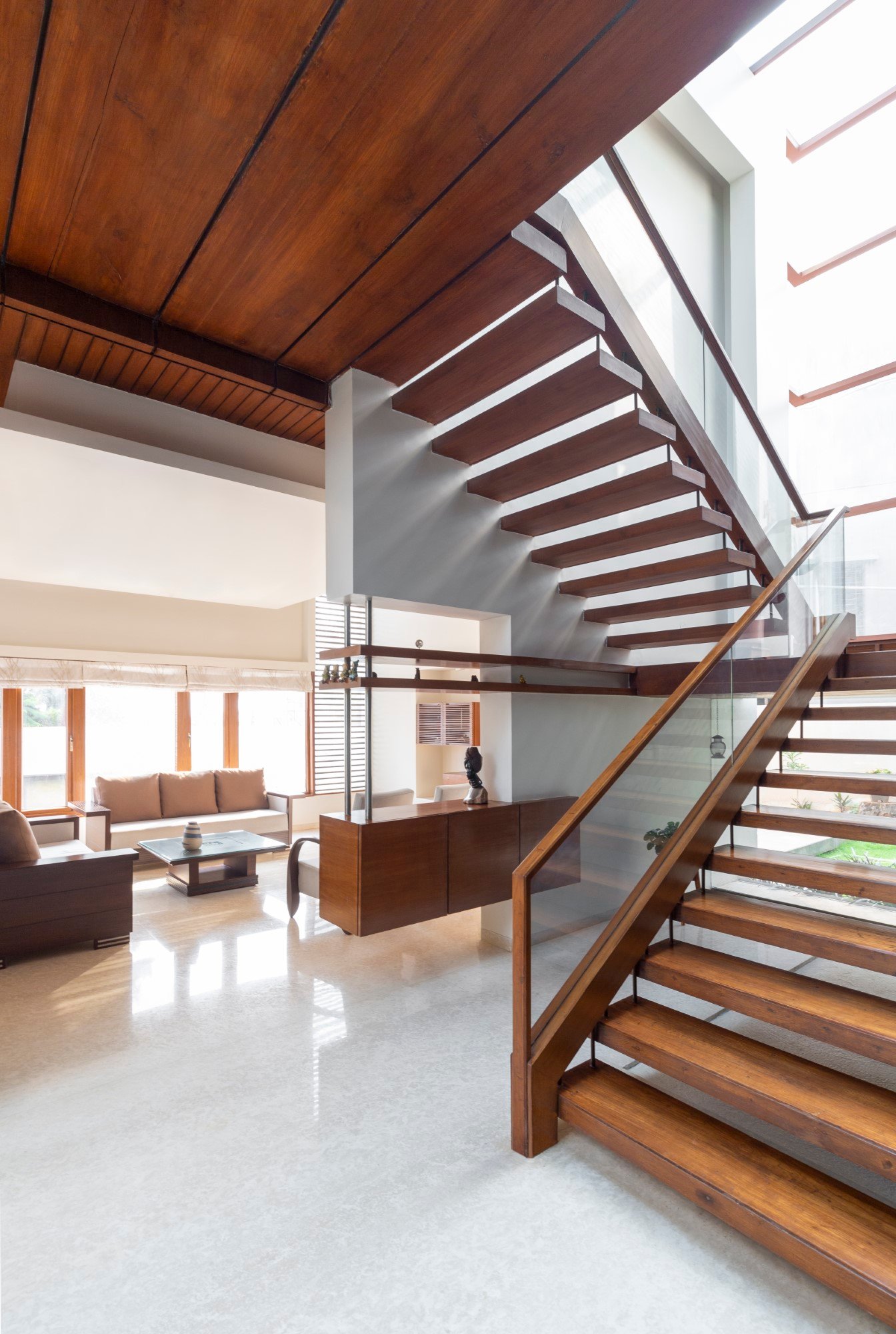
The walls are emphasised as distinctive elements from the exteriors, and they help define the house in the neighbourhood. There are five walls within which the house unfolds, and one of the walls is clad in stone. This wall also forms the backdrop for the staircase. The staircase block, which also houses the entry foyer, has a glass roof that extends down as glass screens between two of the walls. This transparency emphasises the function of this area as an entry portal as well as a connective tissue that connects the public with the private, as well as the two floors of the house. The staircase also is one of the few elements that is in steel and wood and it barely touches the two confining parallel walls. This adds to the transparency and lightness of the entrance foyer area, which is in stark contrast with the rest of the spaces that are built in masonry and concrete.
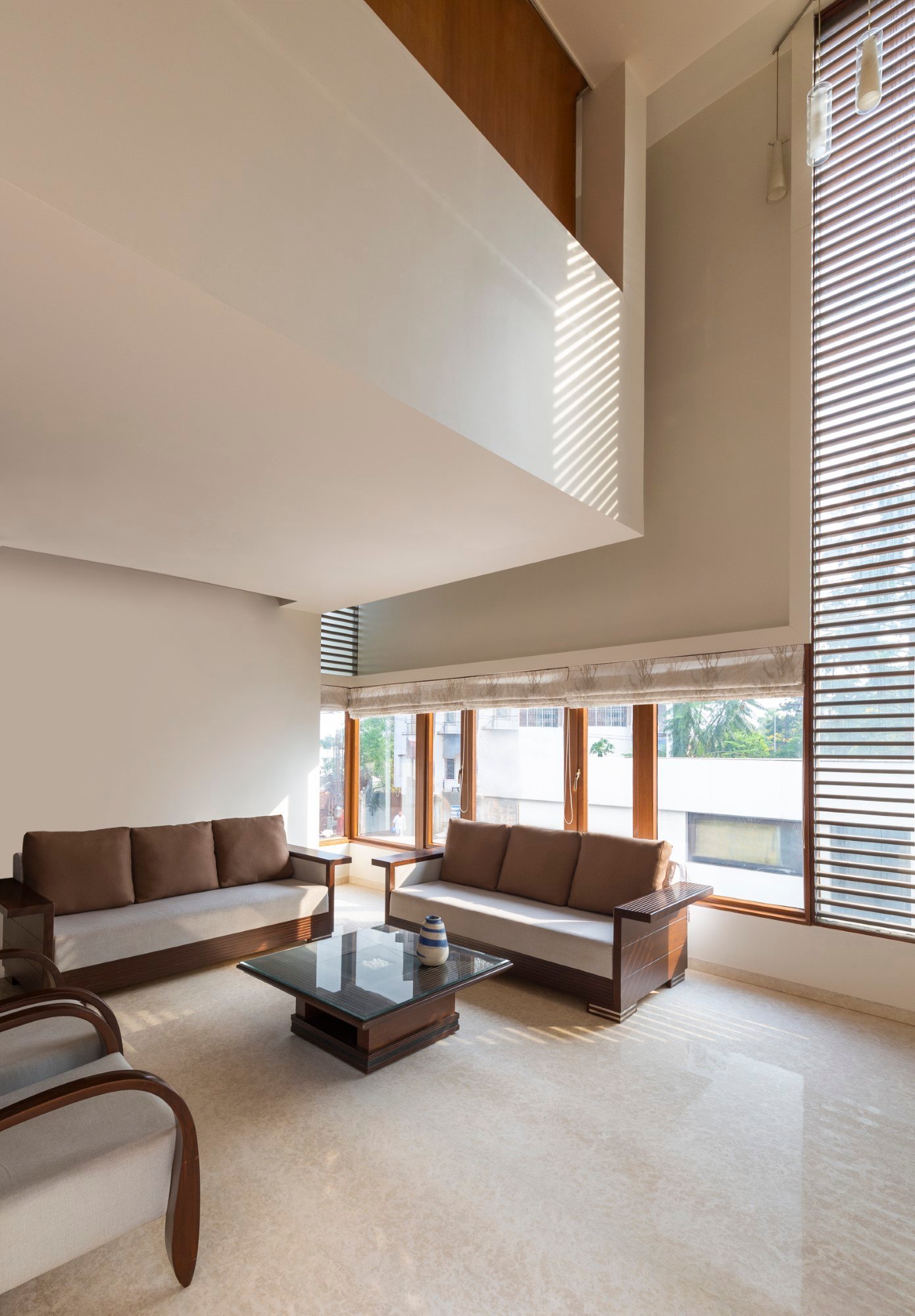
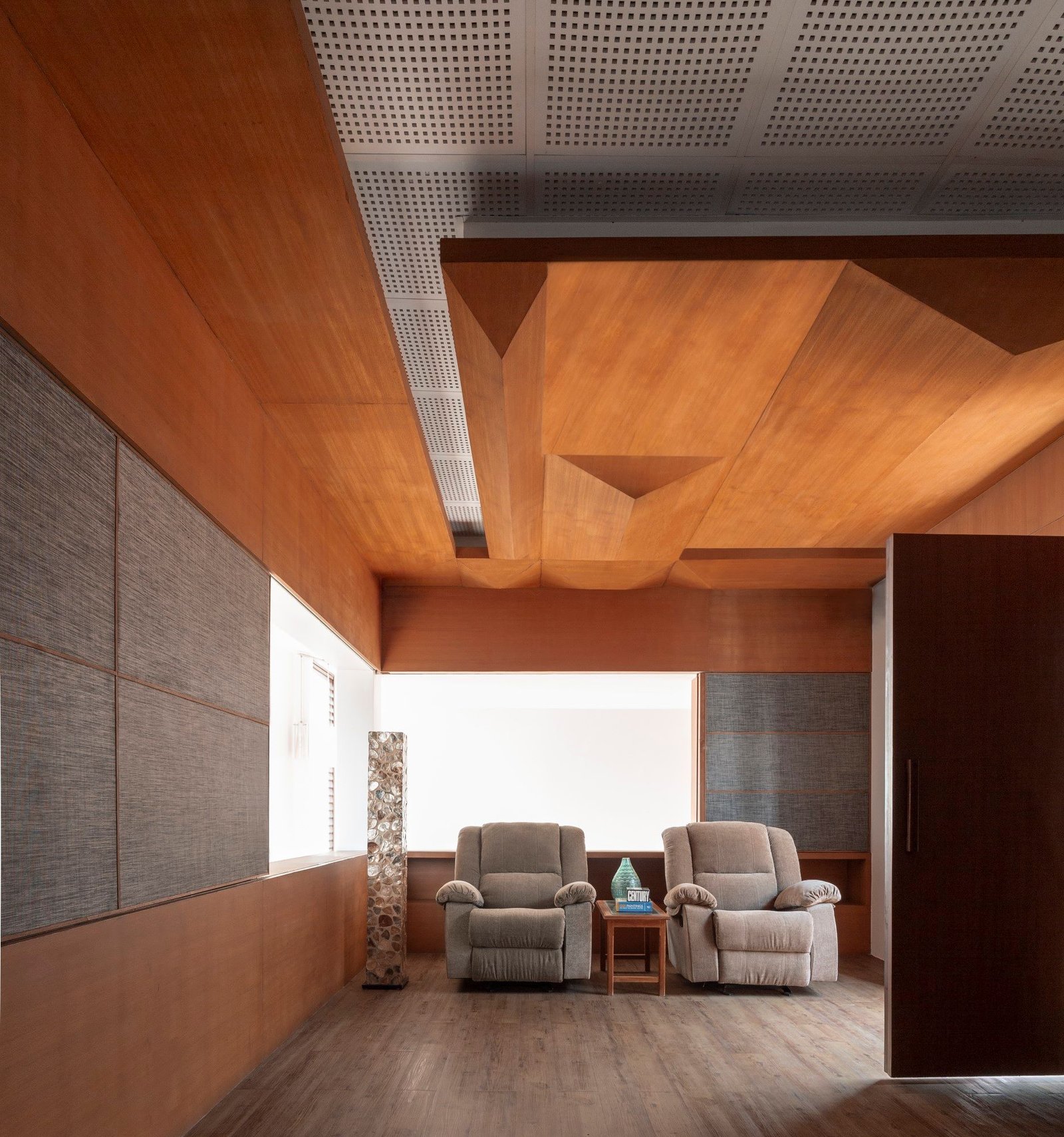
The living room of the house has a home theatre on the top that is pulled out from the main structural grid, thus allowing a double height for the living space. This move also gives a sense of finality and completeness to the overall form.
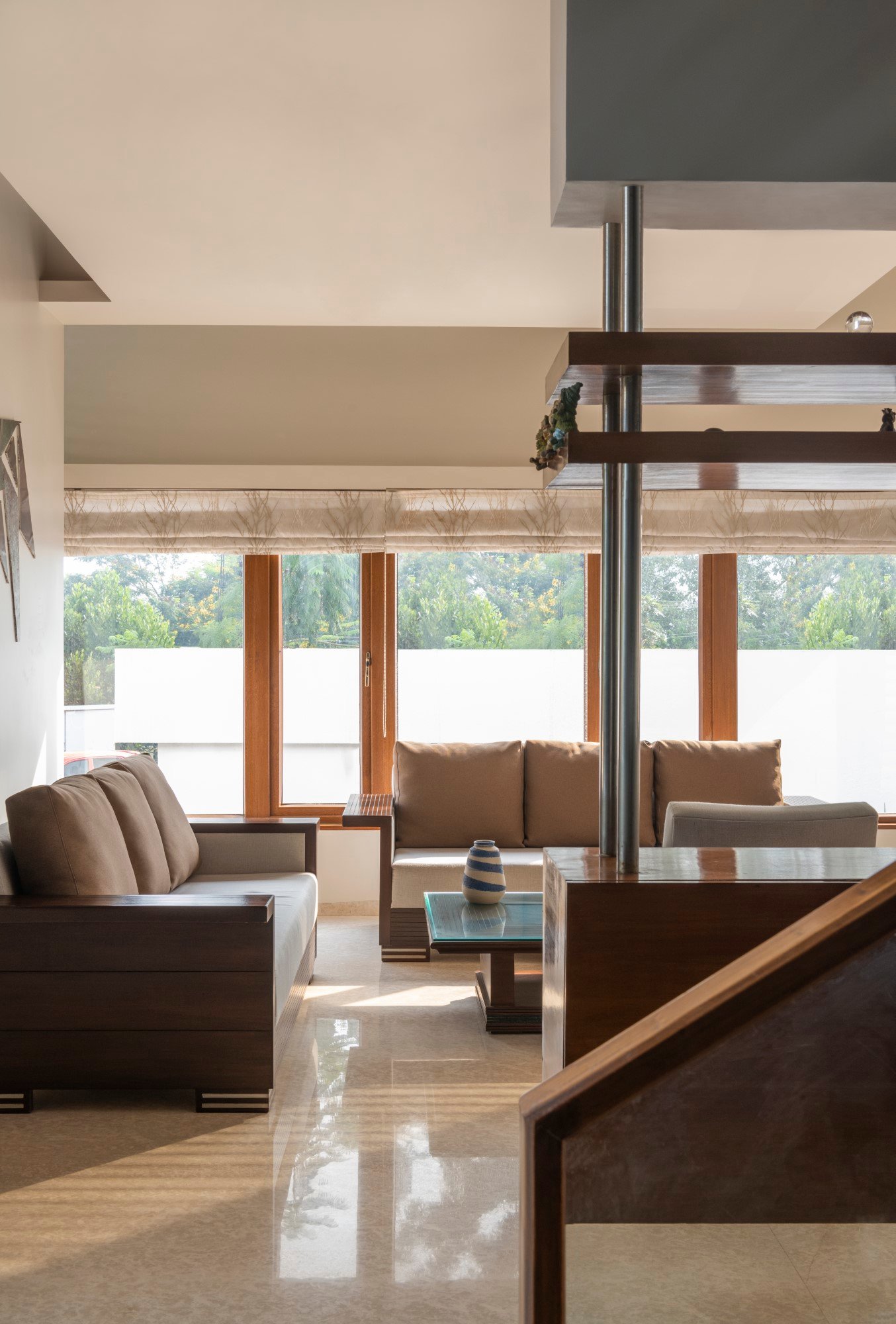
The permeating use of beige Italian marble, white stucco walls and timber accents with just a hint of colour marks the interiors that are in a constant dialogue with the outside through the small courtyards and gardens that lie just outside their French windows.