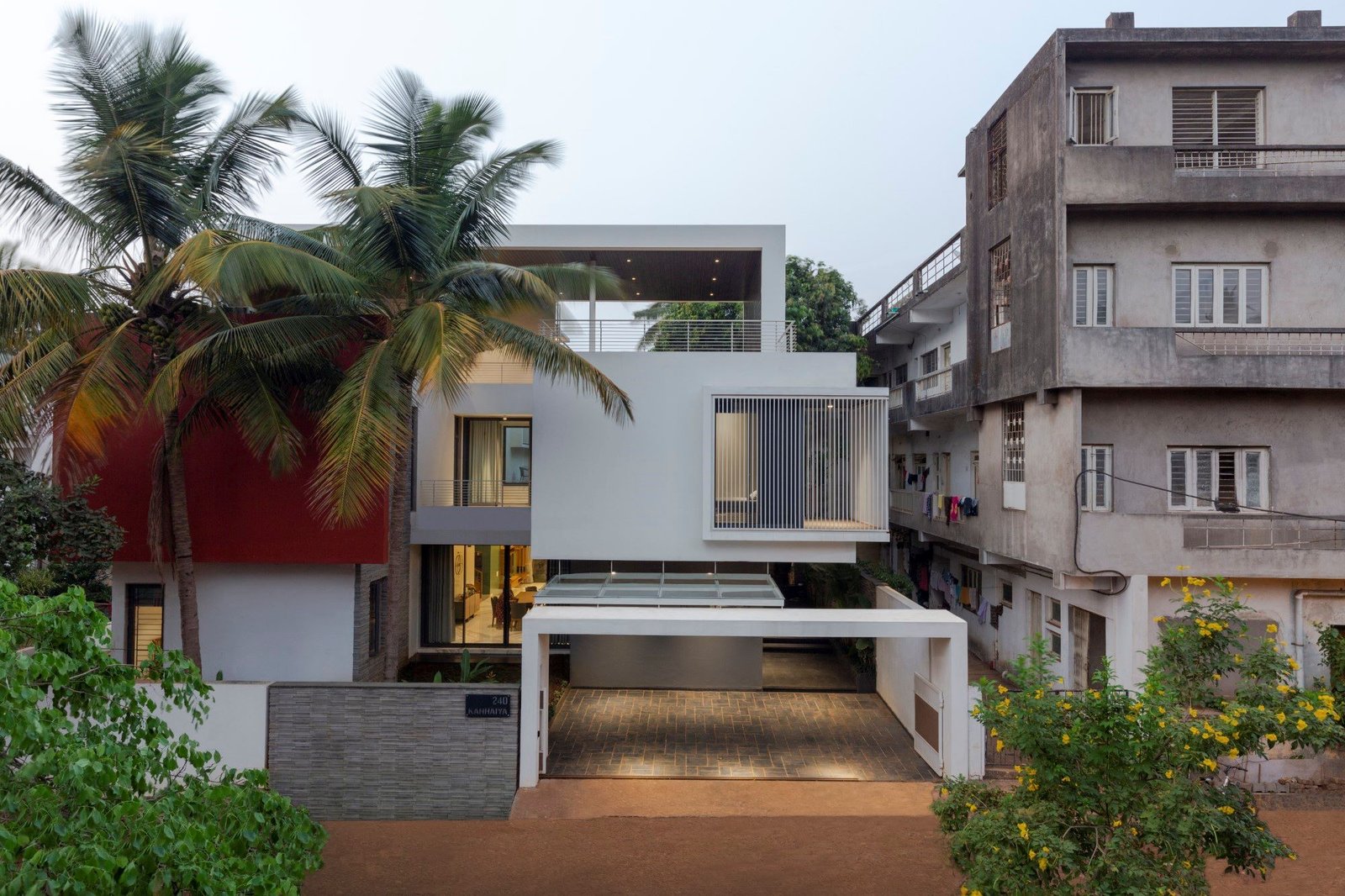
This suburban landscape, once defined by modest bungalows with flat roofs and cantilevered porticos influenced by European modernism, had witnessed a shift towards garish domestic architecture in recent decades.
The design for the Zanwars, a family rooted in Belagavi’s textile industry, called for a five-bedroom house with minimalist undertones. It aimed to capture the essence of mid-century modern architecture while embracing a more contemporary approach. This design endeavour was also a reflection of our studio’s connection to this particular part of Belagavi, as the studio also happens to be in the same vicinity. Praveen, one of the studio principals, grew up in this very area of the city, in the late 70’s and 80’s. This undulating landscape of dense vegetation interspersed with modern homes was a part of his very initiation in architecture from an early age, and so any designs that the studio undertakes in this area pays homage to this urban history.
The concept emerged as an interplay between mono-functional rooms with defined functions and multi-functional interstitial spaces. The placement of core spaces, such as the kitchen, the mandir (prayer room), and the bedrooms, adhered to the tenets of Vastu Shastra, a traditional Indian architectural system, and thus occupied the extremities of the quadrants. The public and semi-public spaces, such as the living, dining, and entertainment areas, serve as the connective tissue that unifies these core spaces.
The entrance to the south-facing house is strategically positioned in the northeast quadrant, facing east. This activates the side margin, creating an entrance walk and court that culminates in a platform surrounding an existing mango tree. The entrance doorway, alongside the mango tree, serves as a pause point in this journey and is delineated by a stone wall separating it from the backyard garden, which is accessible from the living room.
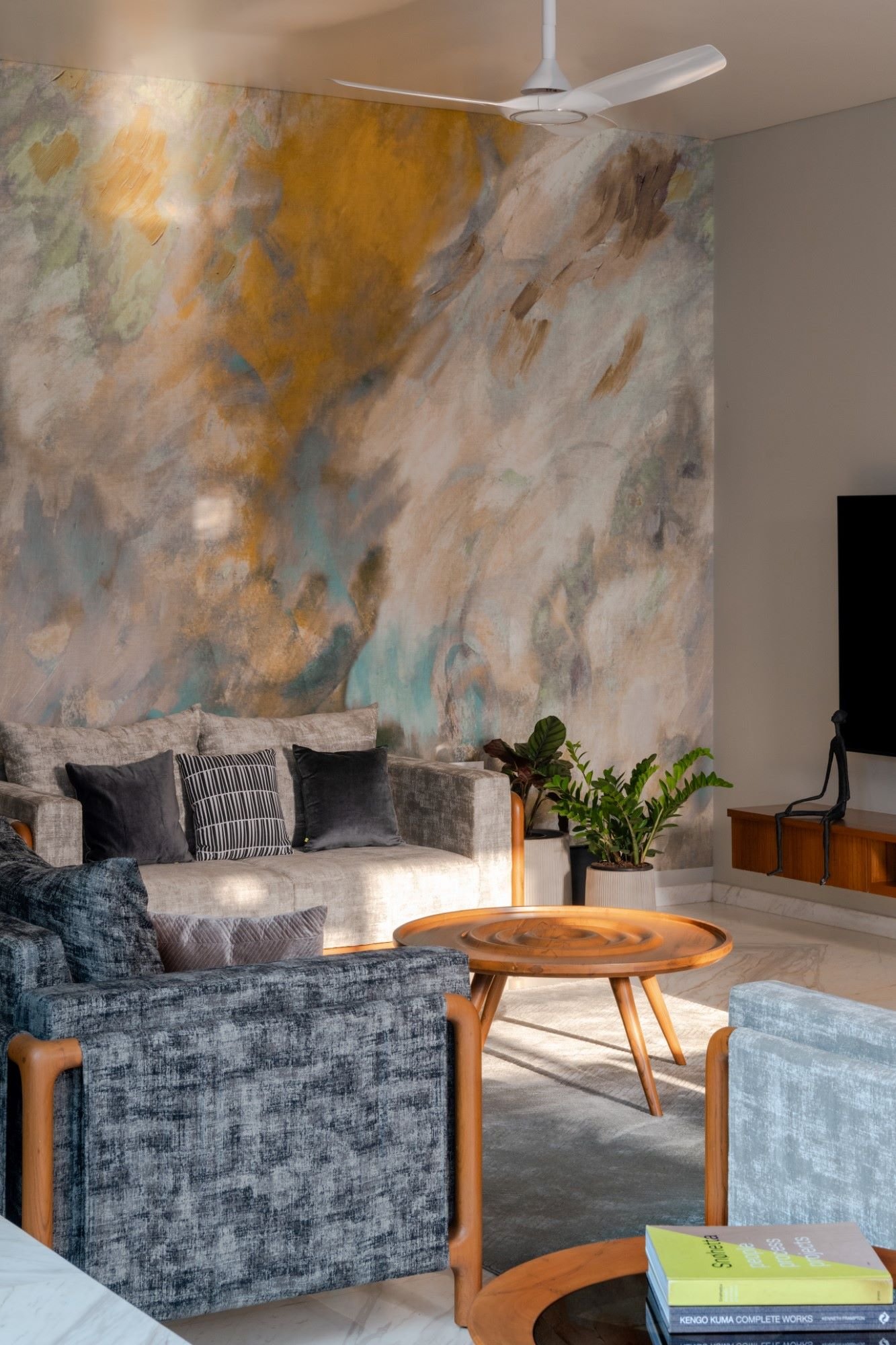
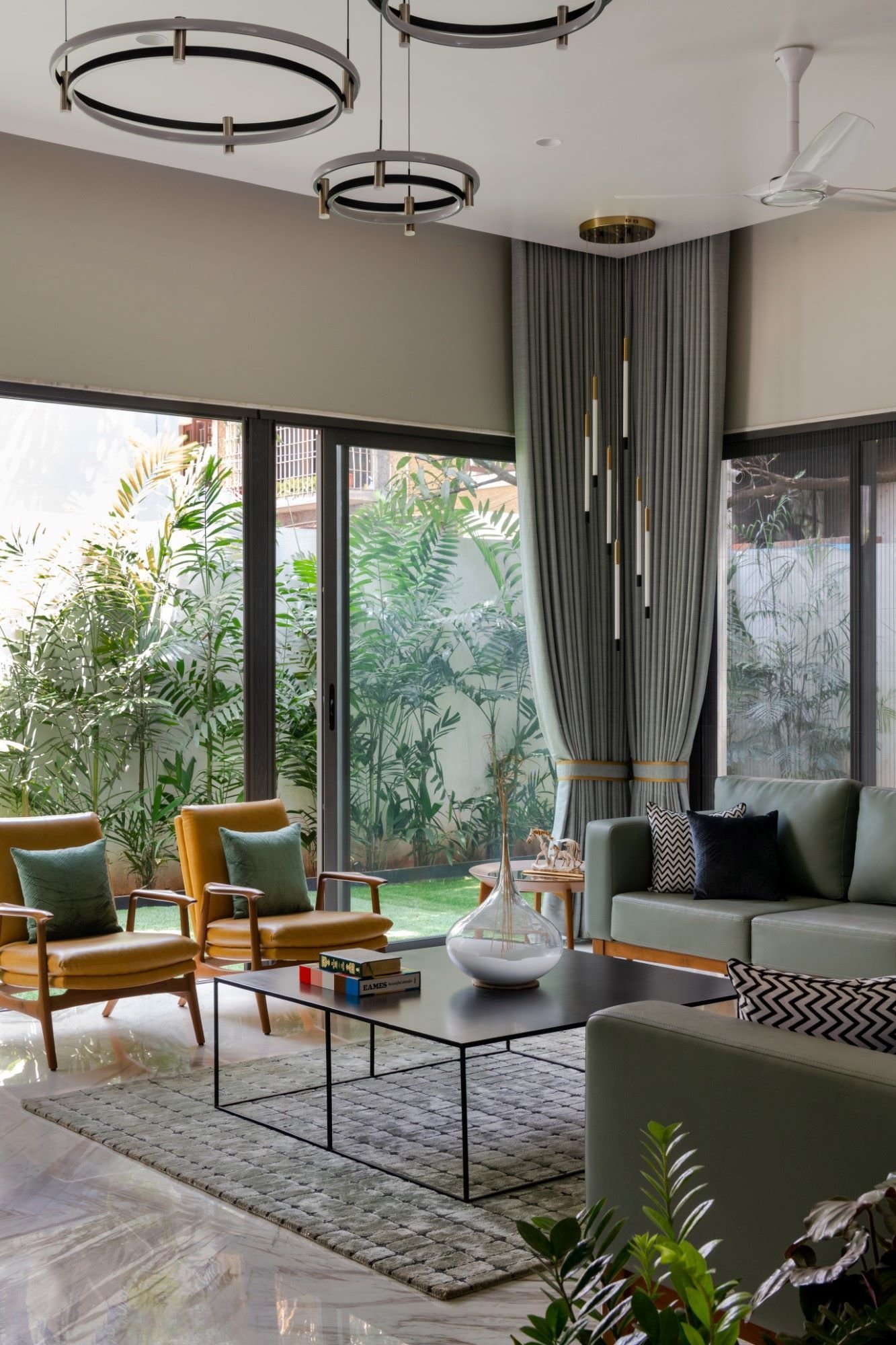
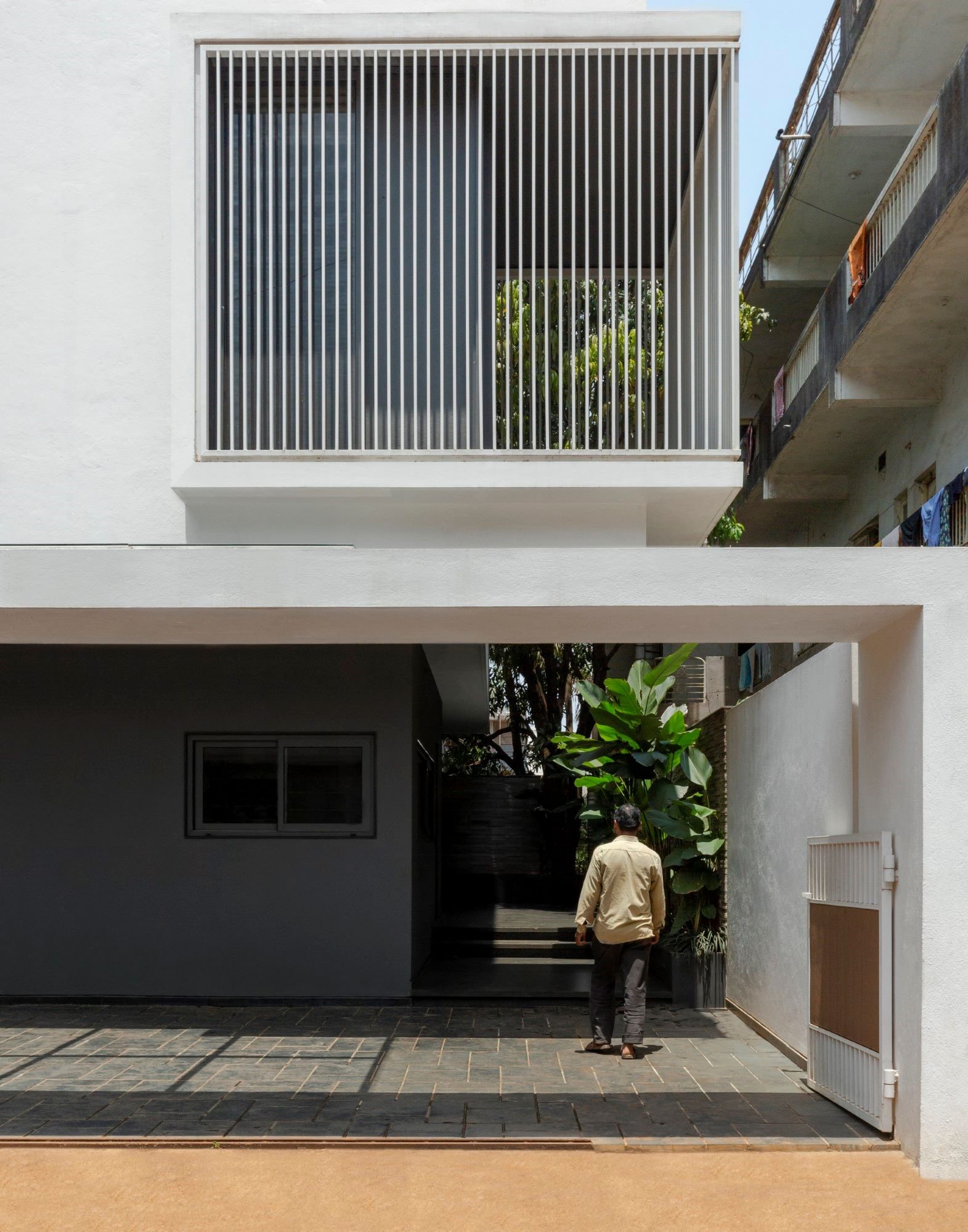
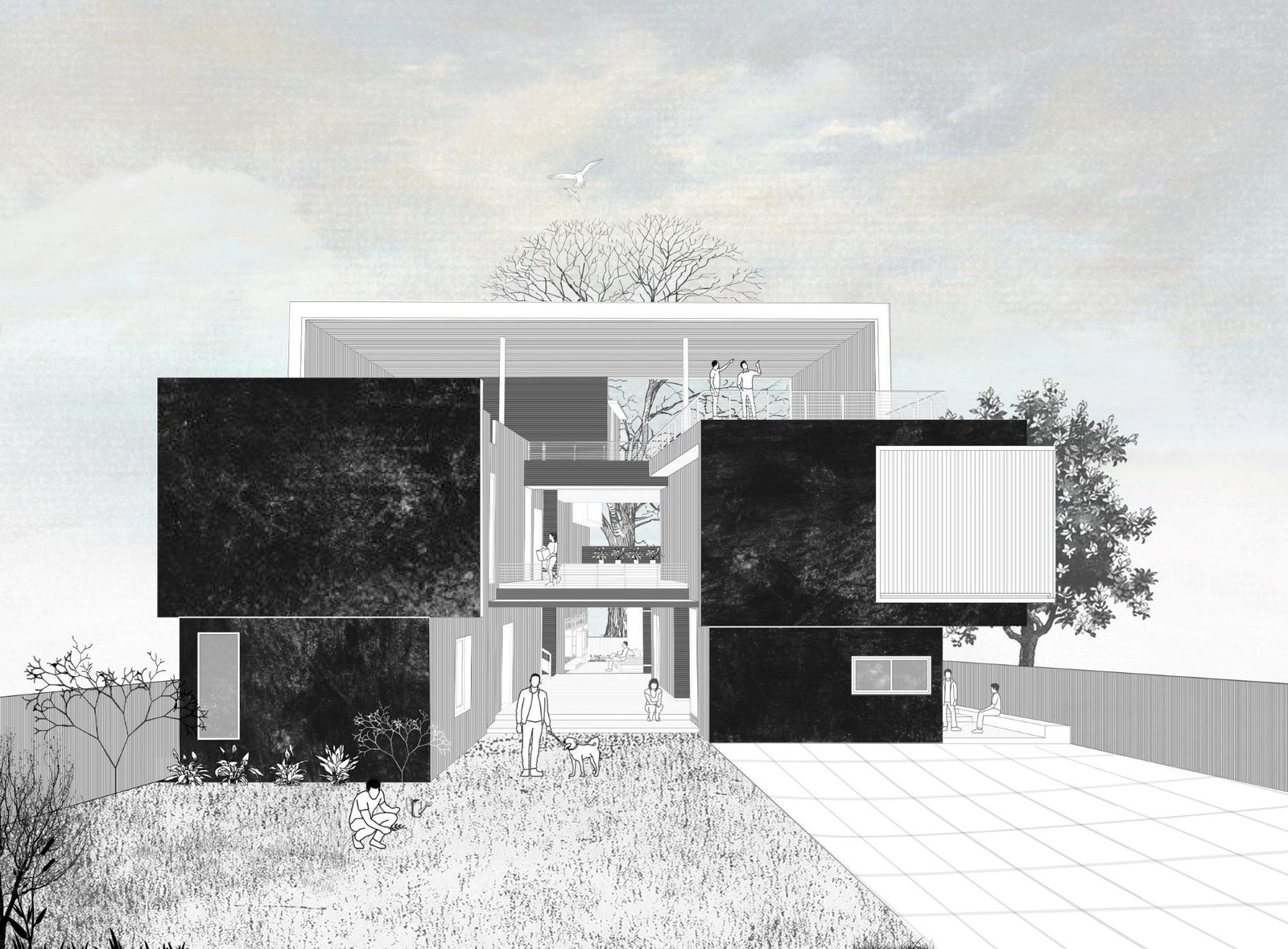
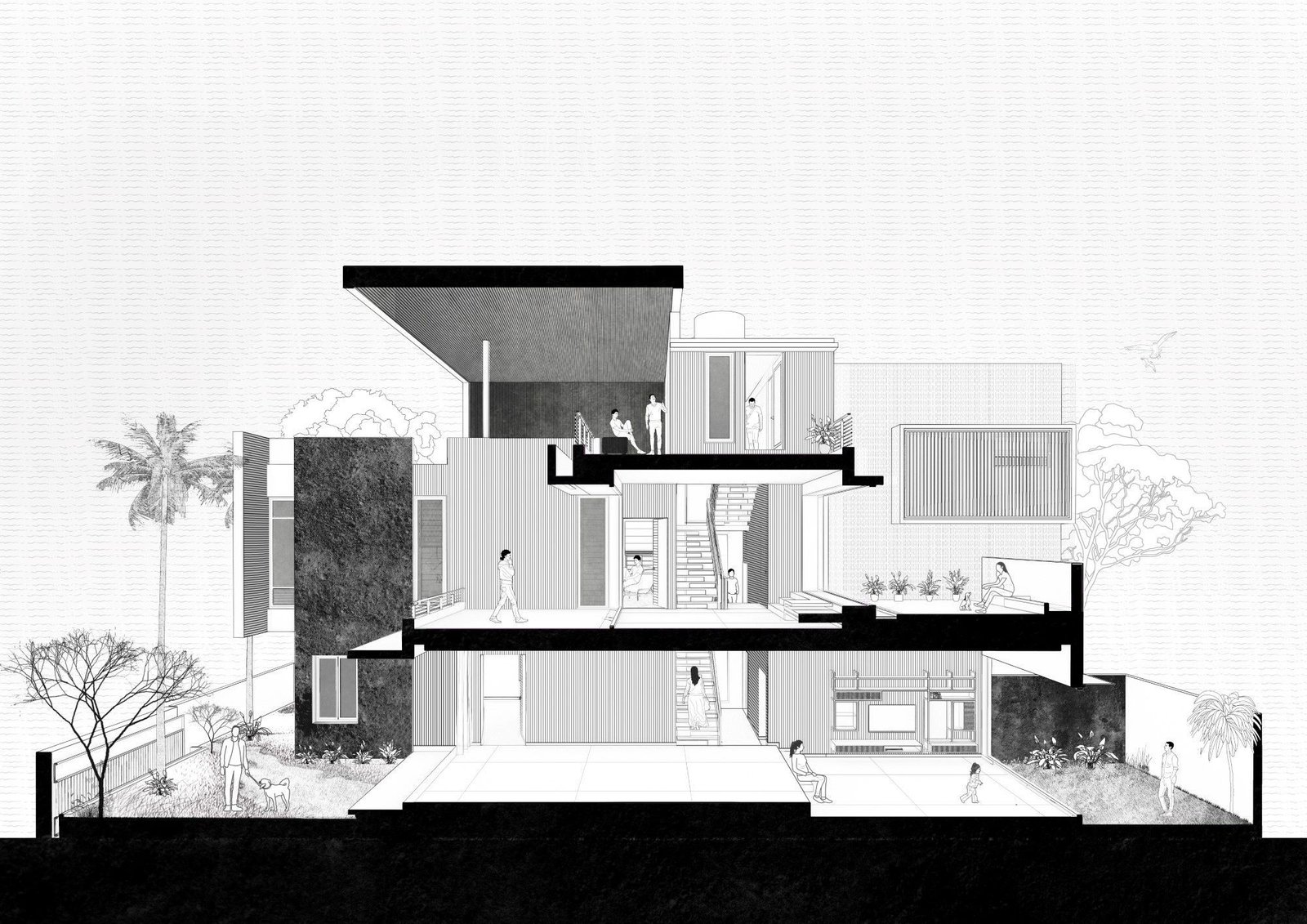
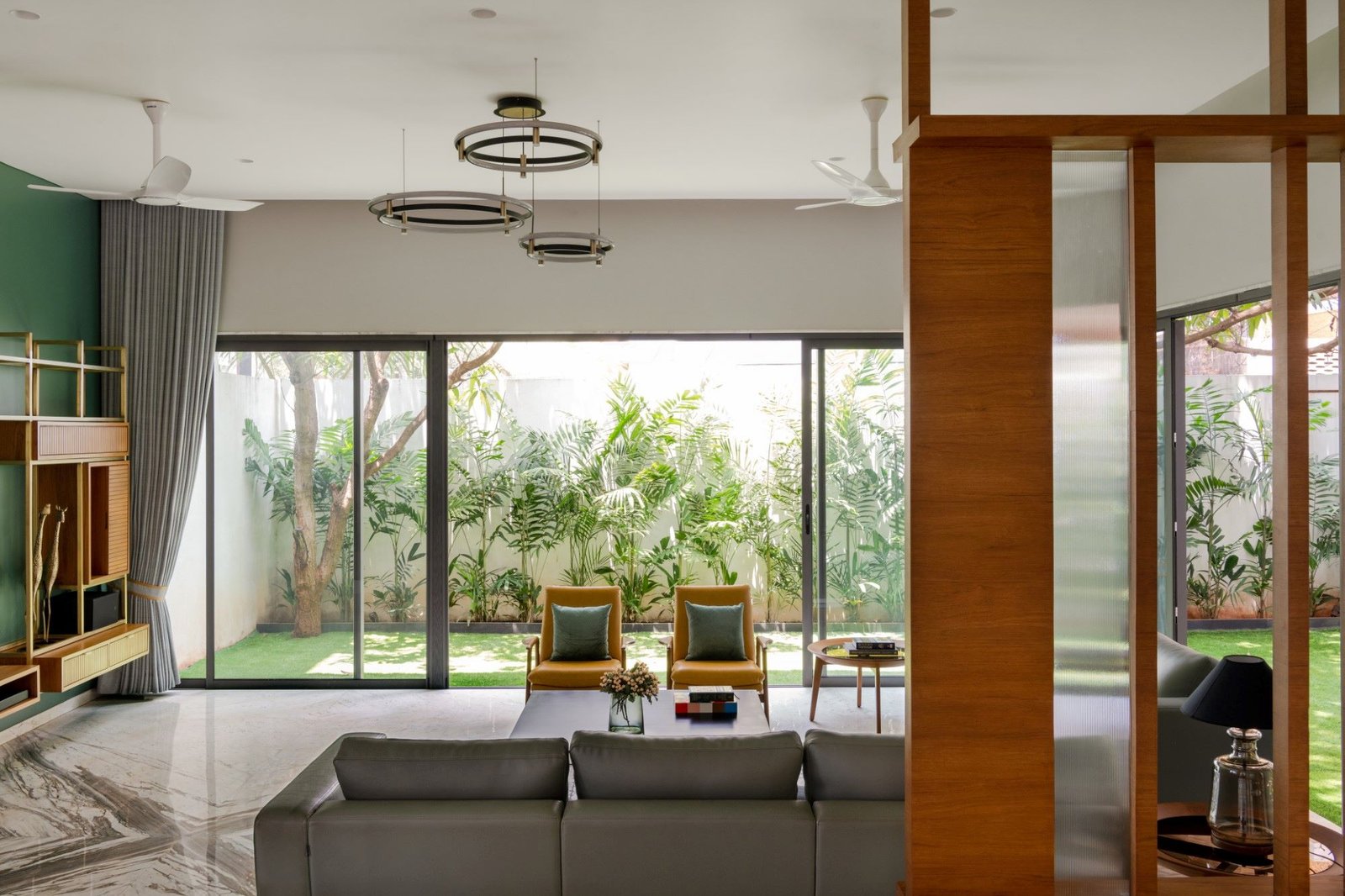
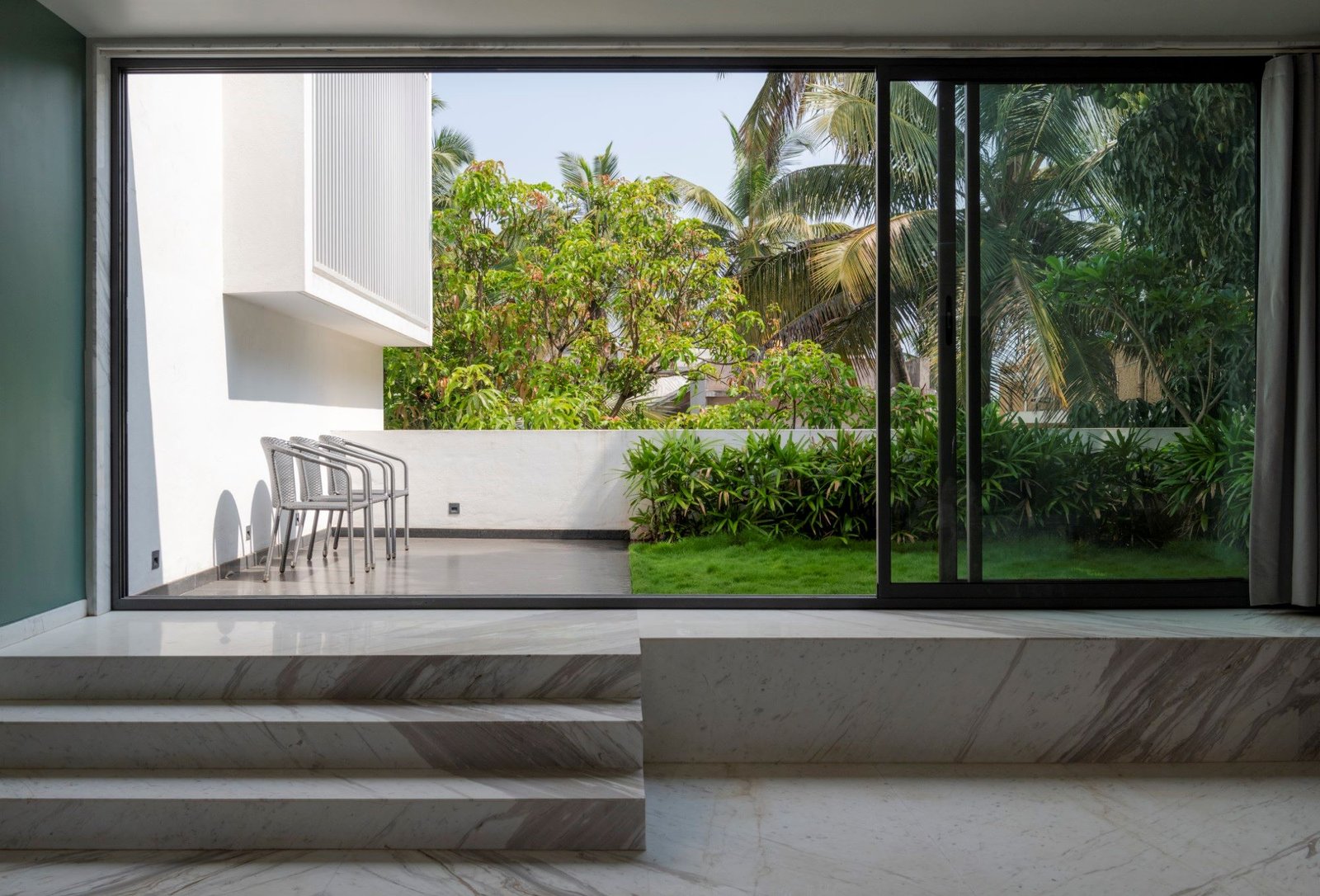
The design employs an interplay between peripheral outdoor spaces, living areas that open up to them, and core private spaces like bedrooms. This is achieved by contrasting the private spaces as enclosed volumes with the living spaces that offers transparency towards the exteriors. This physical and visual connection between the front garden court and the rear garden is facilitated by the amorphous living areas.
The dining area provides access to the front garden court, while the formal living area opens up to the larger garden on the north side.
In plan, the organisation of the house can be understood as three bands that divide the space into distinct parts. The eastern band houses the kitchen, Pooja room, and a bedroom above, while the western band contains the bedrooms and staircase. The space between these seemingly solid bands becomes the interstitial zone that accommodates the living areas. On the facade, this manifests as transparent elements that allow glimpses of the surrounding environment. From the street, one encounters two opaque sets of volumes on either edge, with a central core that provides a visual pathway through the building, even offering glimpses of the sky.
This dematerialization of the monolithic nature of the structure adds a dynamic quality to its appearance from the street.
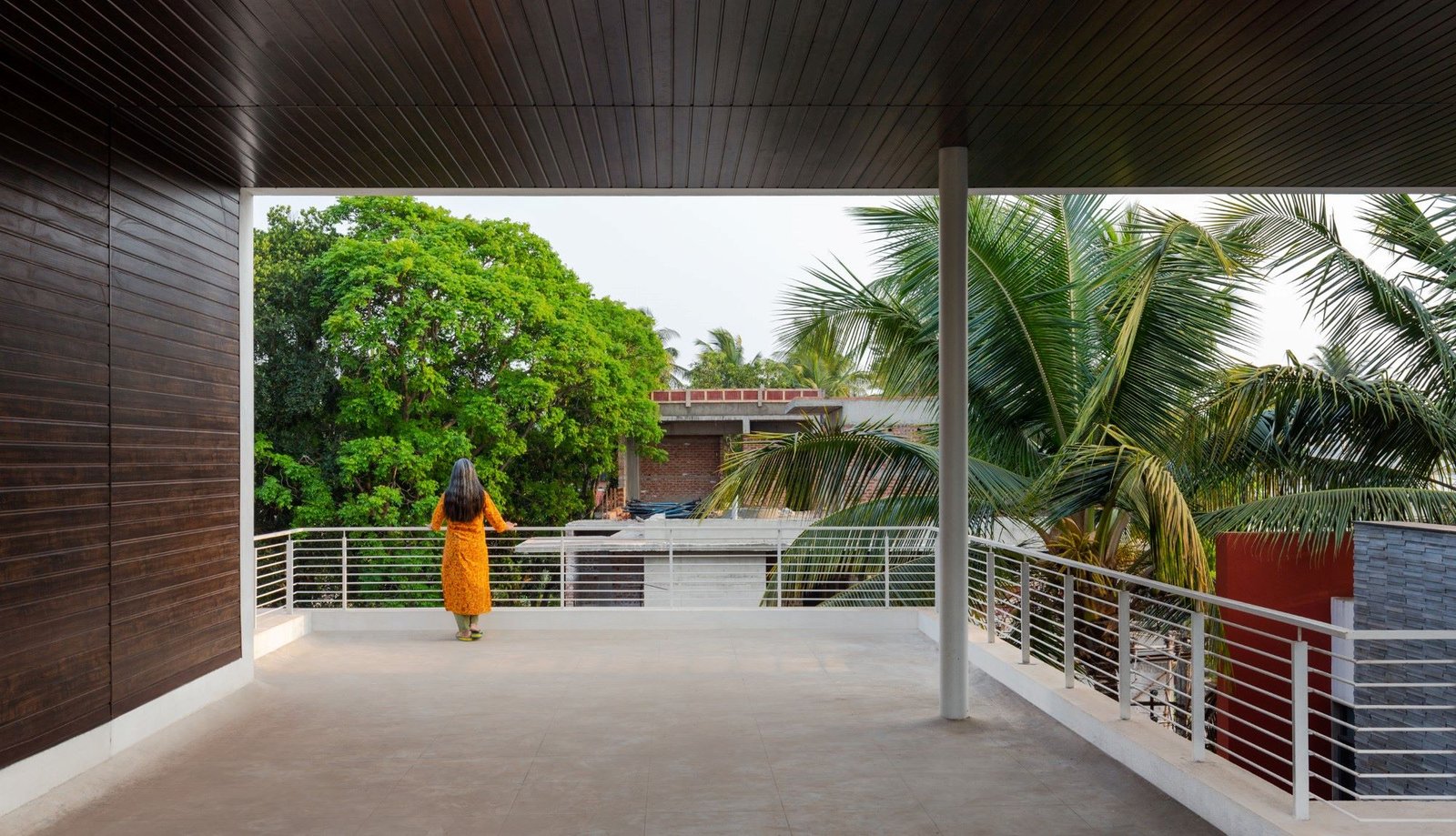
Residential buildings often tend to be opaque, limiting the interaction between the exterior and interior. Any interaction is typically mediated by windows and doors. In this design, the composition of spatial and functional components itself encourages the building to engage with its surroundings. This approach also occasionally allows fleeting views of the landscape from the road.
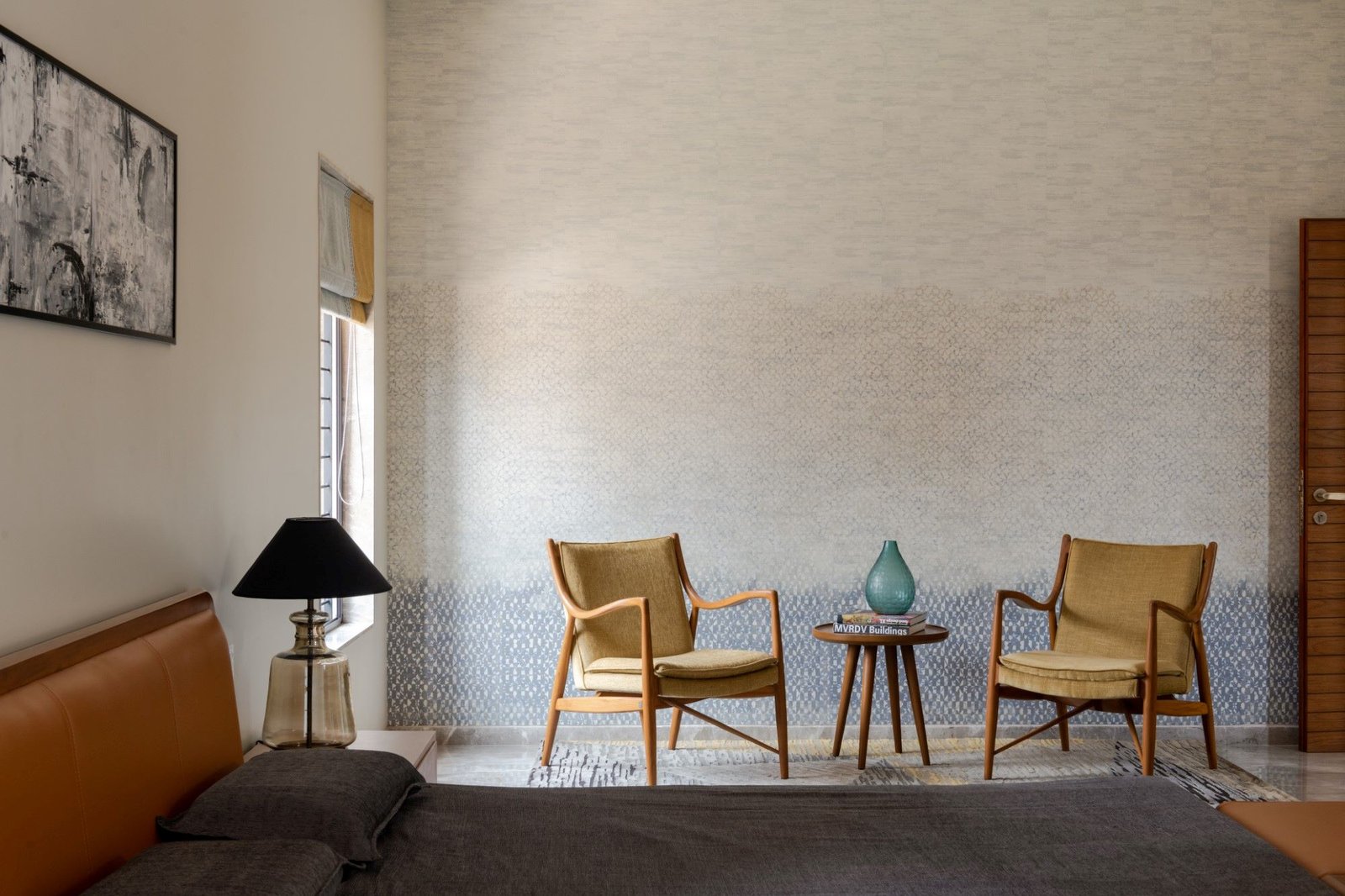
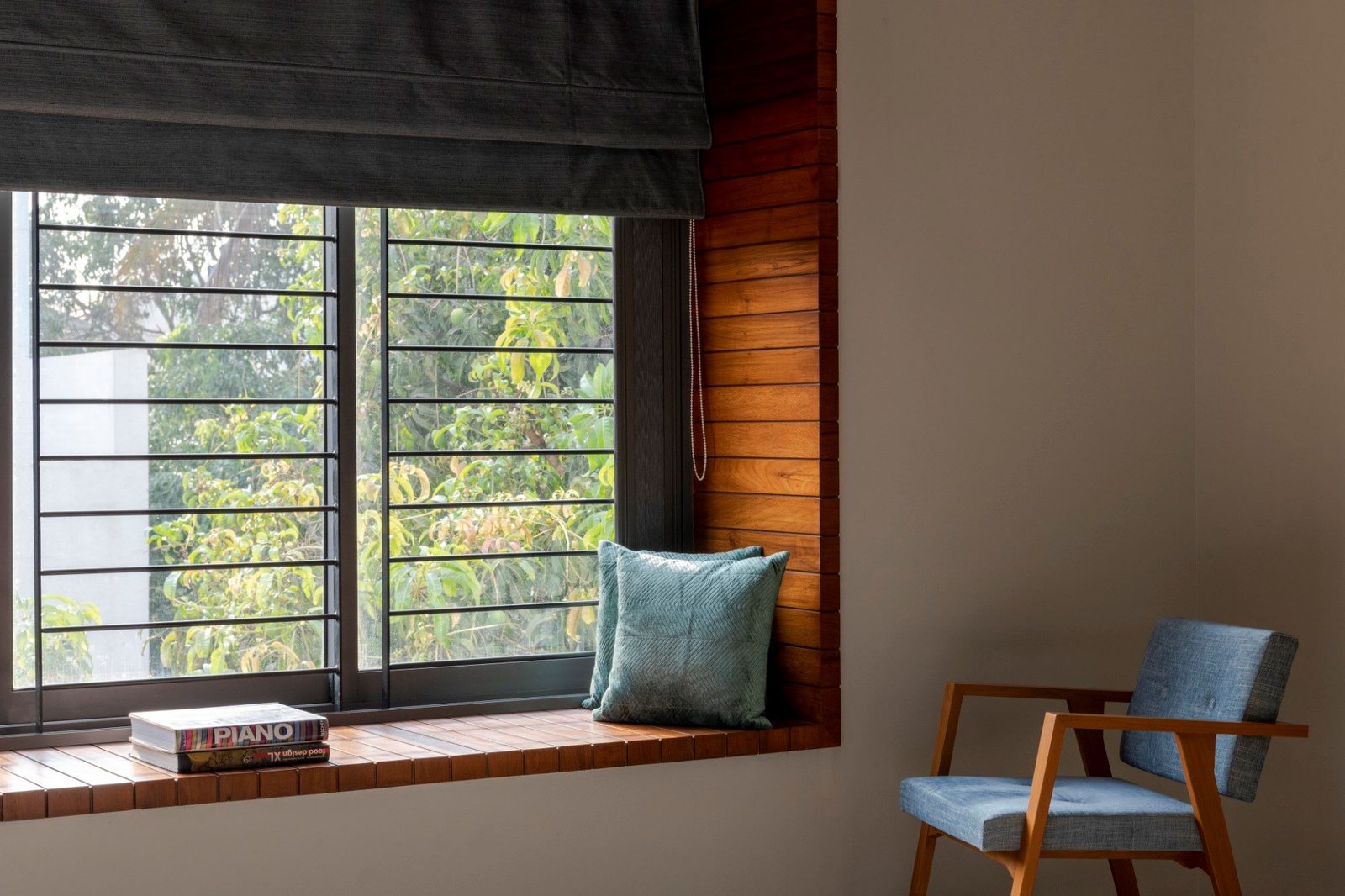
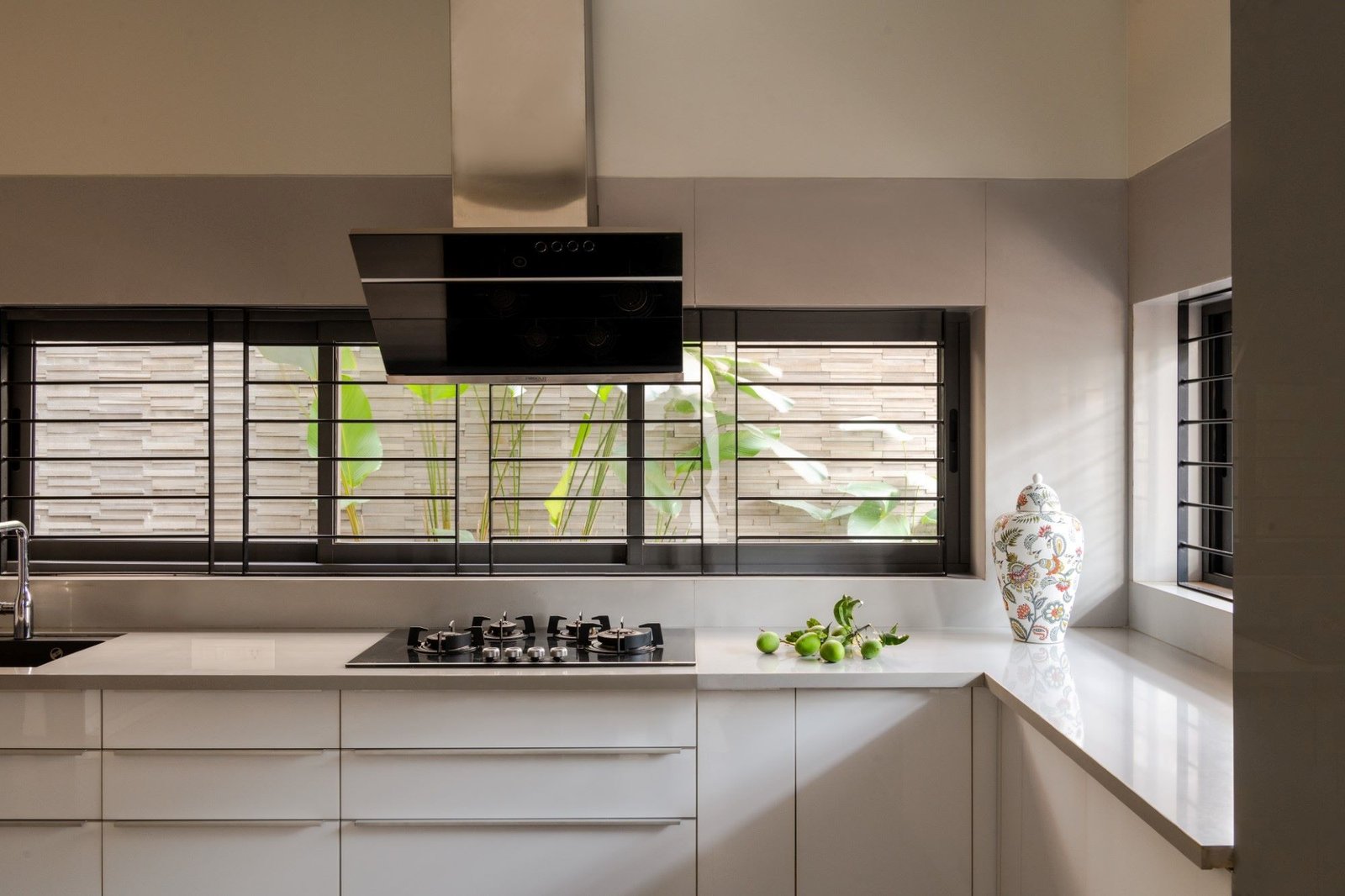
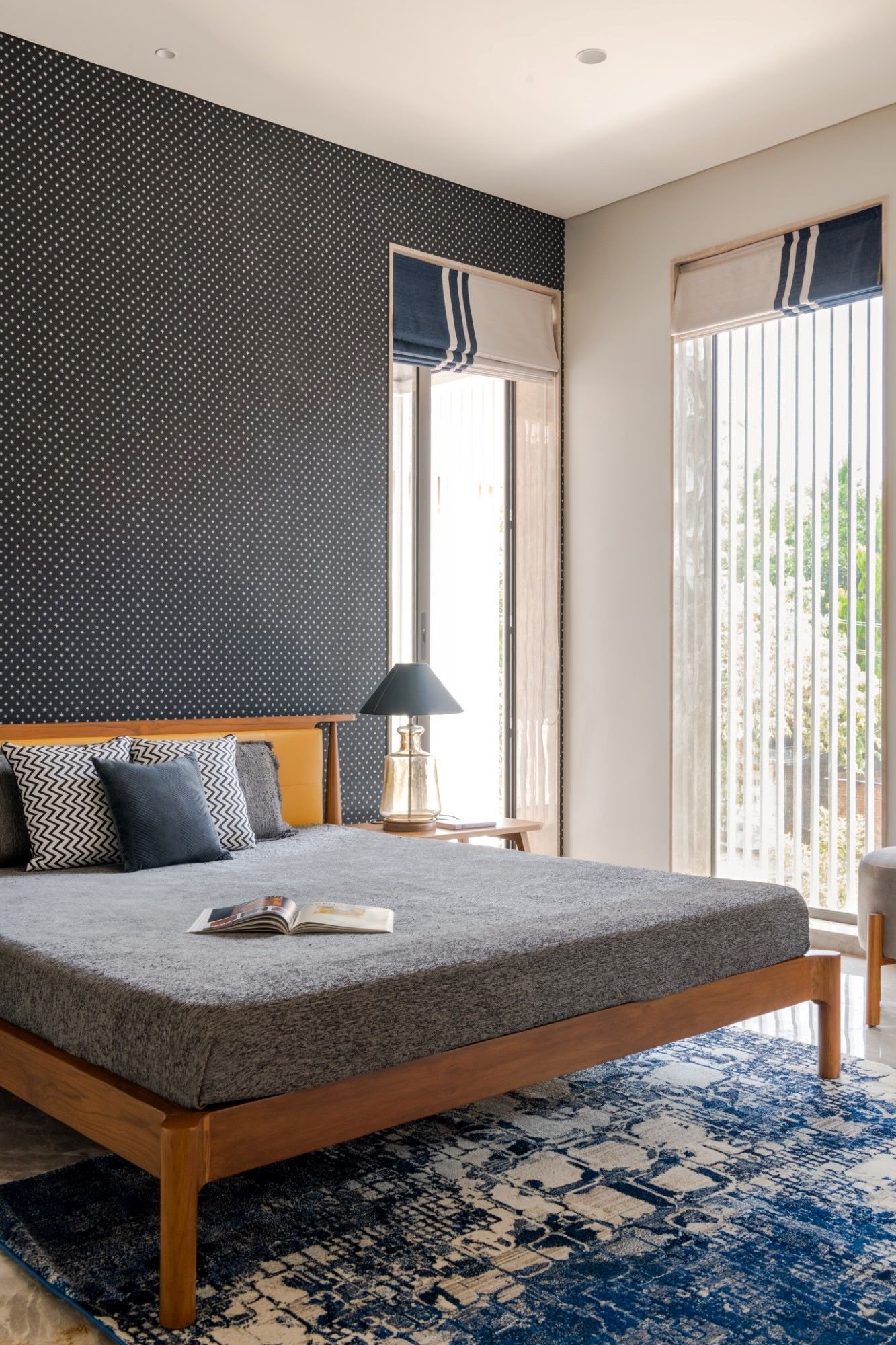
The material palette of the house reflects the residents’ lifestyle, characterised by a subdued selection of natural materials such as wood and natural stone. Accents of printed tiles and patterned wallpaper add depth to the spaces, creating a warm ambience that counterbalances the stark white floors and expansive glazed openings.